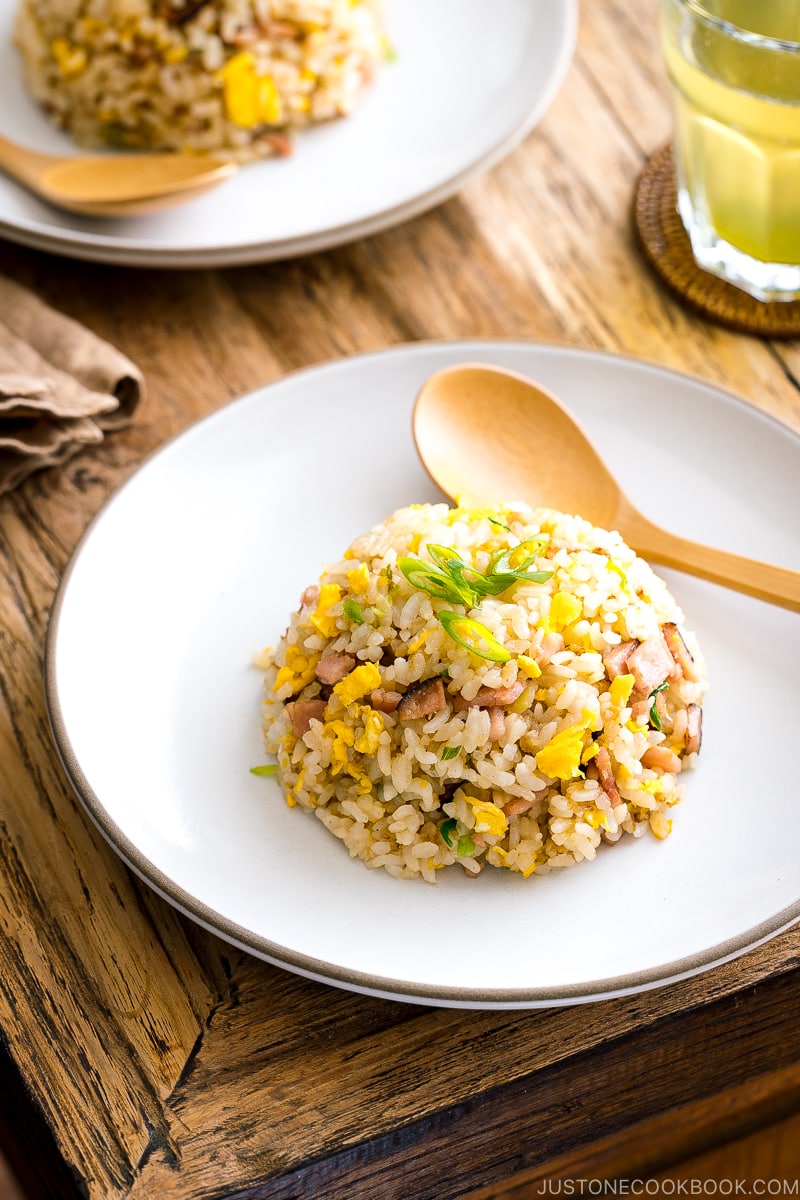
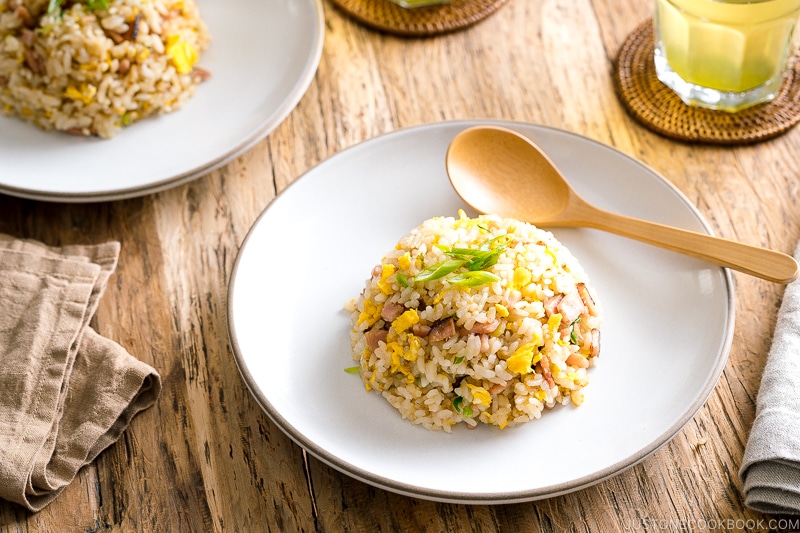
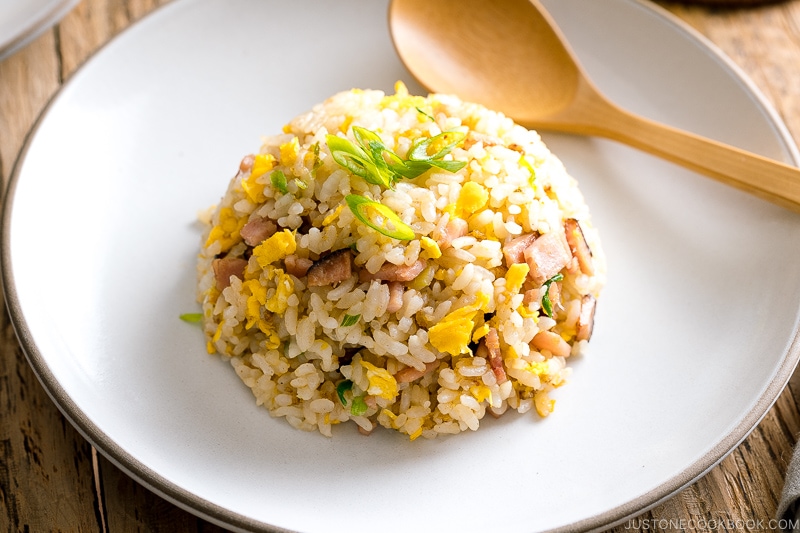
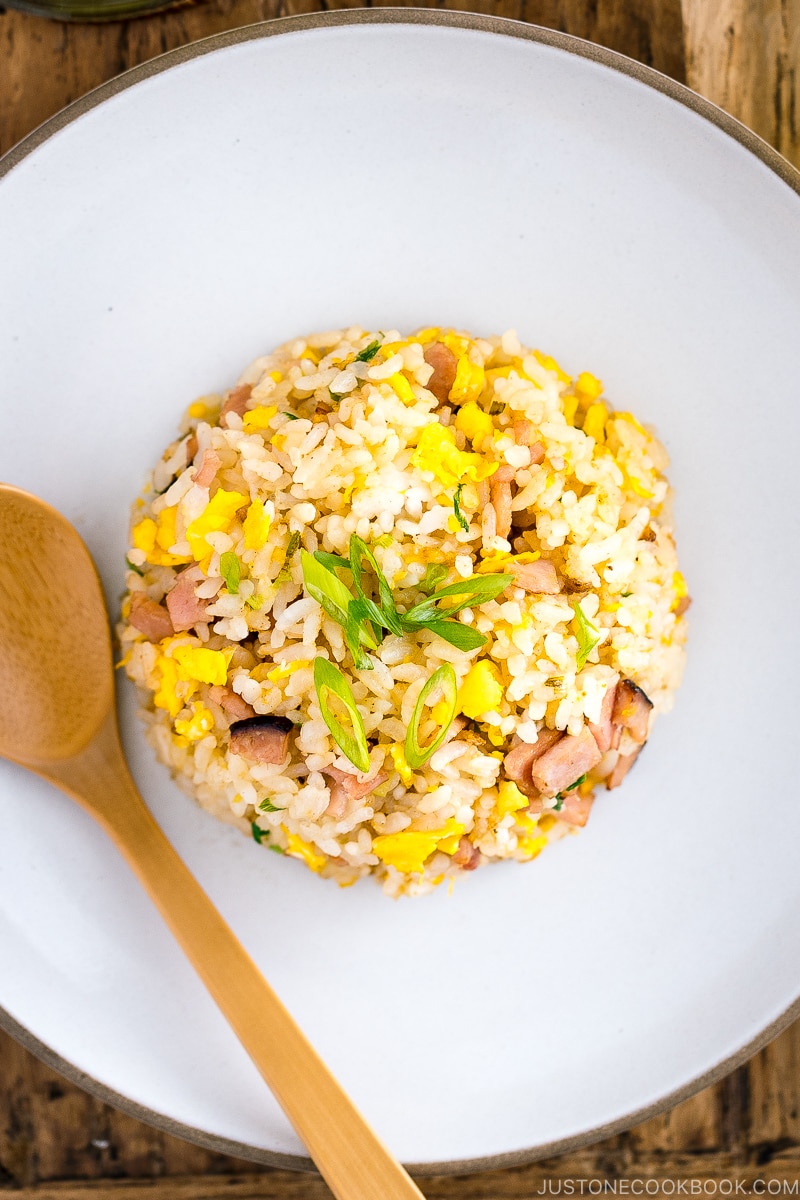
Whenever I need to get lunch or dinner on the table fast, Japanese Fried Rice (Yakimeshi) is my first instinct. I’ve been making this exact version since I was in Japan — ham, egg, green onion, and a touch of soy sauce at the end over high heat for that slightly smoky finish. It’s one of those recipes that’s better the more you make it, because the technique becomes second nature.
What is Japanese Fried Rice?
Almost every Asian country has its own version of fried rice, and so does Japan. It’s a clever way of repurposing leftover rice by frying it with veggies, eggs, or whatever meat/protein in a wok or pan.
In Japan, we call Japanese fried rice chahan (チャーハン) or yakimeshi (焼き飯).
Chahan vs Yakimeshi
We commonly use both terms interchangeably and there are a few explanations out there, but I believe the actual differences might have gotten mixed up and blurred. Here are a few observations:
Chahan チャーハン
- Chahan is the Japanese transliteration of the Chinese-style fried rice “chao fan” (炒饭). The name reflects the fact that fried rice originated in China; Chinese immigrants introduced it to Japan in the nineteenth century.
- Typically served at Japanese-Chinese restaurants in Japan.
- Eggs are cooked first before adding the rice.
- Seasoned mostly with salt.
- People in Tokyo region commonly use the term ”chahan” for fried rice.
Yakimeshi 焼き飯
- Yakimeshi translates to “pan-fried rice” or “fried cooked rice,” just like Yakisoba or Yaki Udon.
- Eggs are cooked after adding the rice.
- Typically seasoned with soy sauce. In Osaka, fried rice seasoned with Worcestershire sauce is called Sauce Yakimeshi (ソース焼き飯).
- People in the Osaka region commonly use the term yakimeshi for fried rice.
Japanese Fried Rice vs Chinese Fried Rice
The main difference is that Japanese fried rice uses only Japanese short-grain rice, which is plump and sticky and has a higher moisture content, so it gives a slightly sticky, chewy, toothsome texture. Chinese fried rice or other Asian fried rice typically uses long-grain rice such as Jasmine rice, so you’ll find the texture tends to be on the drier side.
I sometimes come across hibachi fried rice recipes online and I do want to point out that these are only available at hibachi or teppanyaki restaurants in the US, not in Japan. The concept of hibachi has somehow been misinterpreted and become mainstream for American-Japanese restaurants. I wrote more about it in my Teppanyaki post.
4 Tips to Make the Best Yakimeshi
1. Use Day-Old Rice or Let Cool Freshly Cooked Rice
Day-old rice recommended
Day-old, leftover rice that‘s dried out slightly in the refrigerator is the perfect vehicle for making fried rice because it is more firm and has no excess moisture. Just make sure to bring the leftover, cold rice to room temperature so it is easier for you to crumble and fry the rice in the wok.
Using freshly cooked rice
If you have to use freshly cooked rice, you’ll need to cook the rice earlier. Once cooked, spread the rice out in a baking sheet at the counter to cool it and let the moisture evaporate. Hot rice will easily turn into mush, so this helps to keep the rice intact and fluffy.
2. Less is More for the Case of Fried Rice
A good bowl of fried rice is about simplicity. When I first made fried rice in college, I tossed in way too many ingredients that my fried rice was more like a fried plate of a mish-mash. The rice had no space to move around and it ended up with big chunks of rice with overloaded vegetables and proteins.
So less is best. Rice is the key ingredient; keep the rest minimal. Use a big wok or a pan with sufficient space to toss and turn the ingredients, and give each grain of rice enough contact with the heat. If you have too much food, your fried rice will stick together like a giant mess.
Also, keep the veggies and meat/protein in smaller sizes so they will cook nicely together with the rice.
3. Make Fluffy Eggs First
Everyone has a different method to cook fried rice. Mine always starts with making fluffy eggs.
Pour the beaten eggs into a pool of hot oil, and let the oil cook up the eggs first. When the bottom of the egg is set but the top is not yet fully cooked, take it out.
Then, you can cook the other ingredients and rice, followed by the fluffy egg back into the wok or pan. It’s a fail-proof method for everyone.
4. Don’t Be Shy of Oil
If you want to achieve restaurant-quality fried rice, we’re going to need a good amount of oil. Fried rice should not taste oily, but it needs sufficient oil to circulate heat and flavor.
What is the Best Rice Cooker
Day-old rice is best for yakimeshi, I like to use my Zojirushi NP-NWC10XB Rice Cooker to make mine in advance. It makes fluffy rice every time, and it’s the best Japanese rice cooker I’ve ever used! You can get it on Amazon for $458.29, and it’s well worth it if you cook a lot of rice.
Basic Seasonings for Yakimeshi
I use only three condiments to season my fried rice.
- Salt
- White pepper powder
- Soy sauce
To make it gluten-free, I used Kikkoman®’s Gluten-Free Tamari Soy Sauce. Kikkoman®’s soy sauce is known for its appealing aroma and rich color that stimulate the appetite. Their soy sauce works great when you add heat to it.
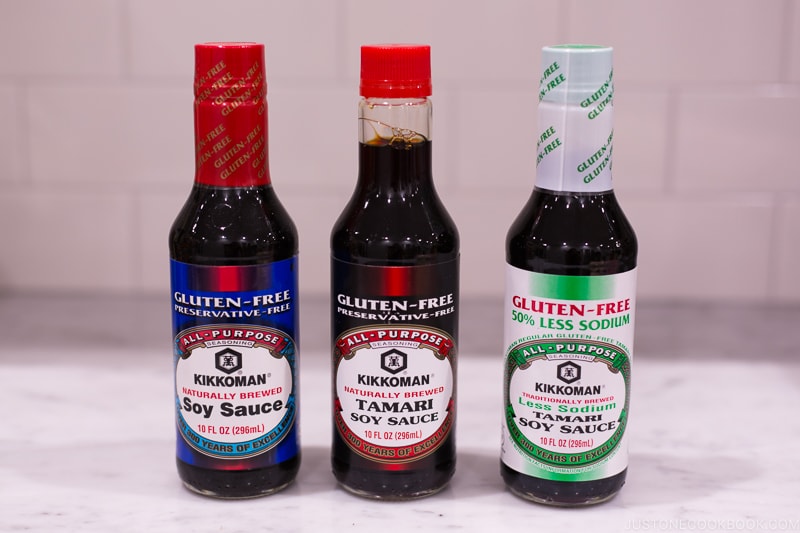
Fried rice cooked with Kikkoman®’s soy sauce adds a distinctly savory aroma, which lasts longer than other soy sauces. If you pack this fried rice in your children’s bento or your bring-to-work lunch box, you will get to enjoy the fried rice several hours later.
If you do not have to make this recipe gluten-free, feel free to use regular soy sauce (I use Kikkoman® Organic Soy Sauce).
Common Ingredients for Japanese Fried Rice
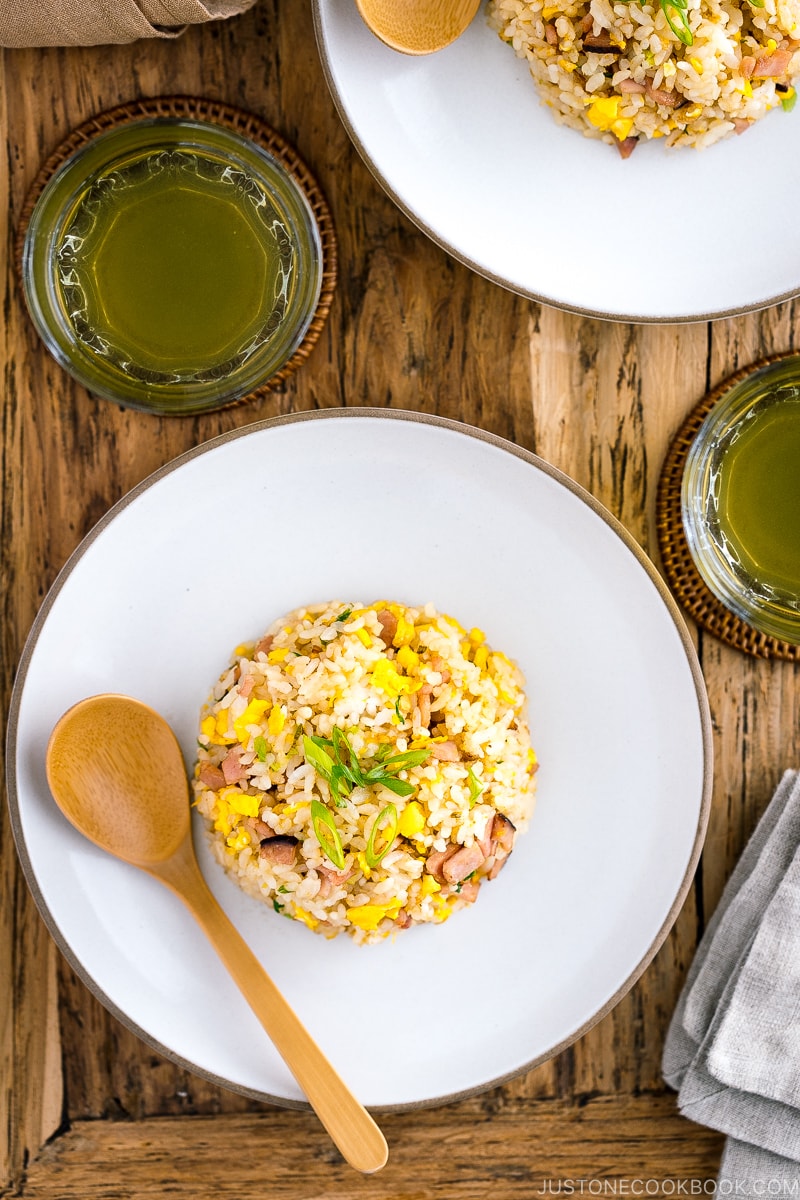
For the most basic yakimeshi, we use Japanese short-grain rice, eggs, and ham, and garnish with green onion. However, fried rice is all about infinite possibilities! So you can use my basic yakimeshi recipe and customize it to your liking. I listed some common ingredients for Japanese fried rice below, but you can use whatever you have in the fridge. Keep your concoction simple. 3-4 ingredients will suffice.
- Chashu pork belly (See Chashu Fried Rice)
- Chicken
- Chinese sausage
- Crab
- Edamame
- Eggs
- Green onion
- Green peas
- Ground pork
- Ham
- Iceberg lettuce (my favorite!)
- Kimchi (see Kimchi Fried Rice)
- Salmon (see Salmon Fried Rice)
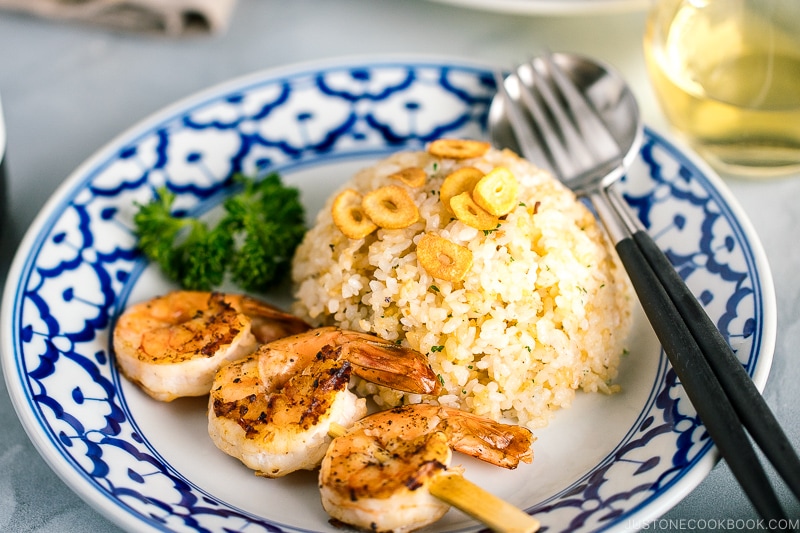
- Shrimp (see Shrimp Fried Rice)
- Takana (see Pickled Mustard Greens Fried Rice (Takana Chahan))
FAQs
What is the difference between yakimeshi and chahan?
Yakimeshi and chahan are both Japanese fried rice. Yakimeshi (used in Osaka) is seasoned with regular soy sauce and the eggs are often added after the rice. Chahan (used in Tokyo) is Chinese-inspired, seasoned mainly with salt, and with eggs cooked first. The terms are often used interchangeably.
What is the best rice for Japanese fried rice?
Japanese short-grain rice is essential for yakimeshi. It has a plump, slightly sticky texture that gives this Japanese fried rice recipe its signature chew. Day-old rice works best because excess moisture has evaporated, helping the grains fry evenly without becoming mushy.
Can I make Japanese fried rice without a wok?
Yes! A large, heavy frying pan or skillet works well. The key is to use a pan with enough surface area so the rice has room to move and make contact with the heat, rather than steaming in a pile. A stainless steel pan may require a little extra oil to prevent sticking. Cast iron works well too, as long as it’s well-seasoned. Avoid small or shallow pans where the rice will clump and steam instead of fry.
How do you keep Japanese fried rice from getting soggy?
Use day-old cooled rice, keep ingredients simple, and cook over medium-high heat in a spacious pan for the basic yakimeshi recipe. Avoid overcrowding, and evaporate the moisture from the ingredients before seasoning. Enough oil is also key to heating evenly.
Other Popular Japanese Rice Dishes
Wish to learn more about Japanese cooking? Sign up for our free newsletter to receive cooking tips & recipe updates! And stay in touch with me on Facebook, Pinterest, YouTube, and Instagram.
Easy Japanese Fried Rice (Yakimeshi)
Ingredients
- 2 servings cooked Japanese short-grain rice (1¾ cups, 12 oz; cooled and preferably day old; see below to use freshly cooked rice)
- 1 large egg (50 g w/o shell)
- 2 slices ham
- 1 green onion/scallion
- 2 tsp soy sauce (I use Kikkoman® Gluten Free Tamari Soy Sauce)
- ⅛ tsp white pepper powder (a must-have for my fried rice!)
- ½ tsp Diamond Crystal kosher salt
- 2 Tbsp neutral oil (divided)
Instructions
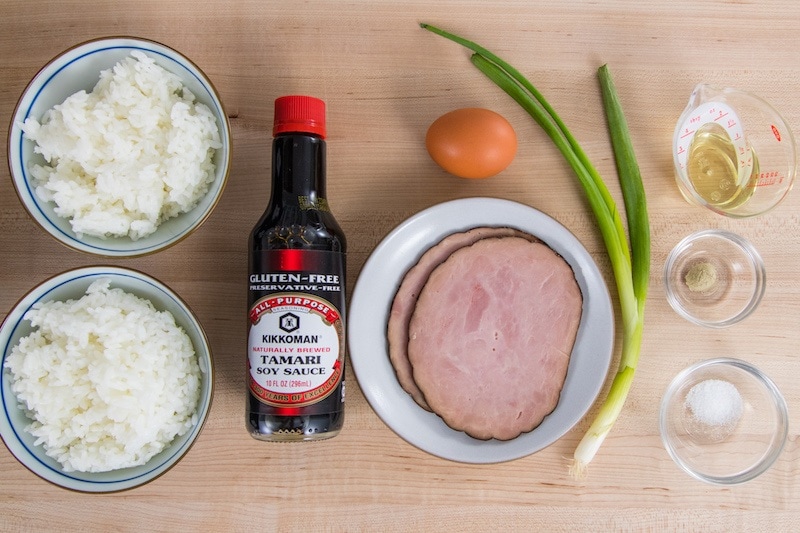
- Gather all the ingredients. If you haven‘t prepared the rice yet, cook 1 rice cooker cup of Japanese short-grain rice and cool it using my instructions in the next step. 1 rice cooker cup (180 ml, ¾ US cup, 150 g) of uncooked rice yields roughly 2 servings (1¾ US cups, 330 g) of cooked rice.
To Prepare the Ingredients
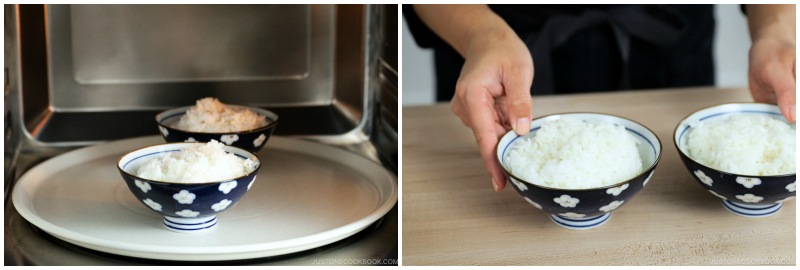
- Remove your day-old rice (2 servings cooked Japanese short-grain rice) from the refrigerator and heat it in the microwave until it‘s room temperature or slightly warm. If your rice is freshly cooked, spread out the hot rice on a baking sheet and let it cool completely. This will remove the moisture from the rice.
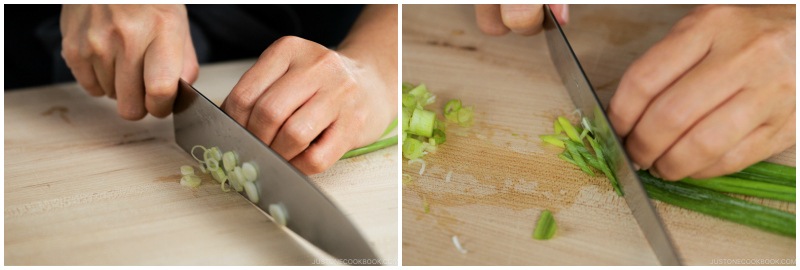
- Cut the white part of 1 green onion/scallion into rounds and the green part diagonally. Keep the white and green parts separate and set aside. Reserve a few green slices for garnish.
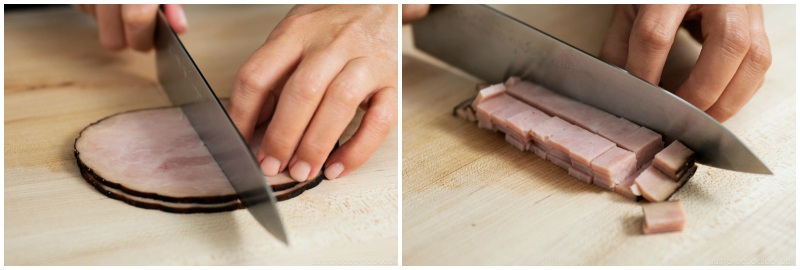
- Dice 2 slices ham into square pieces ½ inch (1.3 cm) wide.
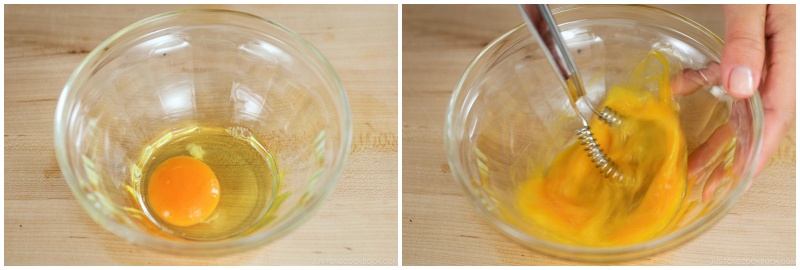
- Crack and whisk 1 large egg (50 g w/o shell) in a bowl.
To Cook the Fried Rice
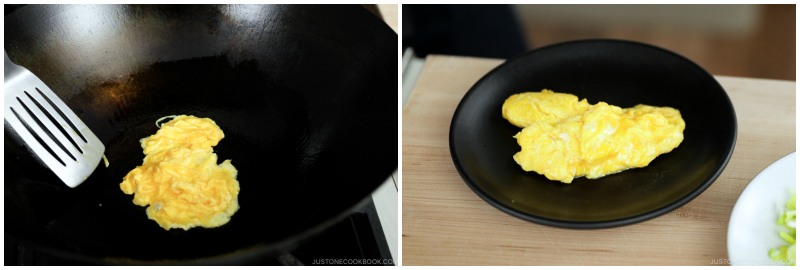
- Make sure all the ingredients are prepped and ready to go, as this dish cooks quickly. Heat the wok (or a large frying pan) on medium-high heat. Once hot, add half of the 2 Tbsp neutral oil and swirl it around to coat the wok's entire surface. Pour in the beaten egg. After a few seconds, the egg will float to the top of the oil.
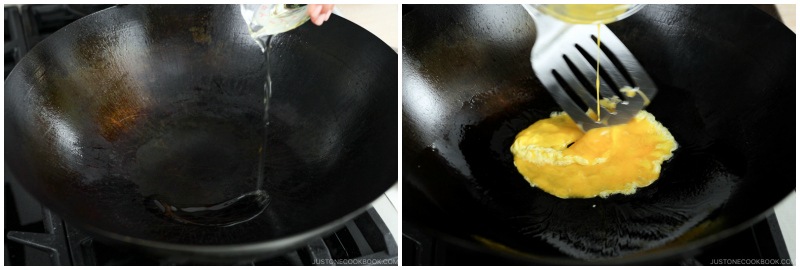
- With the blunt end of a spatula, swirl the loosely set egg around the pan to keep it fluffy while cooking it. When the bottom of the egg is set but the top is still a bit runny, transfer it to a plate. Do not want overcook the egg at this stage.
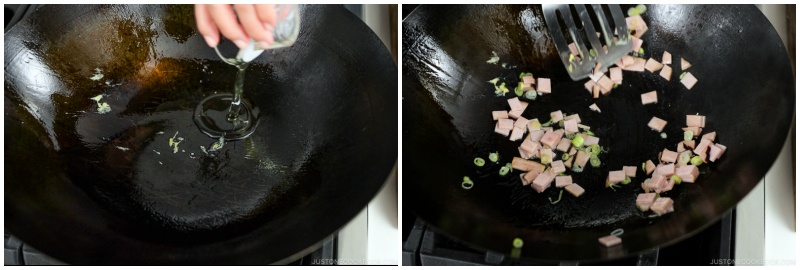
- Add the other half of the oil to the pan. Add the ham and white part of the green onion and stir-fry to coat well with the oil.
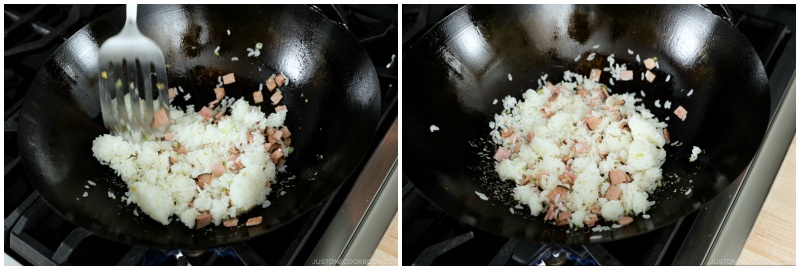
- Add the room-temperature rice to the wok. Separate the rice clumps with the spatula using a slicing motion so you don't mash or break the grains. Combine the rice and ham, tossing to coat the rice with oil so it develops a nice char.
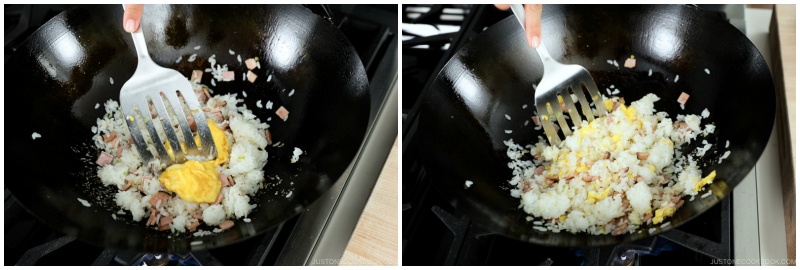
- Add the egg back to the wok and break it into smaller pieces as you toss it with the rice. If some of the rice sticks to the wok (it happens when there‘s not enough oil), you can scrape it off easily if you‘re using a well-seasoned or nonstick wok. This creates a charred flavor. You may need to add more oil with a stainless steel pan, as the rice tends to stick more.
- Season with ½ tsp Diamond Crystal kosher salt and ⅛ tsp white pepper powder.
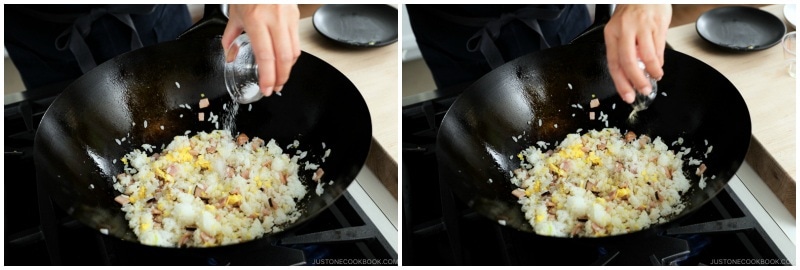
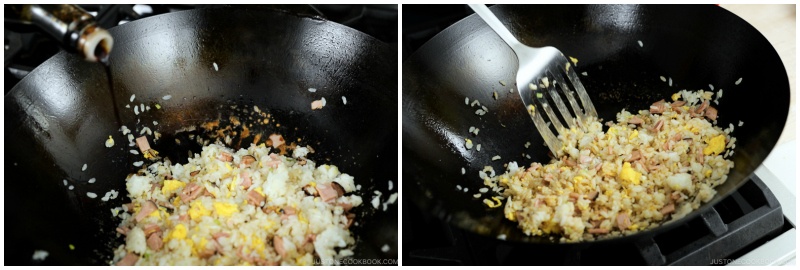
- Add 2 tsp soy sauce and toss to distribute it throughout the rice. Continuously turn and toss the fried rice in the air to keep it from clumping (otherwise, it may become a sticky mass at the bottom of the wok). This key action also develops a smoky flavor.
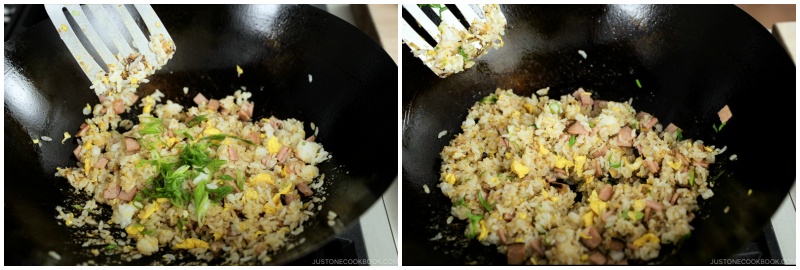
- Add the green part of the chopped scallion. Taste the fried rice and adjust the seasoning if needed. After tossing the rice in the air a few more times, transfer it to a plate.
To Serve
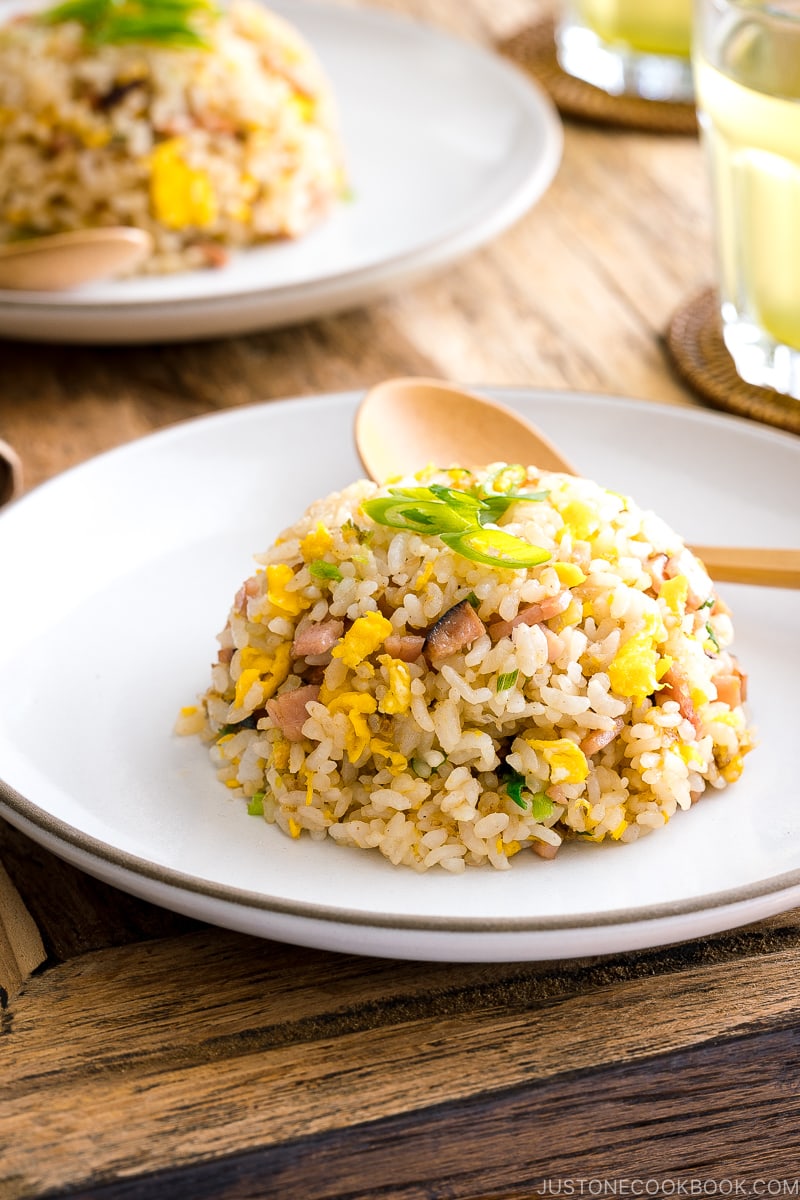
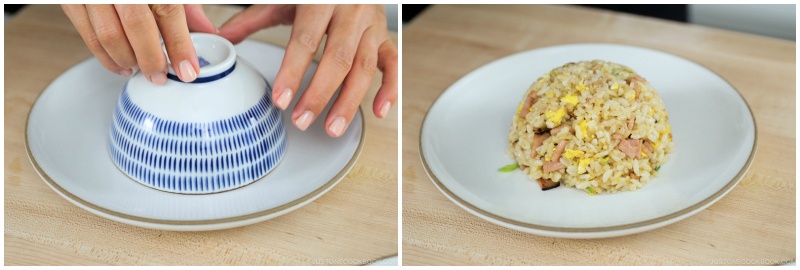
- Fried rice at Chinese restaurants in Japan is often served in a dome shape. To serve it this way, fill a rice bowl with the fried rice, pat it down lightly to compact it, and invert it onto a plate. Repeat for the other plate. Sprinkle the reserved sliced green onion on top, and serve.
To Store
- You can store the leftovers in an airtight container and keep in the refrigerator for up to 2 days and in the freezer for up to a month.
Nutrition
Did you make this recipe?
Tag @justonecookbook on Instagram so we can see your delicious creation!
Editor’s Note: This post was originally published on November 16, 2018. The post has been updated with more information and republished in March 2022.