
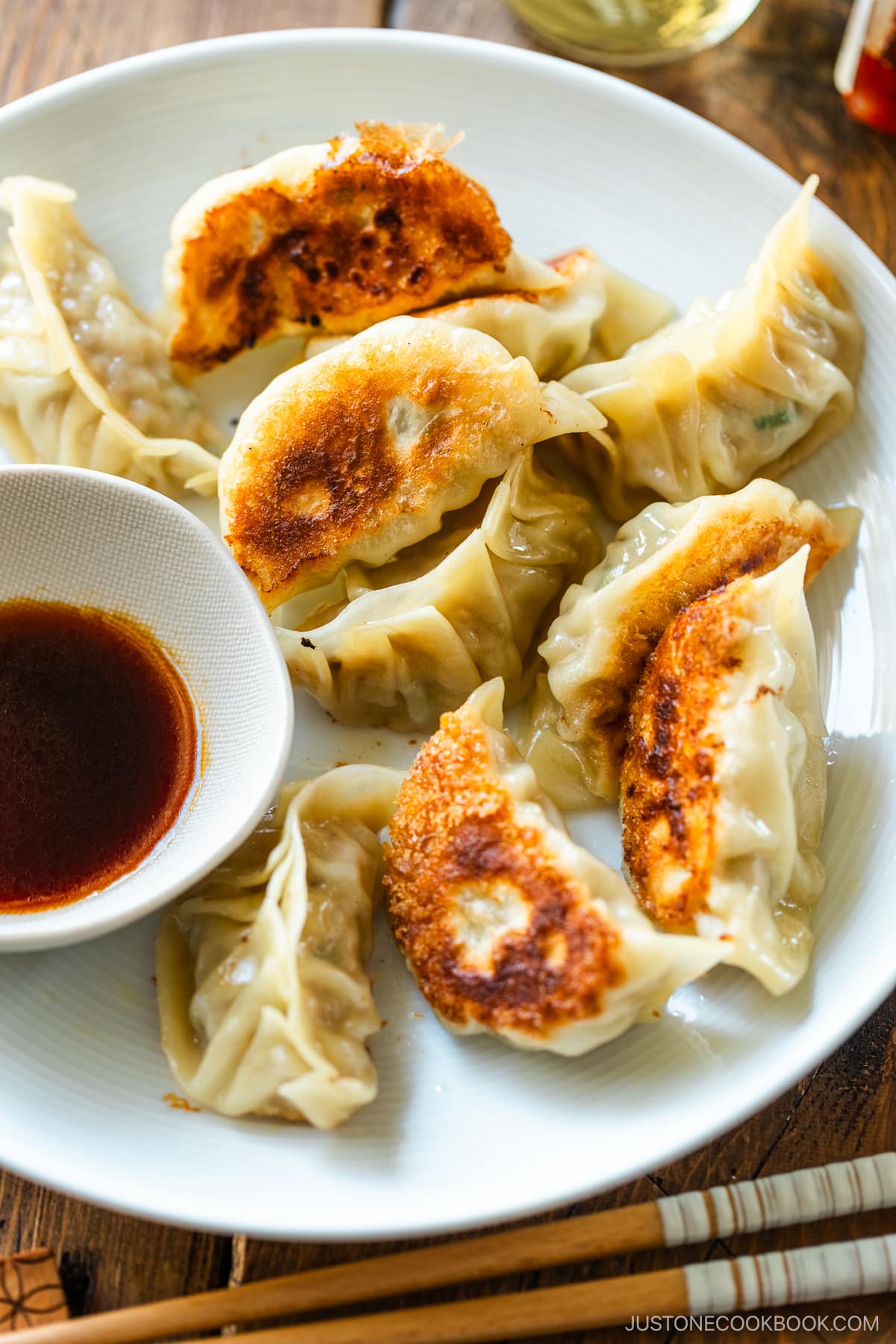
I’ve been making gyoza (餃子) since middle school, and it’s one of the dinner menu items that my mom and I often prepared together. We stood in the kitchen and folded countless gyoza while talking about life. Looking back, it’s such a comforting memory for me. With the tips I share in today’s Gyoza recipe, you can start making these Japanese pan-fried dumplings at home and create your own delicious and happy memories, too!
What is Gyoza?
Gyoza are the Japanese version of Chinese dumplings called jiaozi (餃子). When World War II ended and Japanese settlers returned from Manchuria, they brought back a taste for northern Chinese cuisine. To make a living, returnees set up food stalls where they sold gyoza—a word derived from the northern Mandarin dialect. This popular dumpling was smaller with a finer filling and thinner wrapper than the Chinese potsticker. These juicy and crispy gyoza quickly caught on in Japanese home cooking as an inexpensive, nutritious, easy-to-make, and undeniably delicious dish.
If you love Japanese pan-fried dumplings, try my Vegetable Gyoza (vegan/vegetarian), Gyoza with Wings (Hanetsuki Gyoza), and Napa Cabbage Gyoza with Miso Dipping Sauce recipes next!
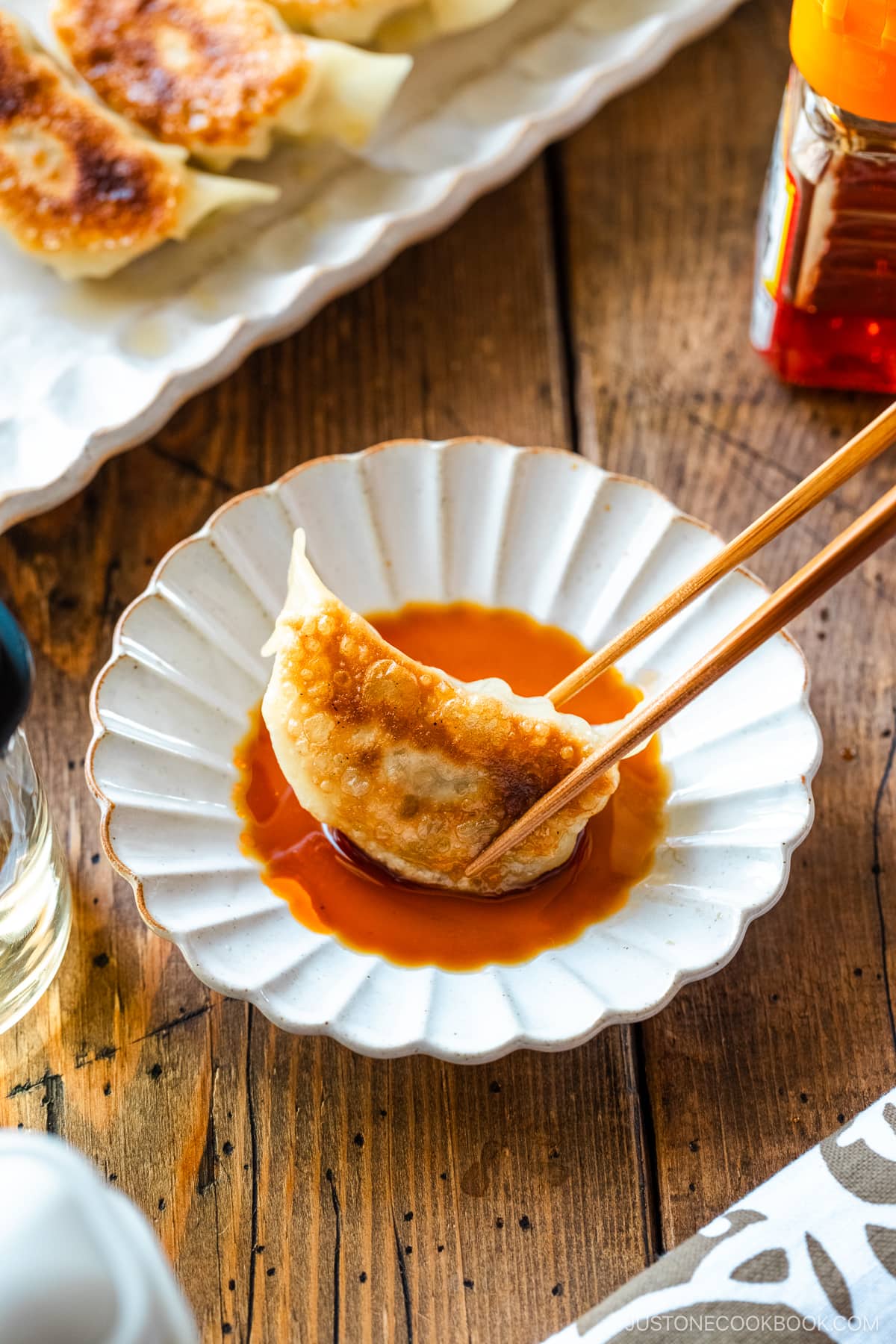
Why I Love This Recipe
You can find these mouthwatering dumplings on the menu practically everywhere in Japan—at specialty shops, izakaya, ramen shops, grocery stores, and festivals. While store-bought is convenient, you can’t beat the taste and texture of homemade gyoza.
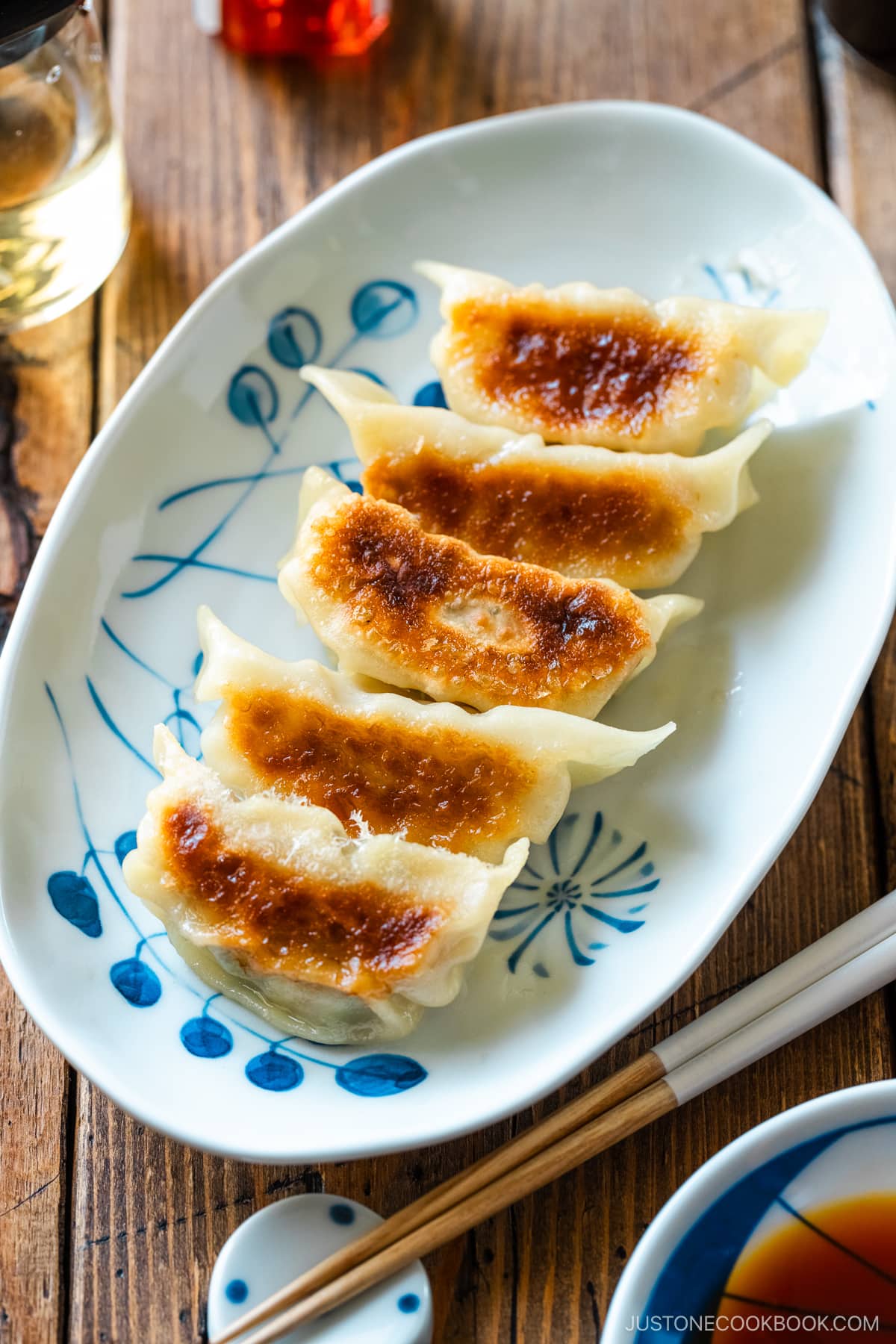
- The best combination of textures – They’re juicy and tender inside, yet crispy on the bottom. So delicious!
- Satisfying and nutritious – These tasty little parcels have protein, vegetables, and carbs all in one bite. They’re hard to stop eating, especially when dipped in your favorite sauce!
- Step-by-step folding instructions with photos and video – Folding these dumplings may seem intimidating, but it’s easy to do with a little practice. I guide you with photos at each step of the process. I show you how it’s done in my video, too.
- Fun to make with friends and family – Throw a gyoza-making party! Gyoza taste even better when you involve family or friends in folding them together. Part of the fun of making homemade gyoza is the process.
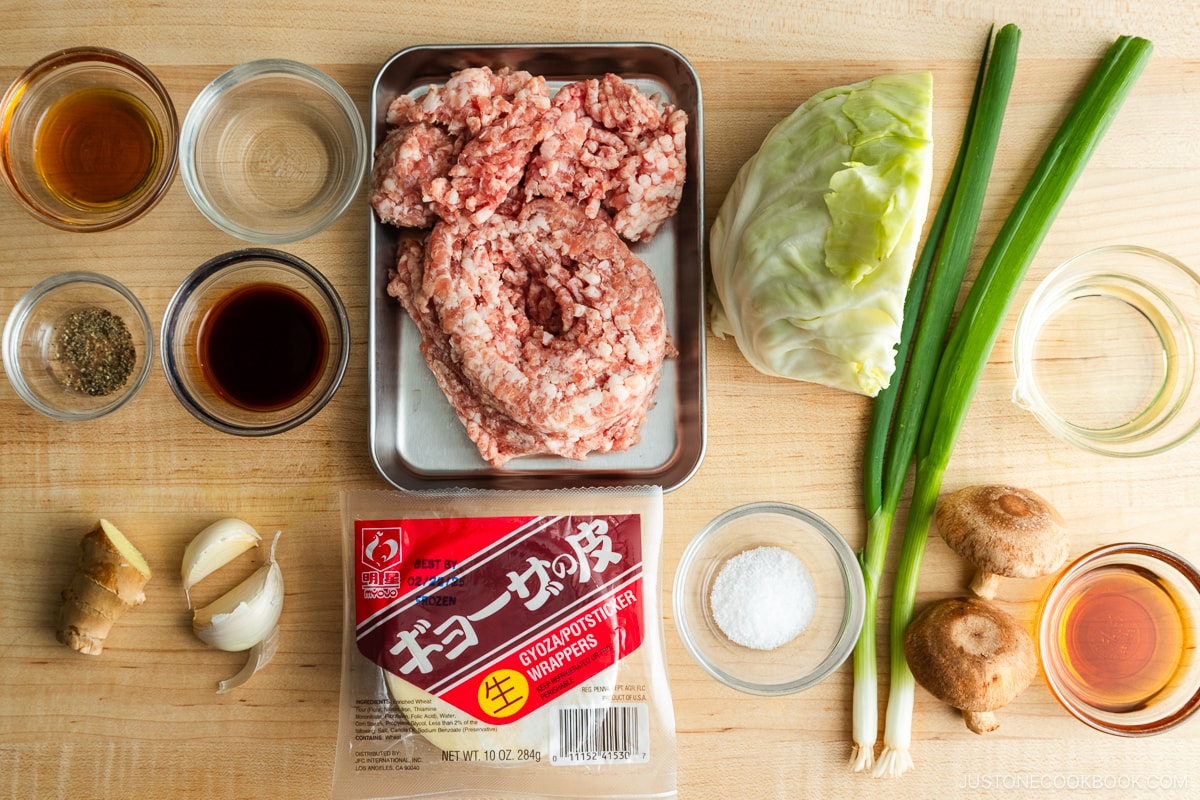
Ingredients for Gyoza
- Gyoza wrappers
- Ground pork
- Green cabbage
- Kosher salt – for wilting the cabbage
- Green onions/scallions
- Fresh shiitake mushrooms
- Garlic
- Ginger
- Sake
- Toasted sesame oil
- Soy sauce
- Freshly ground black pepper
- Neutral oil, water, and toasted sesame oil – for cooking
- Dipping sauce:
- Rice vinegar (unseasoned)
- Soy sauce
- La-yu (Japanese chili oil)
Find the printable recipe with measurements below.
Jump to Recipe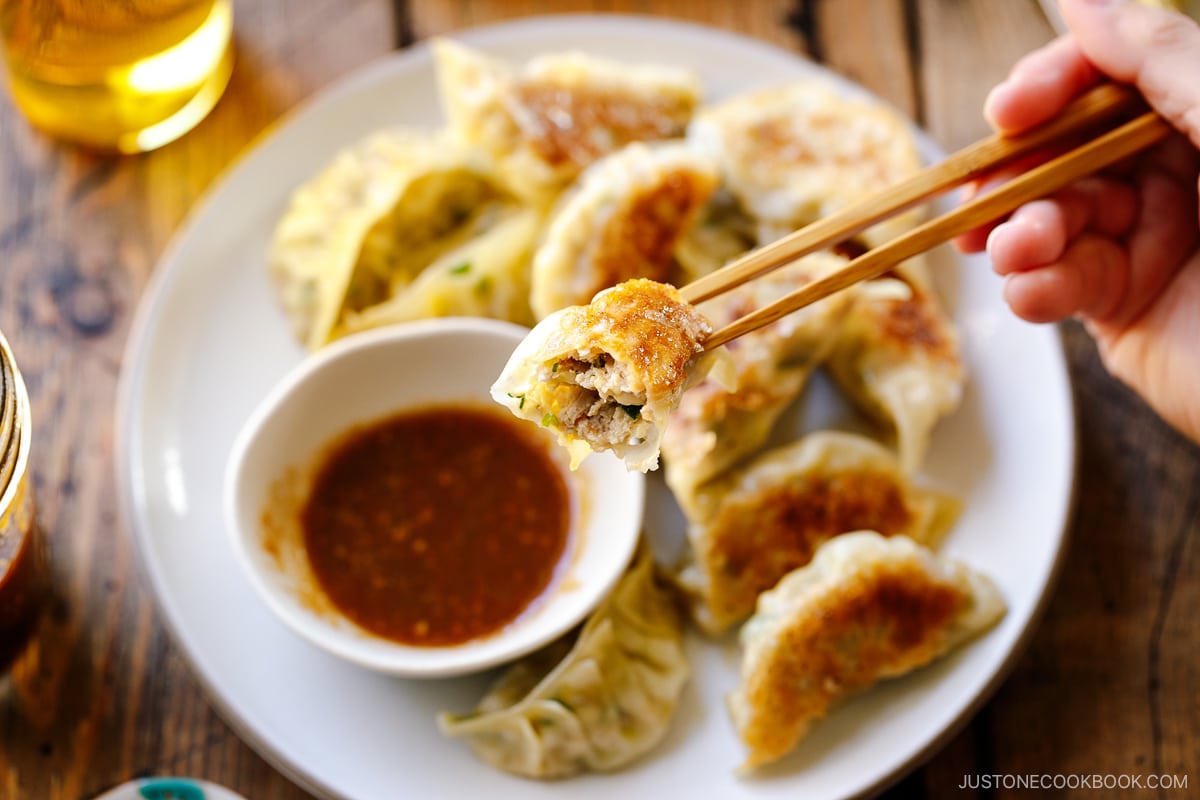
Substitutions
- Green cabbage – We commonly use green cabbage for Japanese gyoza, as opposed to napa cabbage that’s typically used in Chinese potstickers. If you don’t have green cabbage, you can substitute napa cabbage.
- Ground pork – Ground pork is the classic protein for gyoza. If you don’t have it, you can try another protein like ground beef, lamb, turkey, or chicken. You can also substitute with tofu and/or mushrooms for a plant-based option.
- Sake – Besides adding umami, sake helps remove unwanted smells from the meat/seafood. Alcohol evaporation takes away the pork’s gamey smell. If you don’t consume alcohol, simply omit it since the garlic and ginger in this recipe help to remove the unwanted odor.
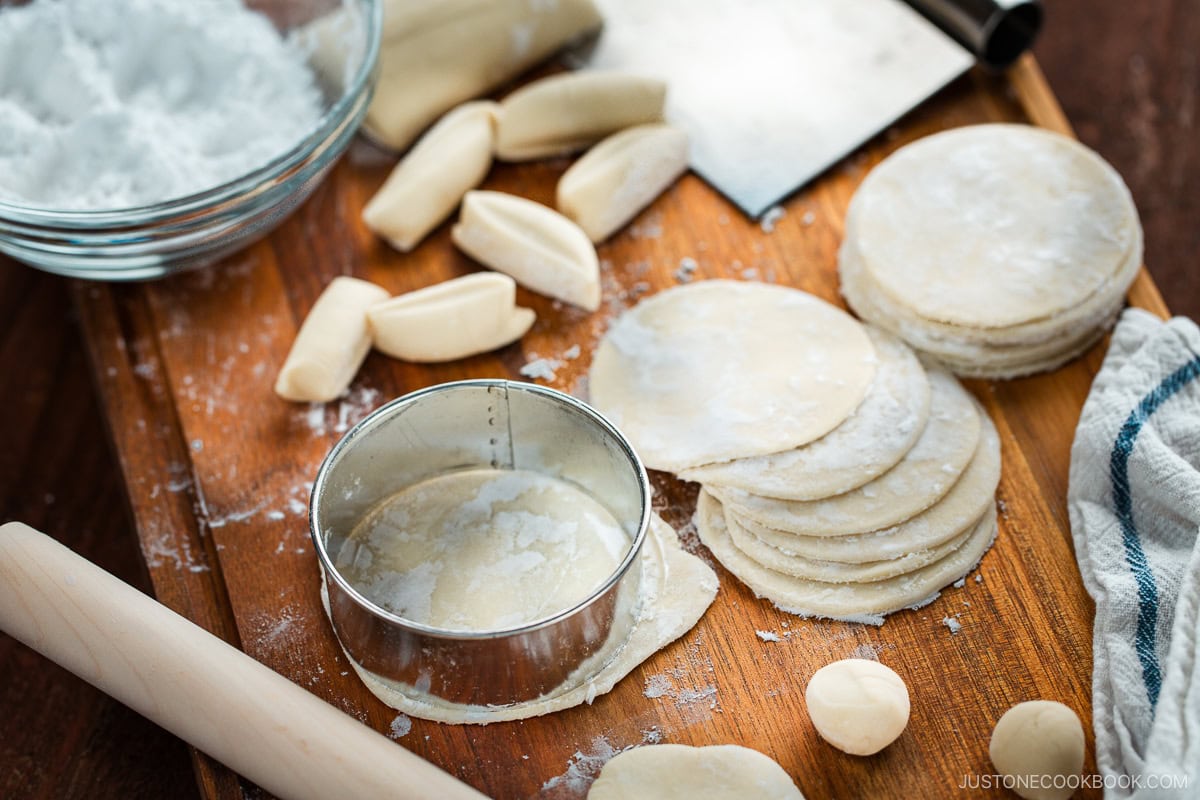
- Gyoza wrappers – I recommend a Japanese brand like Myojo (my go-to) since the dough is thinner than Chinese wrappers. You can find them in Japanese or Asian grocery stores. If you have time, I highly encourage you to make the wrappers from scratch with flour, salt, and water! You can see my detailed tutorial with video instructions in my post How To Make Homemade Gyoza Wrappers.
How to Make Gyoza
Preparation
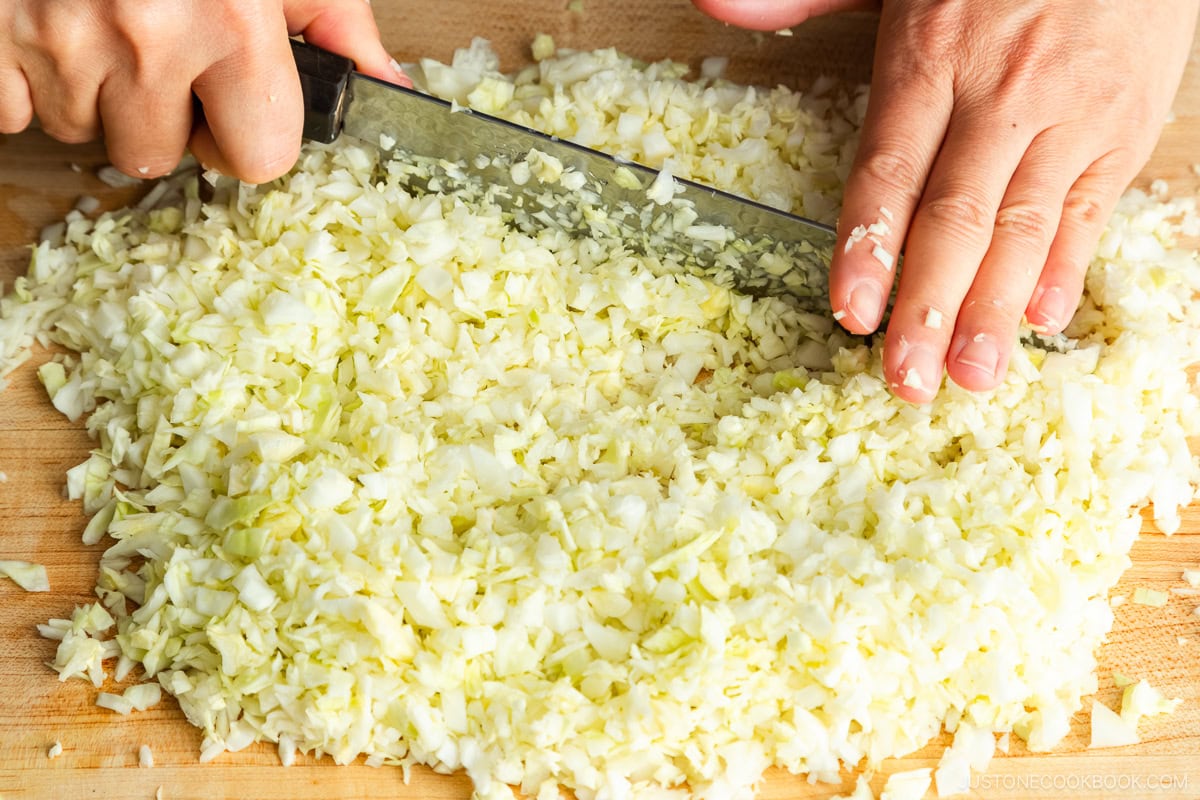
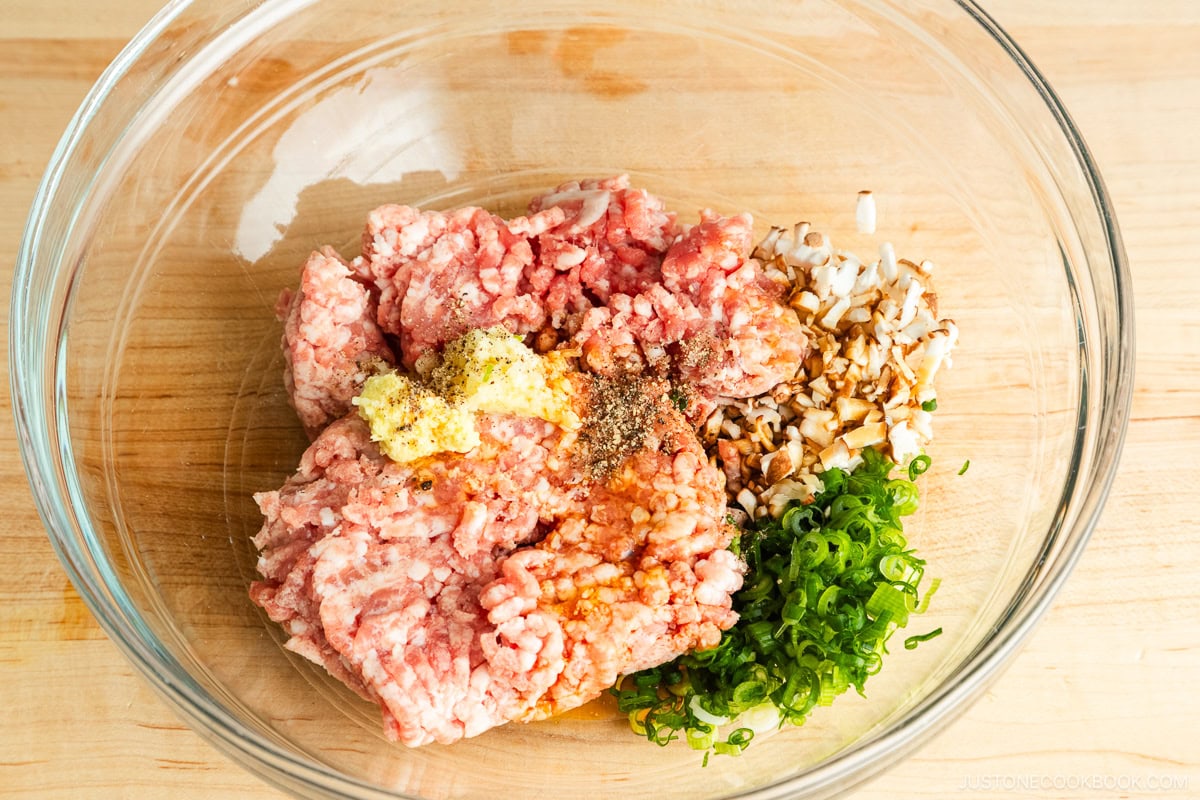
Step 1 – Prep the filling ingredients. Finely chop the cabbage and rub with kosher salt, then set aside to wilt. Mince the other vegetables and mushrooms and add to a large bowl with the ground pork and seasonings.
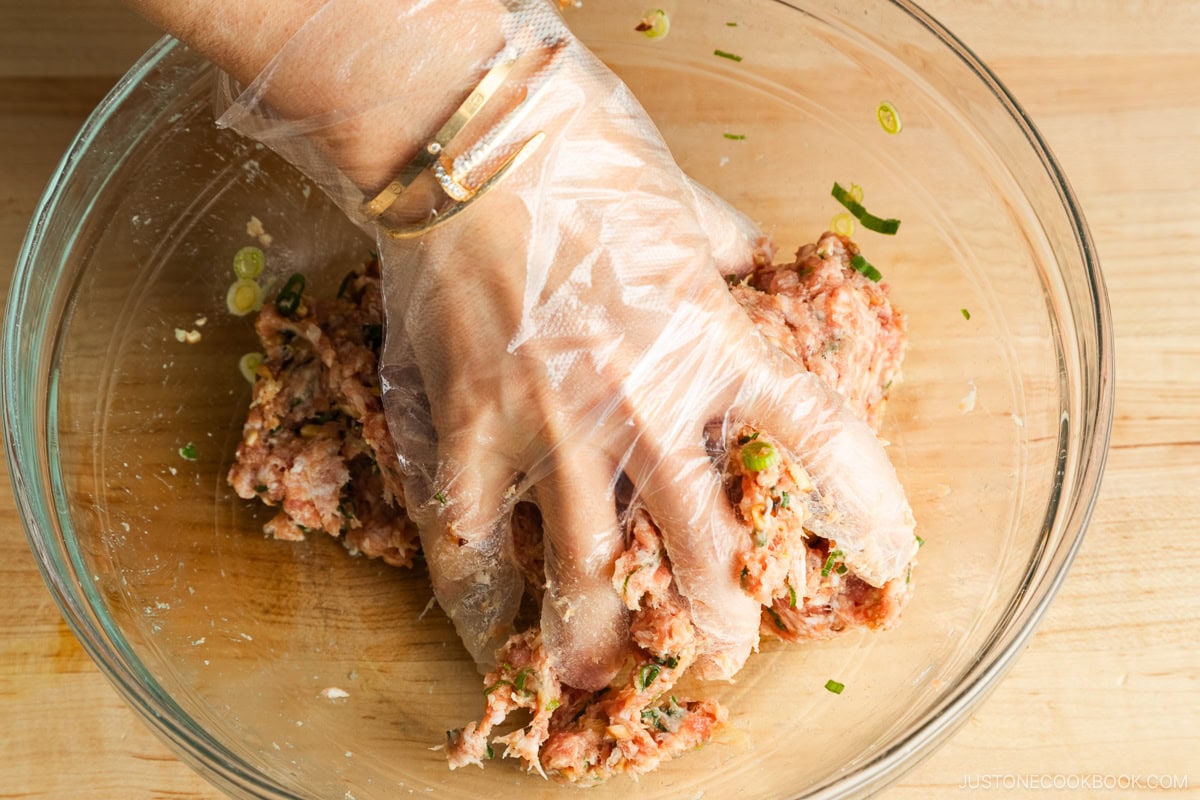
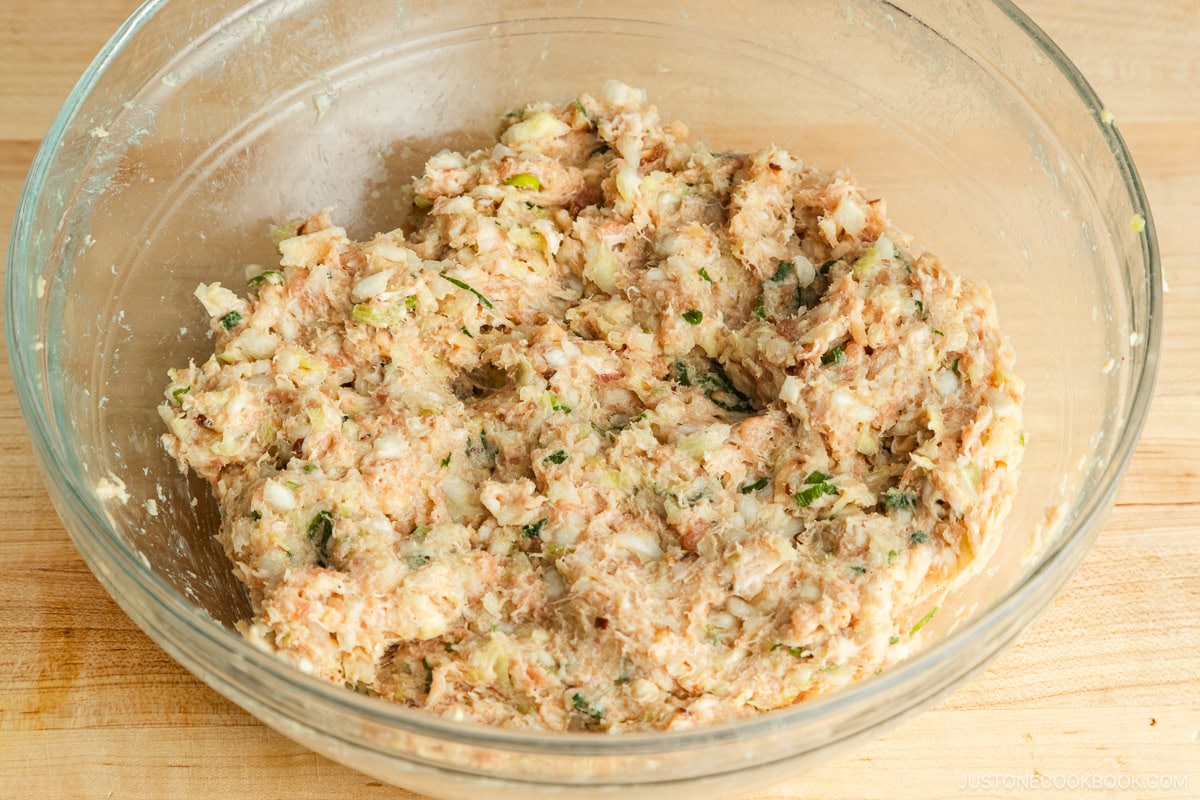
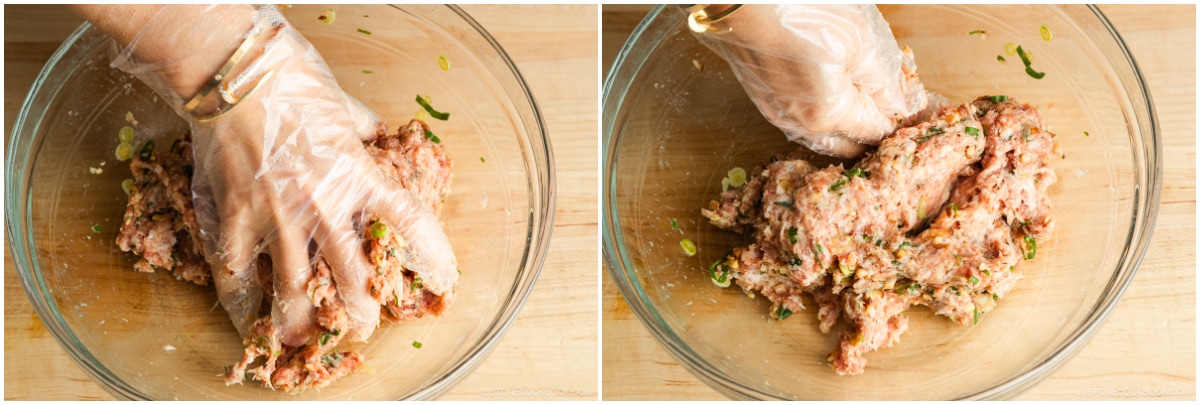
Step 2 – Knead the meat mixture. Mix well and knead the mixture with your hand (I wear plastic disposable gloves) until it becomes sticky and pale in color. Squeeze out the water from the cabbage, then knead it into the meat to distribute evenly.
Folding
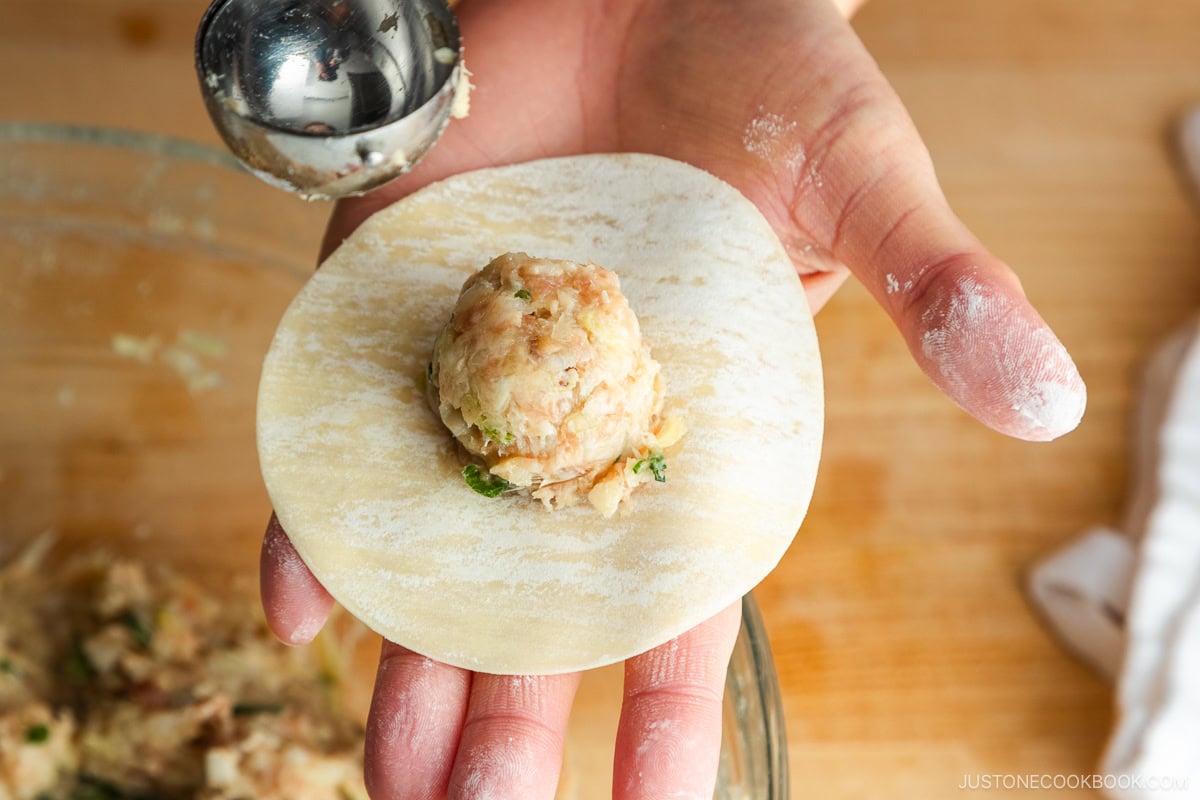
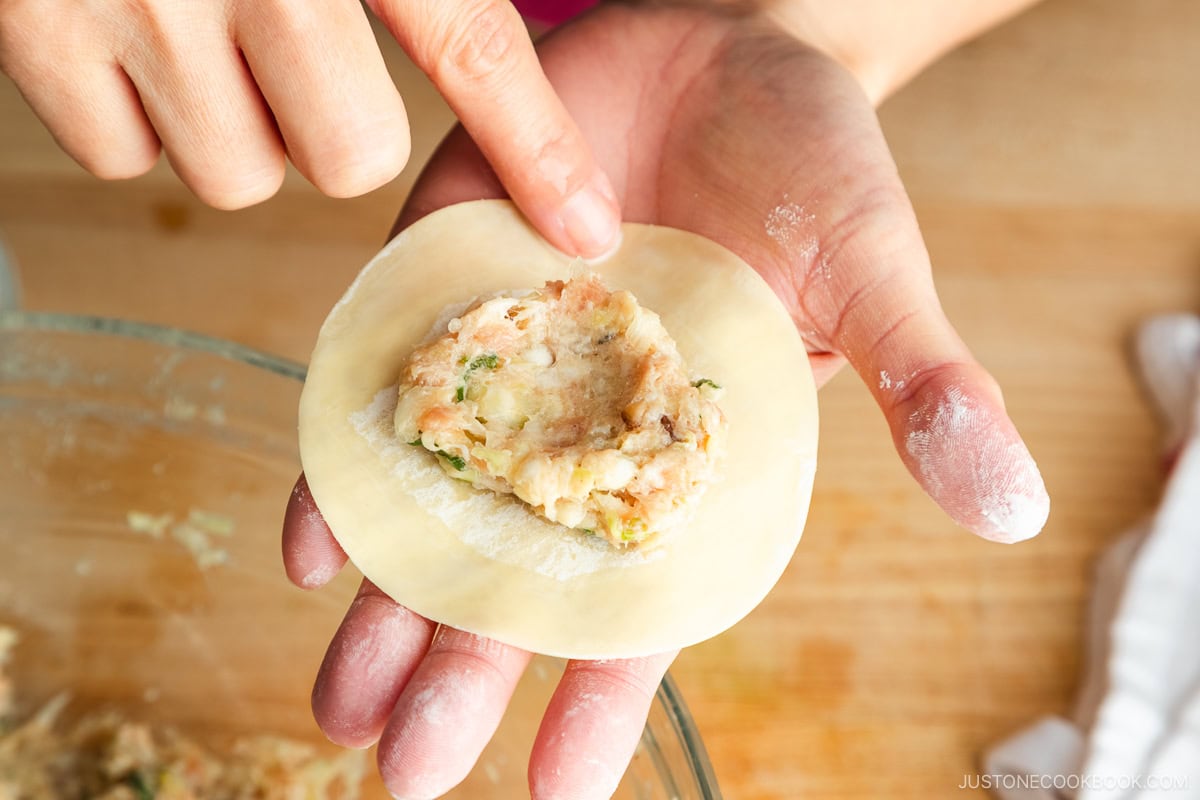
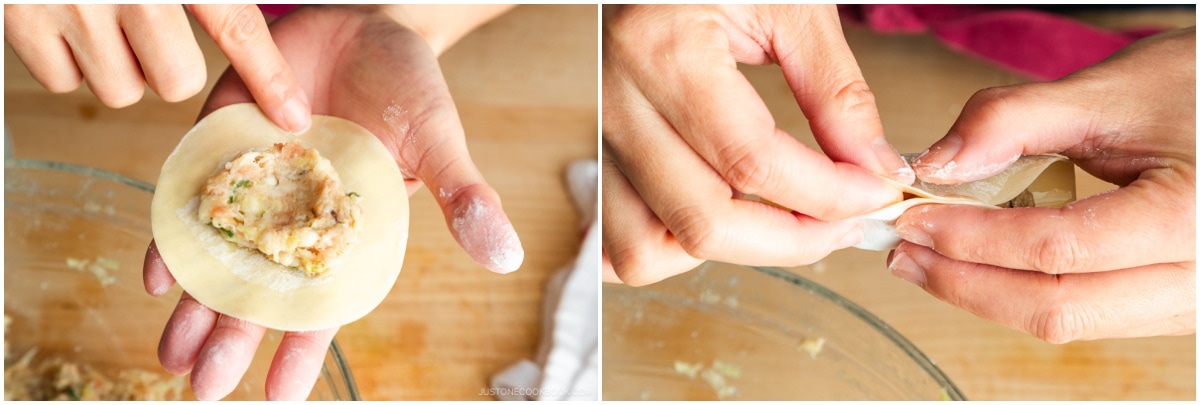
Step 3 – Add the filling to the wrapper. Hold one wrapper in your non-dominant hand and place small amount of filling in the center. Dip one finger in water and moisten a circle around the wrapper’s edge. Fold in half and pinch together at the top center, but don’t seal.
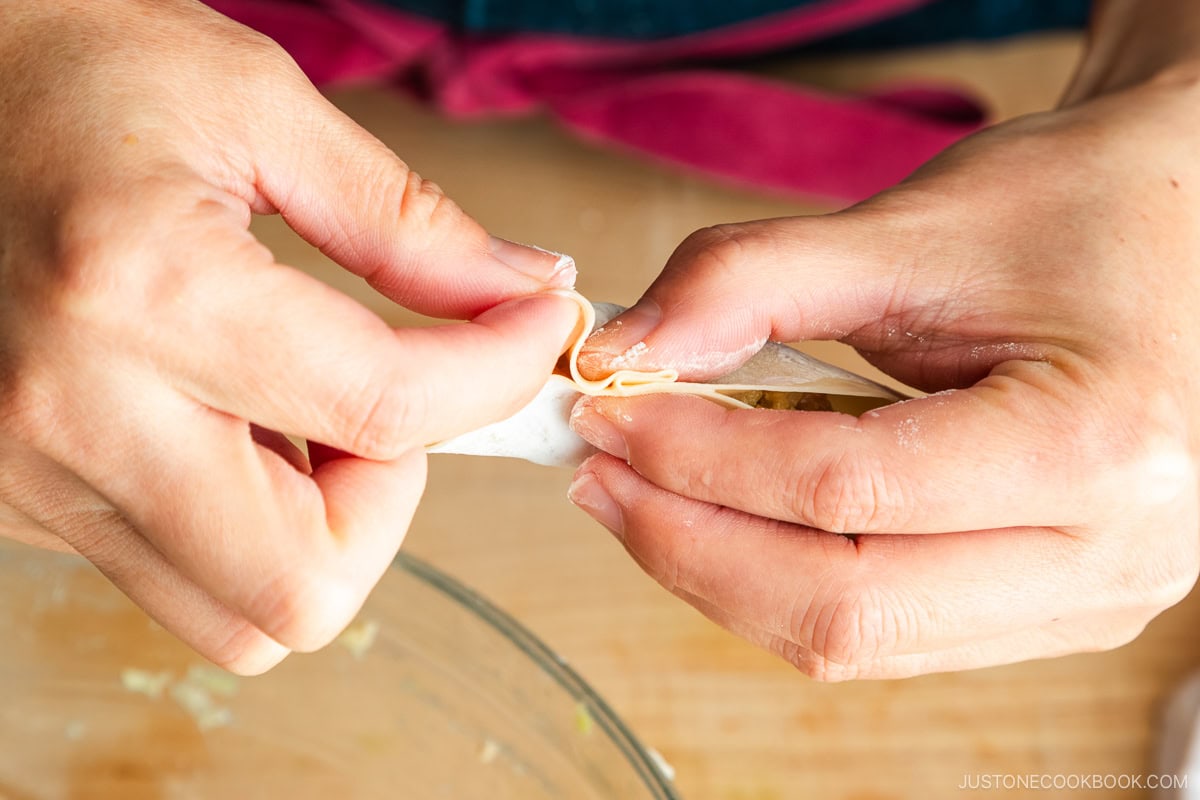
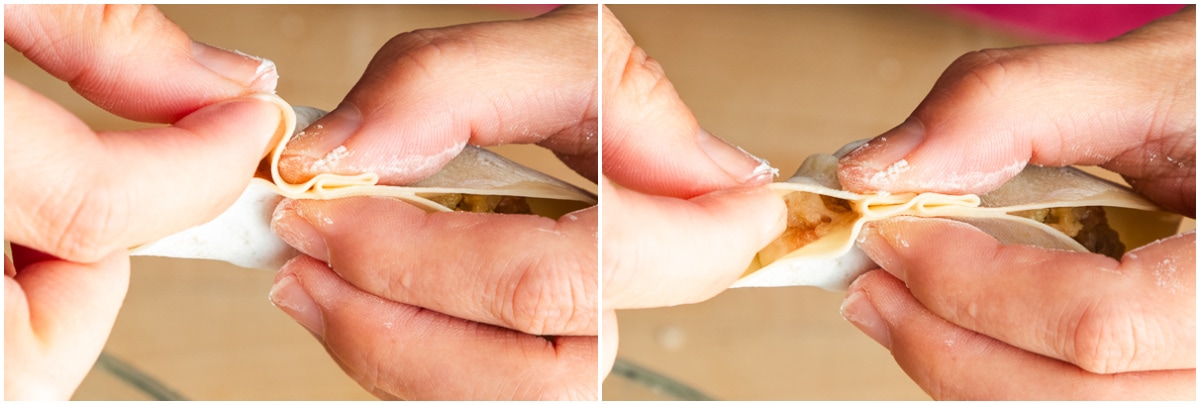
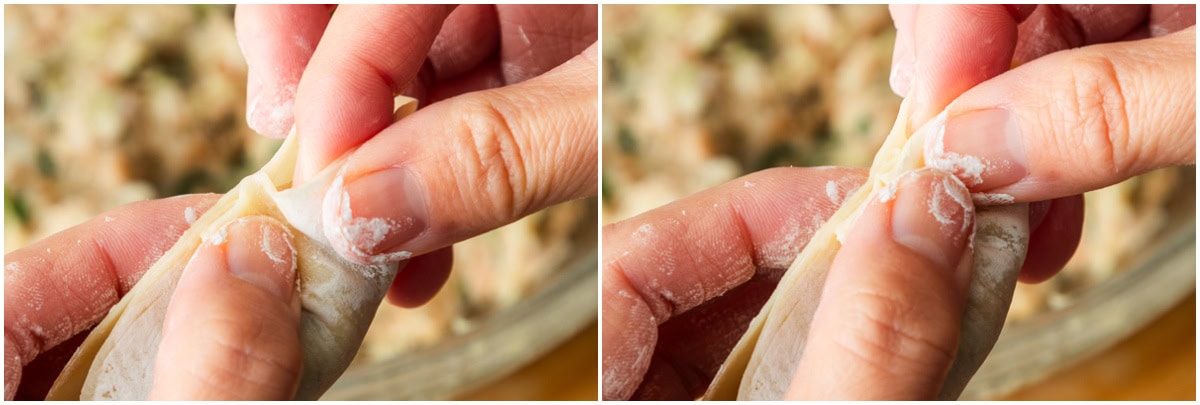
Step 4 – Make pleats leaning toward the center. Starting to the right of top center, fold a pleat that leans toward the top center using your right thumb and index finger. Press it firmly against the back half of the wrapper with your left thumb and index finger. Repeat to make 3–4 pleats total on that side; repeat in reverse on the left side.
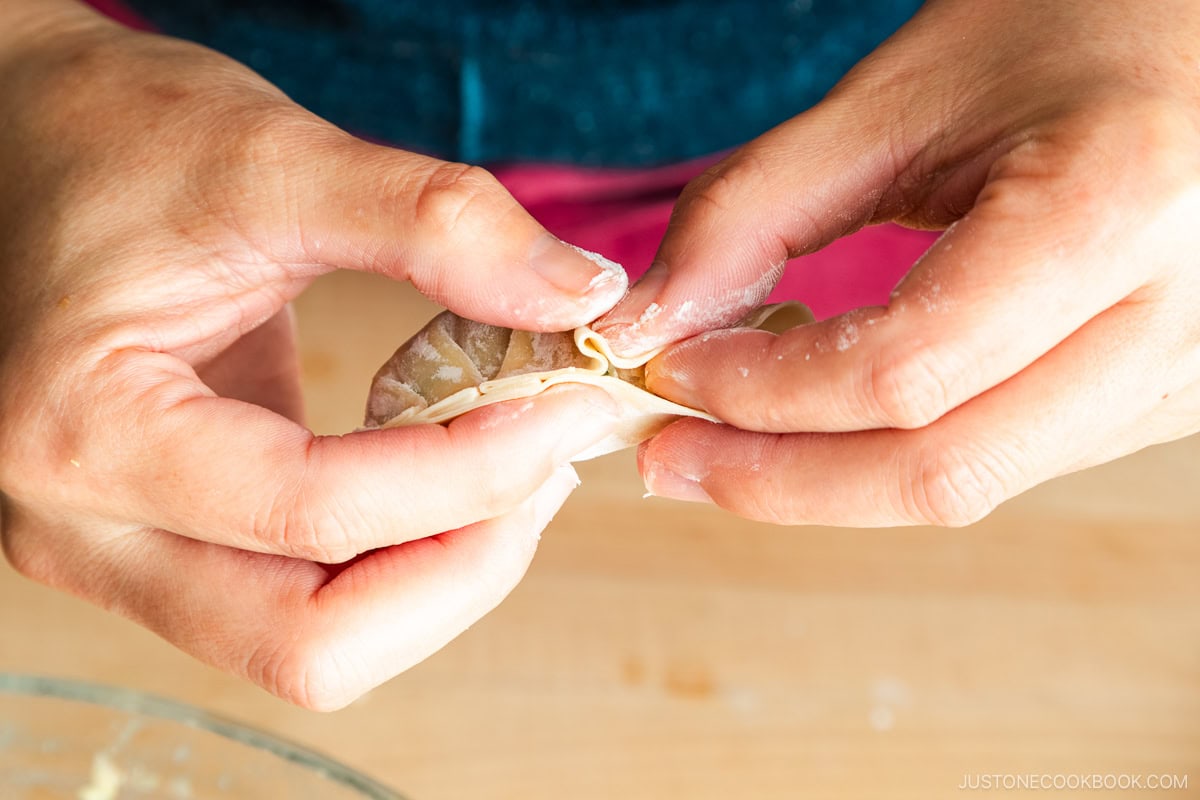
Step 5 – Shape the dumpling. Evenly distribute the filling and shape the gyoza to create a flat side on the bottom.
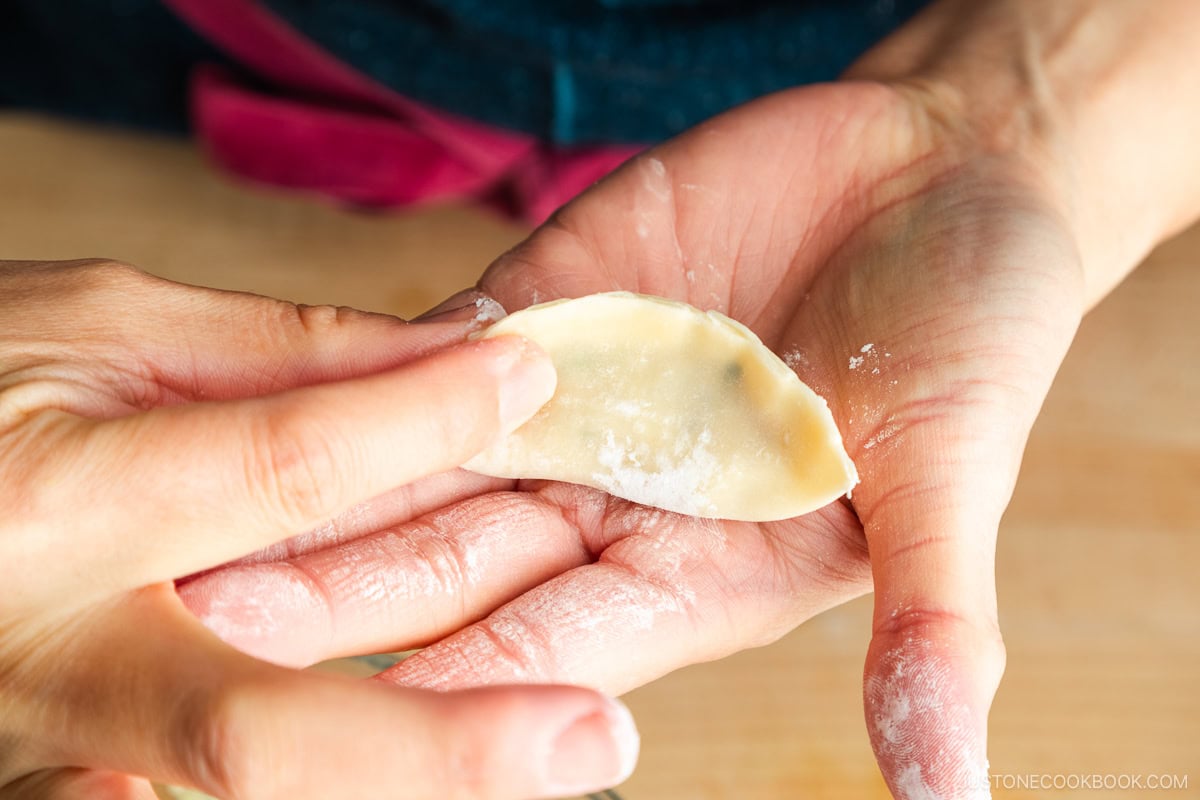
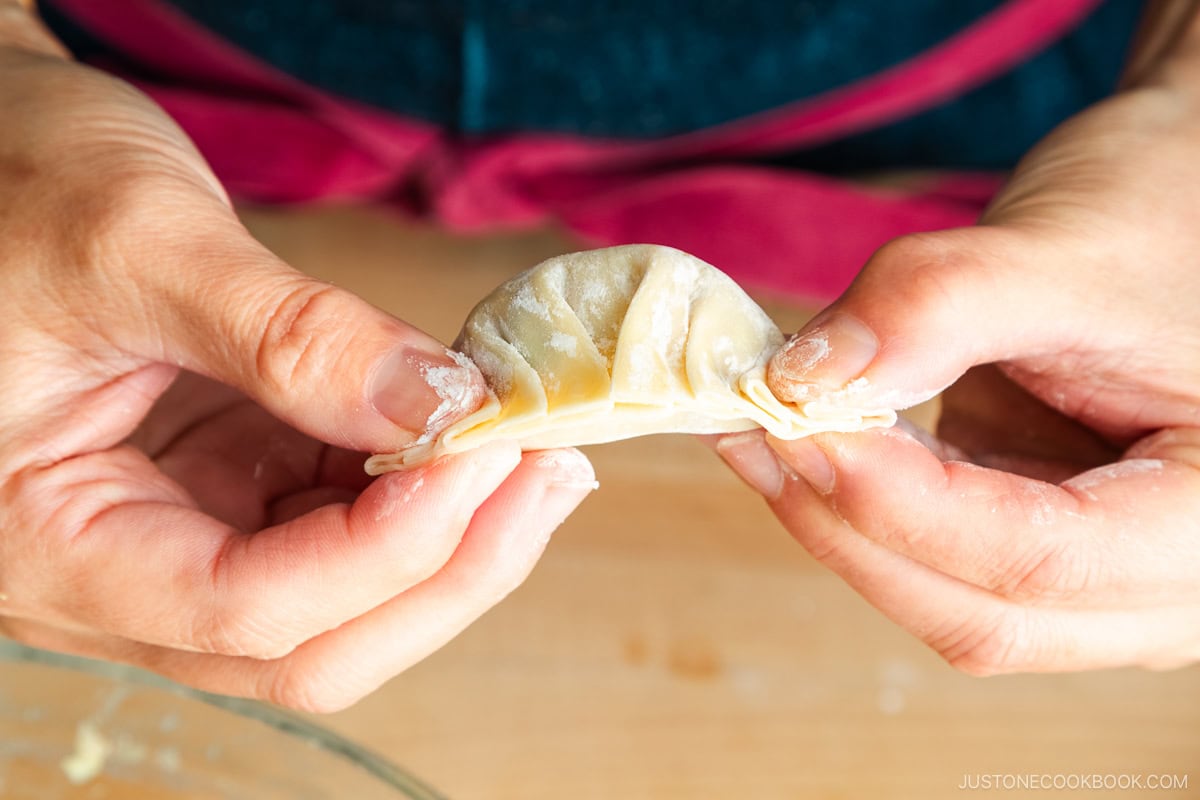
Cooking
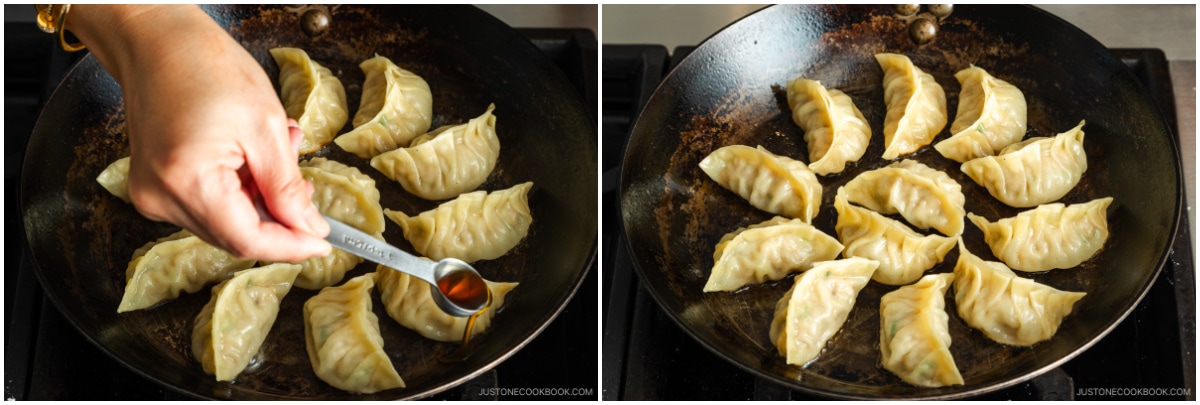
Step 6 – Pan-fry in a nonstick skillet or carbon steel pan. To a hot pan over medium heat, arrange the gyoza single layer in a circular pattern. Leave space between each piece so they don‘t touch. Cook until the bottom of the gyoza turns golden brown, about 3 minutes.
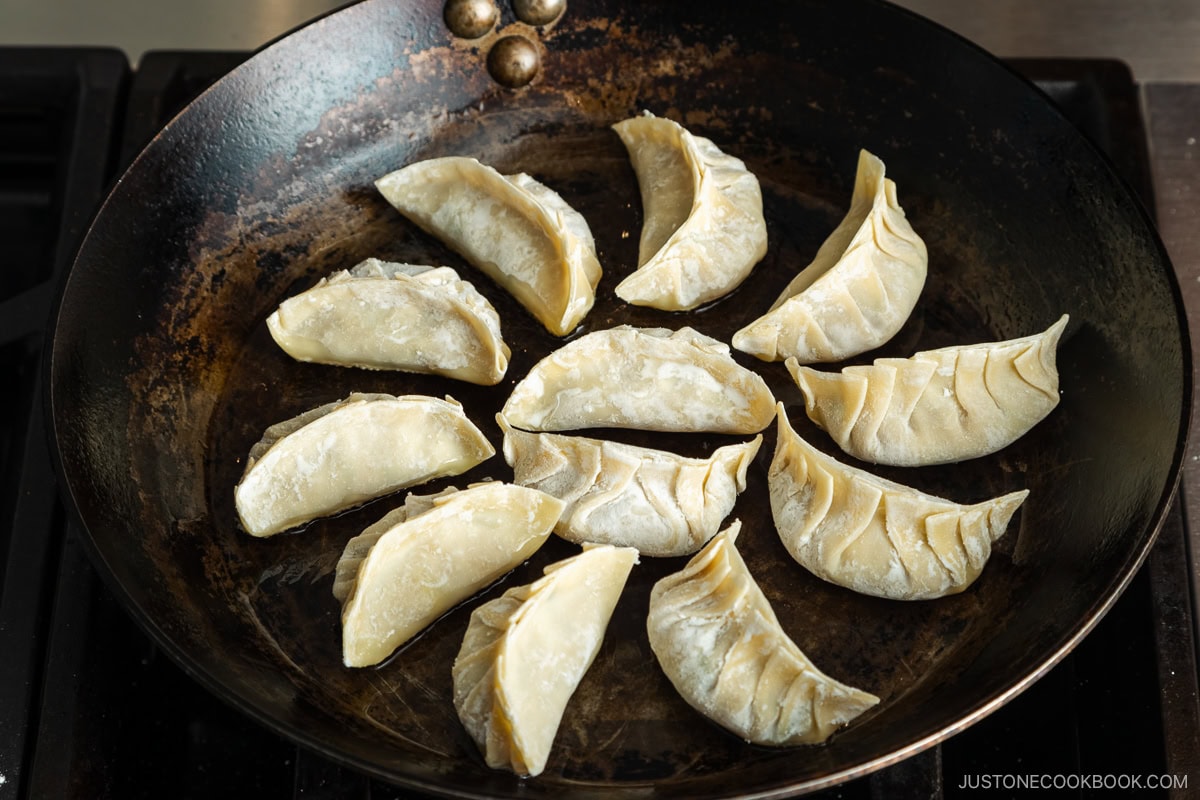
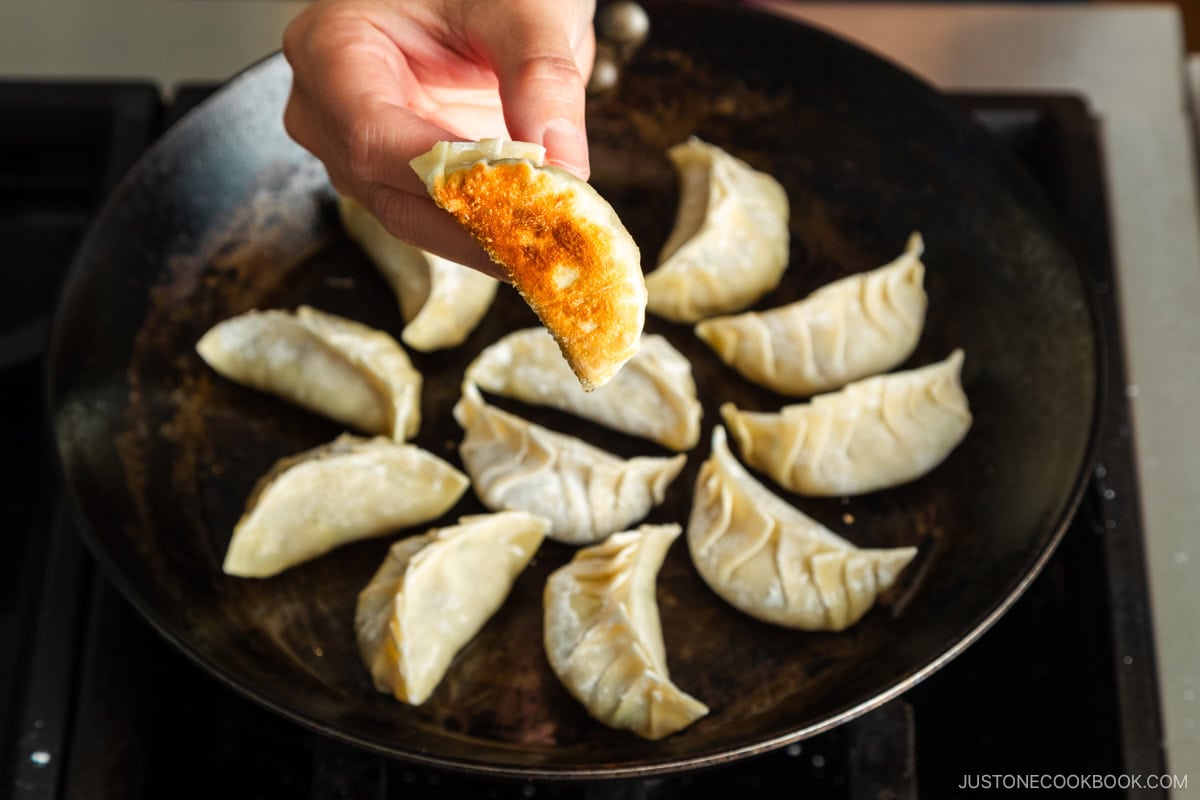
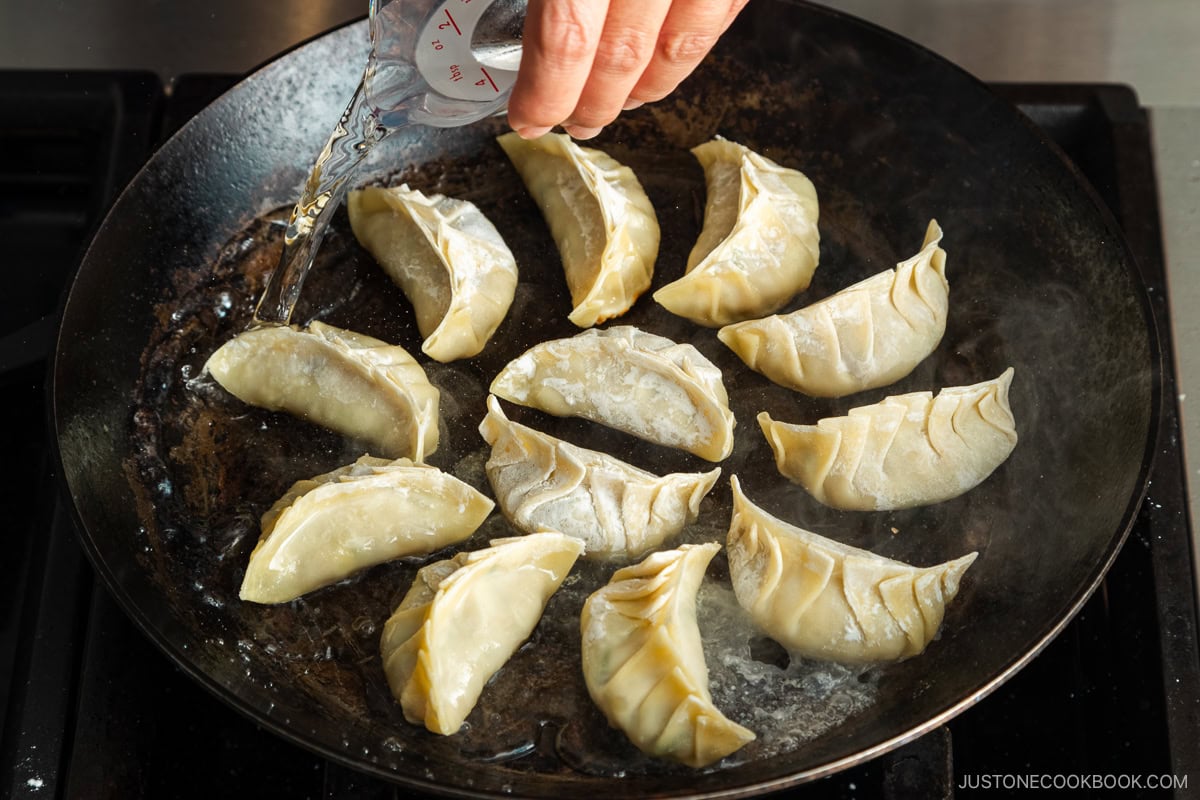
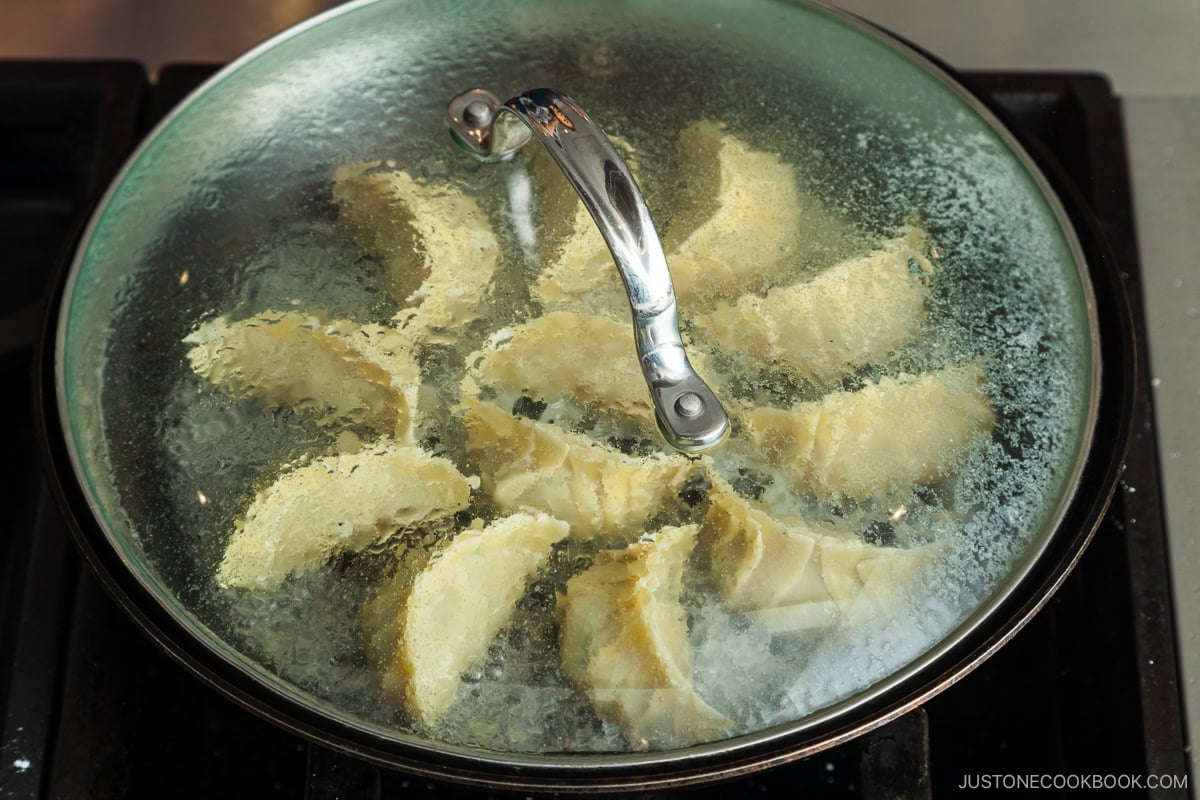
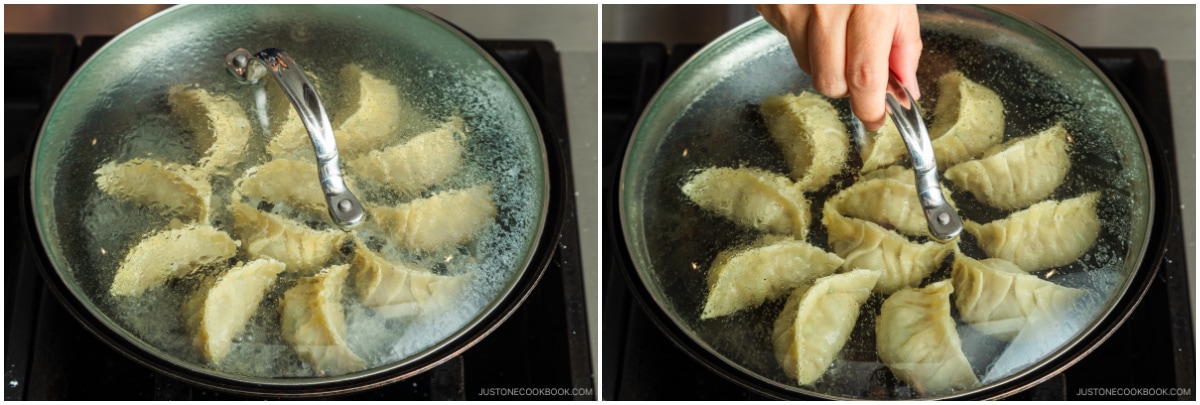
Step 7 – Steam to cook through. Add water to the pan and cover with a lid to steam until most of the water evaporates.
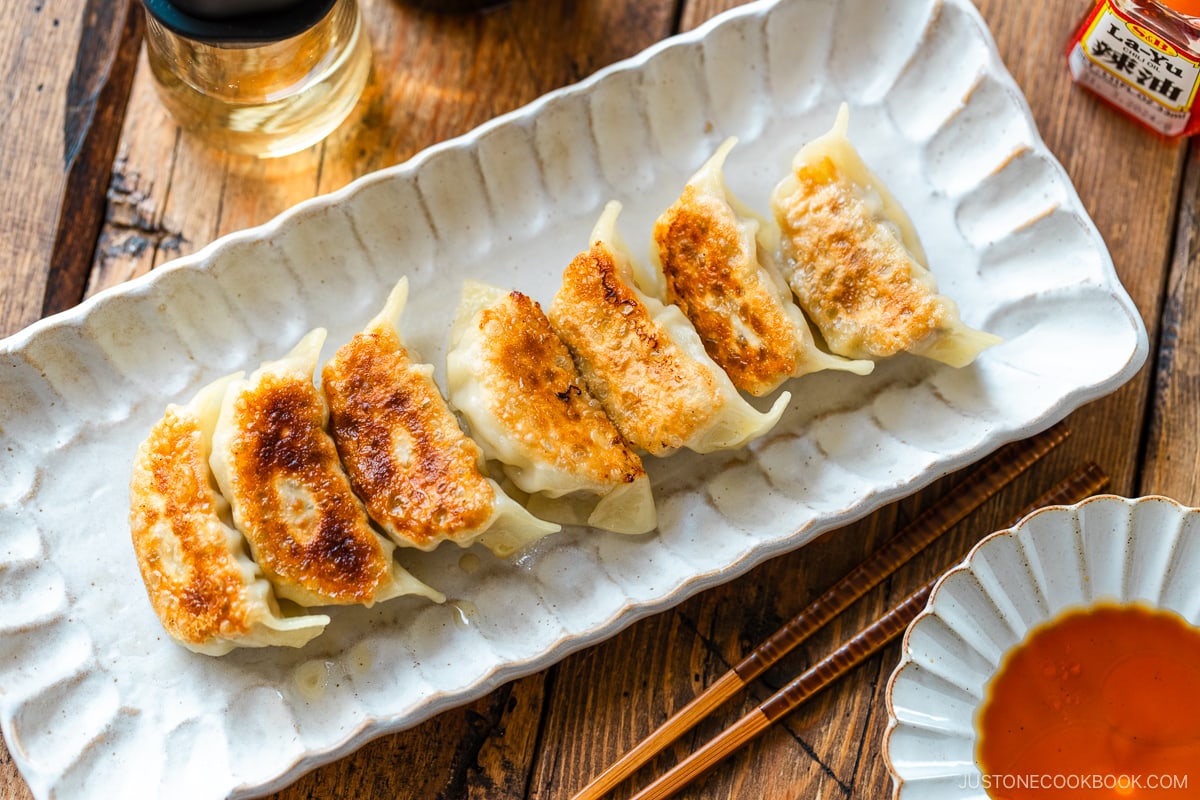
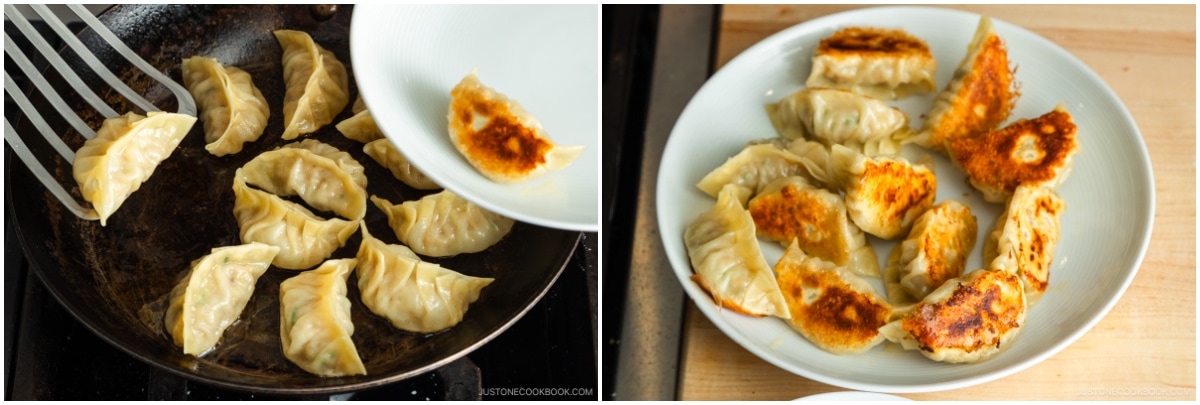
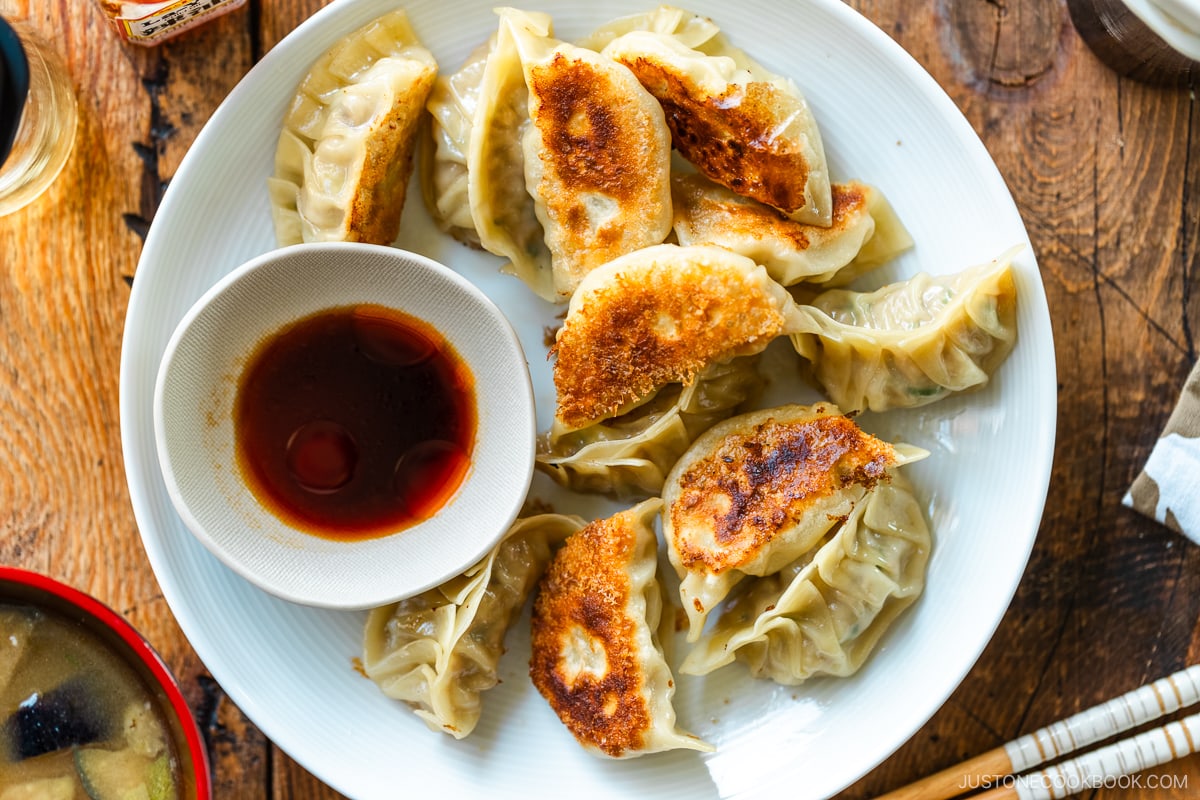
Step 7 – Let the moisture evaporate. Remove the lid to evaporate the rest. Drizzle toasted sesame oil around the gyoza and cook until browned and crisp on the bottom. Serve with dipping sauce and enjoy!
Nami’s Recipe Tips
- Keep the meat-to-cabbage ratio between 1:1 and 1:1.5. In my opinion, this is the best ratio for the perfect juiciness and tenderness. In case you’re curious, the typical gyoza in Japan is 1:2—yes, way more cabbage! I encourage you to adjust the proportions as you like.
- Draw out the moisture from the cabbage. This is very important so that the gyoza wrappers don’t get soggy. After sprinkling salt on the cabbage, squeeze the water out. You’ll be surprised how much water comes out!
- Knead the meat mixture until it’s sticky and pale. Kneading helps the meat proteins bind together for a springier and smoother texture. It also allows the seasonings to blend well with the meat. Instead of using a spatula or spoon, I recommend kneading it with your hand (I wear plastic, food-grade disposable gloves).
- Use less than 1 tablespoon of filling per gyoza. If you add too much filling, it will squeeze out easily. To portion the perfect amount, I use a 1 Tbsp cookie scoop and level off the filling. If you’re a beginner, start with a scant 3/4 Tbsp.
- Cover your gyoza wrappers with a damp towel or cloth. Once you open the gyoza wrapper package, the edges of the gyoza skins dry out quickly. Covering the stack with a damp kitchen cloth or paper towel helps keep them moist and easier to use during the folding process.
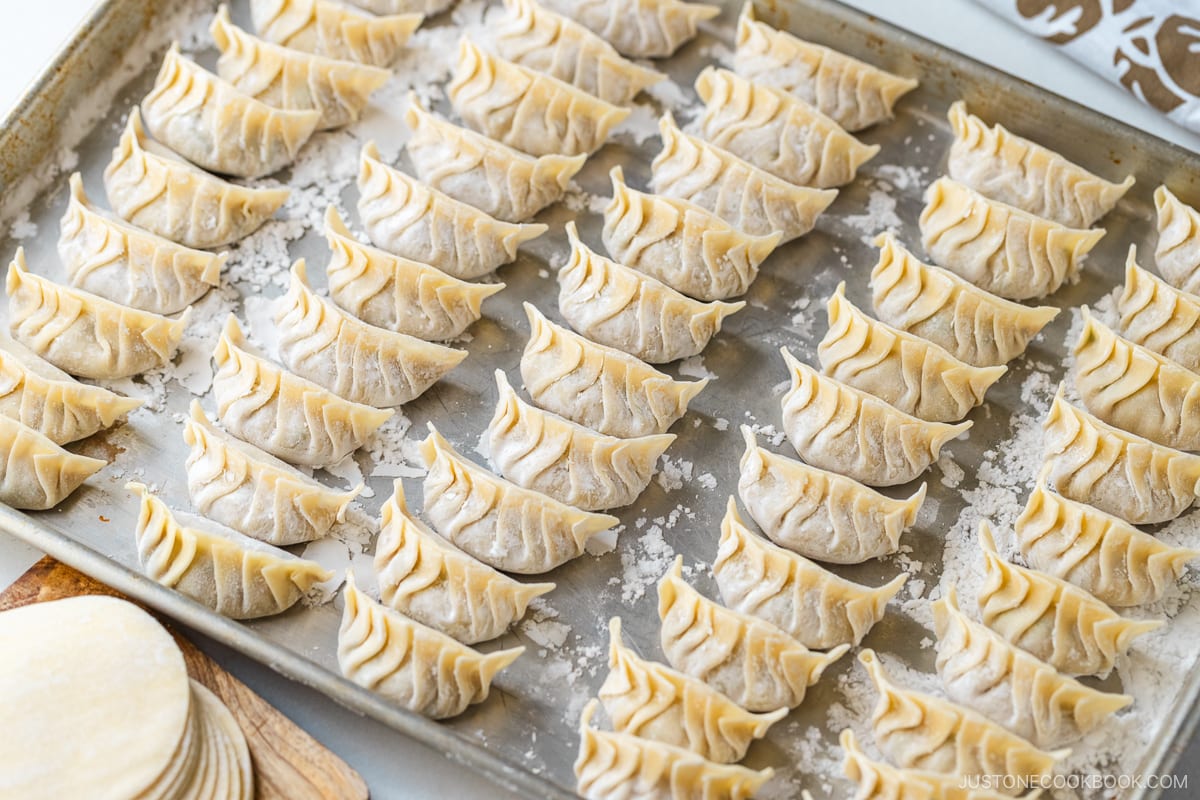
- Cook or freeze the folded dumplings right away. Even though you draw out moisture from the cabbage, the filling still contains some moisture. So, don’t let gyoza sit on the counter for too long. Either pan-fry them right away or flash-freeze them (more on that later).
Variations and Customizations
Gyoza is an adaptable food that you can modify to your own preferences! Here are a few of my suggestions.
- Adjust the proportion of cabbage and vegetables. My favorite proportion is 1 to 1.5 parts cabbage for every 1 part of ground pork. However, a typical gyoza in Japan uses 2 parts cabbage to 1 part ground pork. I encourage you to experiment with your
- Add garlic chives. My mom adds garlic chives (nira) to her delicious gyoza, but I skipped them when my kids were little because they didn’t like the strong taste. I add garlic chives to my recipe for Gyoza with Miso Dipping Sauce.
- Get creative with the filling. The rule of thumb for a delicious filling is to use ingredients with different textures. That said, there is plenty of room for creativity. I like to make different versions at home to change things up. For example, this gyoza recipe includes fresh shiitake mushrooms, which is my specialty! I like the meaty texture and juicy umami from shiitake mushrooms without adding more meat.
- Make it vegan/vegetarian. As I show in my Vegetable Gyoza recipe, you can substitute the meat with tofu, mushrooms, and colorful vegetables. I love that I feel light and healthy after eating them!
- Change up the dipping sauce. Modify your dipping sauce to enjoy a different flavor profile. Miso dipping sauce is one of my favorites. Just stir miso, soy sauce, rice vinegar, sugar, and la-yu (Japanese chili oil) until dissolved. I also love ponzu mixed with yuzu kosho as a refreshing dipping sauce like in my Chicken Shiso Gyoza recipe.
- Fold the wrappers with the pleats to one side. Here, I teach you to wrap gyoza with the pleats leaning toward the center. This is one of the two folding methods for Japanese pan-fried dumplings. If you want the pleats to lean toward one side, check out my How to Fold Gyoza post.
What to Serve with Gyoza
Gyoza is beloved throughout Japan as an appetizer, main dish, after-school snack, or gastropub food. I recommend serving this versatile dish in these other popular ways.
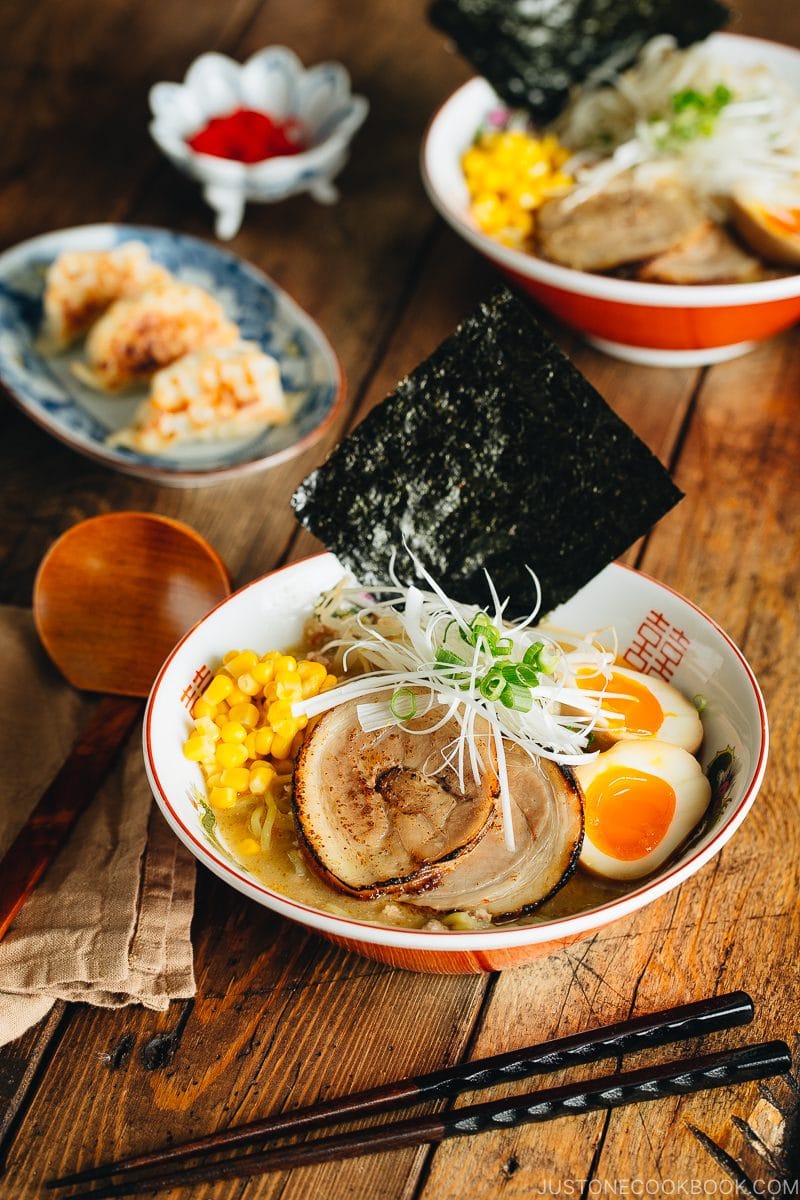
- Alongside ramen – Ramen shops often serve gyoza in a set meal with Miso Ramen and other ramen noodle soups.
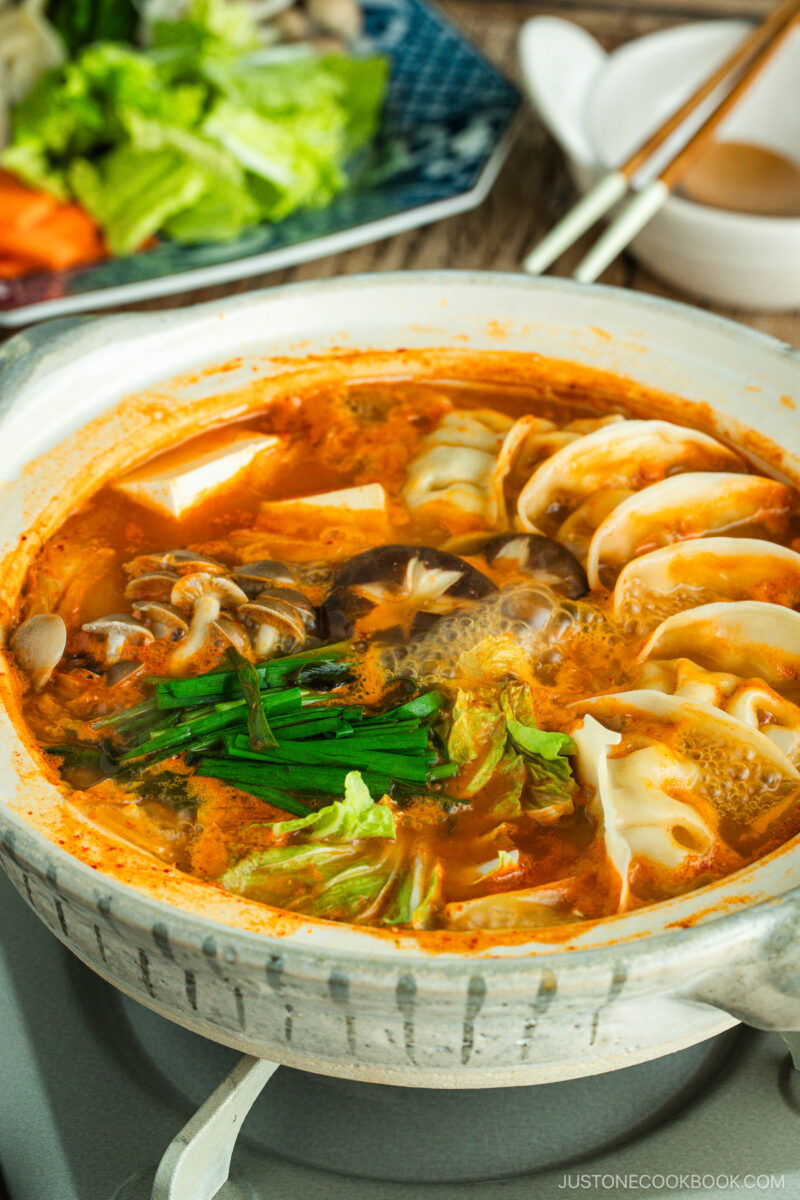
- In a hot pot – Dumplings are a perfect addition to Japanese hot pots, like this Korean-inspired Kimchi Gyoza Nabe.
- With other appetizers – You’ll often find gyoza offered alongside Karaage (Japanese fried chicken).
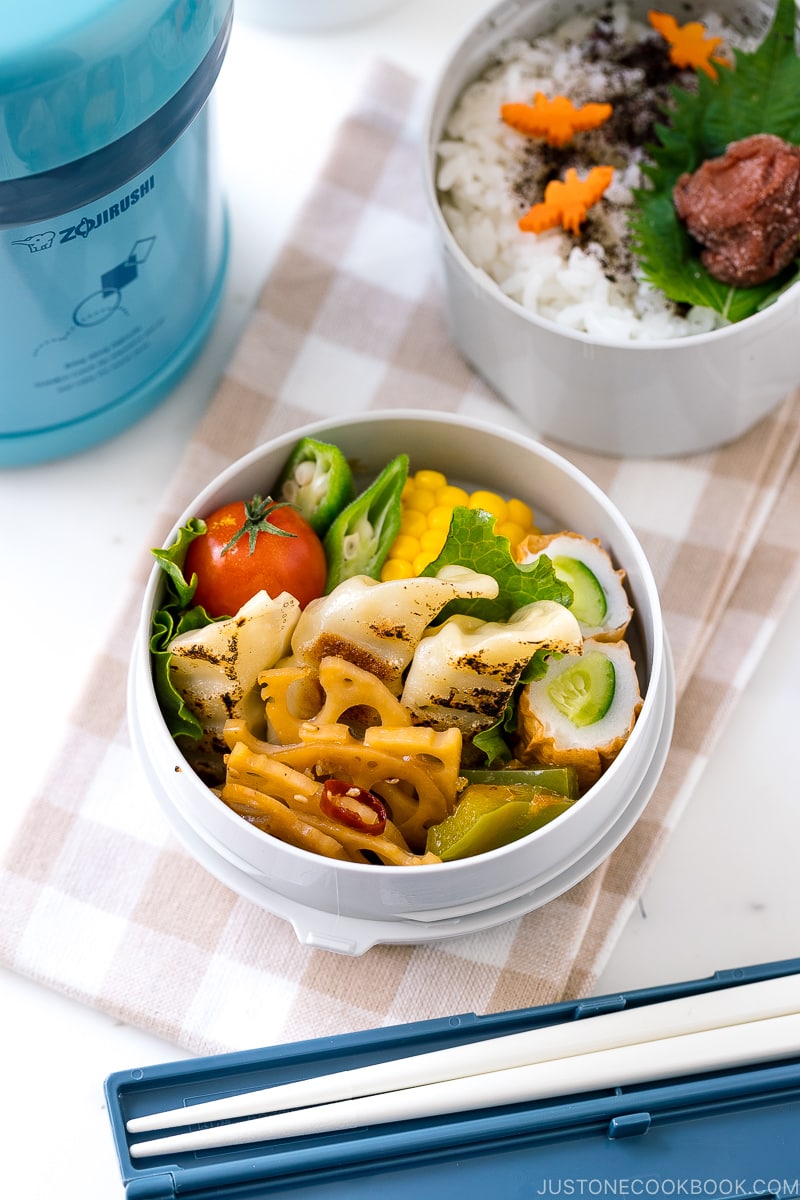
- In bento – Last night’s gyoza leftovers make a delicious boxed lunch in Gyoza Bento.
Storage Tips
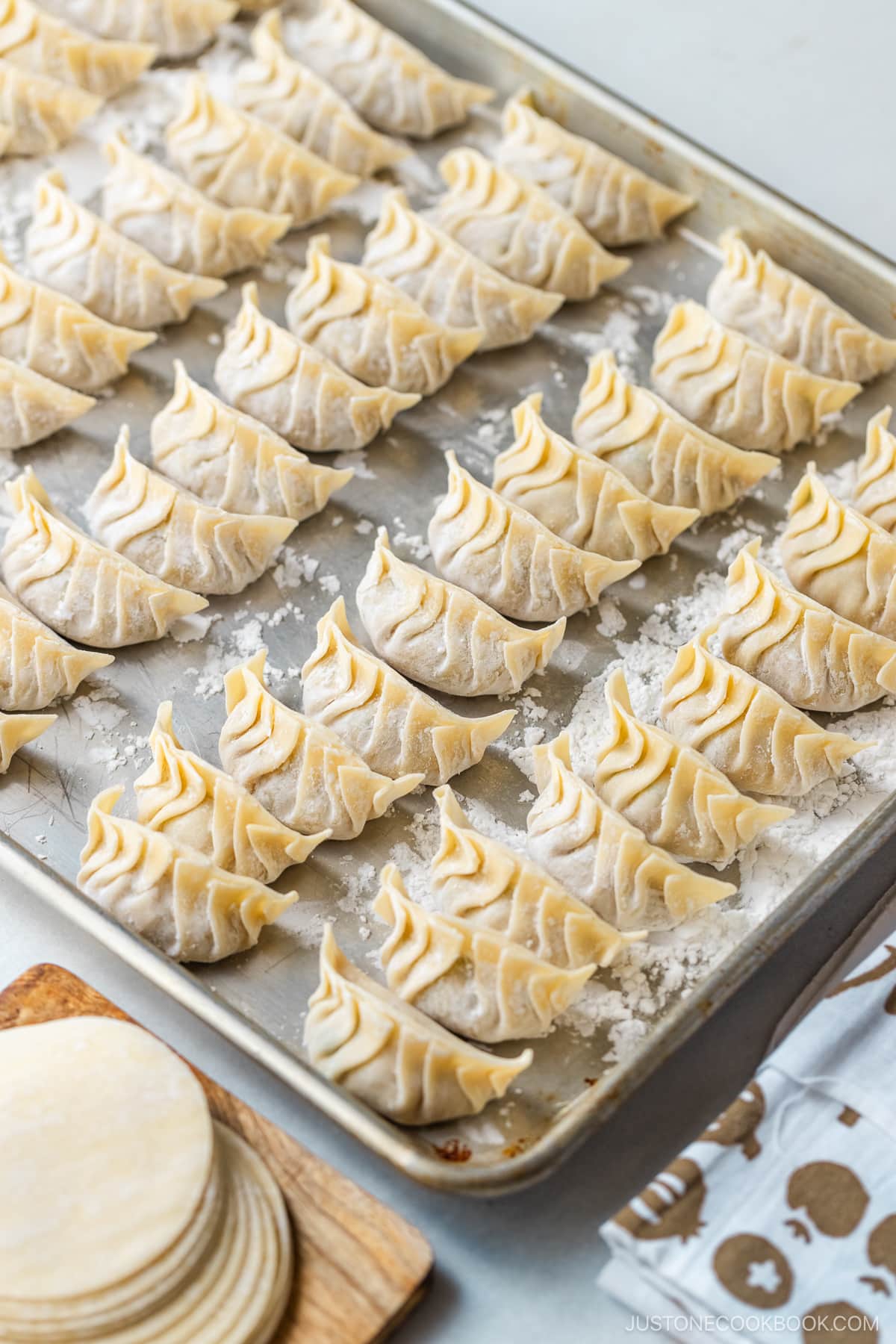
To store uncooked gyoza: It’s best to store freshly folded gyoza frozen, before they are cooked. Before the filling starts to release moisture and make the wrappers soggy, lay out the gyoza on a baking sheet pan or plate in a single layer so they‘re not touching. Then, cover with plastic wrap and place in the freezer to flash freeze. Transfer to a resealable freezer bag and store for up to 1 month in the freezer. When you’re ready to cook them, place the frozen gyoza directly in your frying pan. Follow the regular cooking instructions, but steam them for an extra 1–2 minutes.
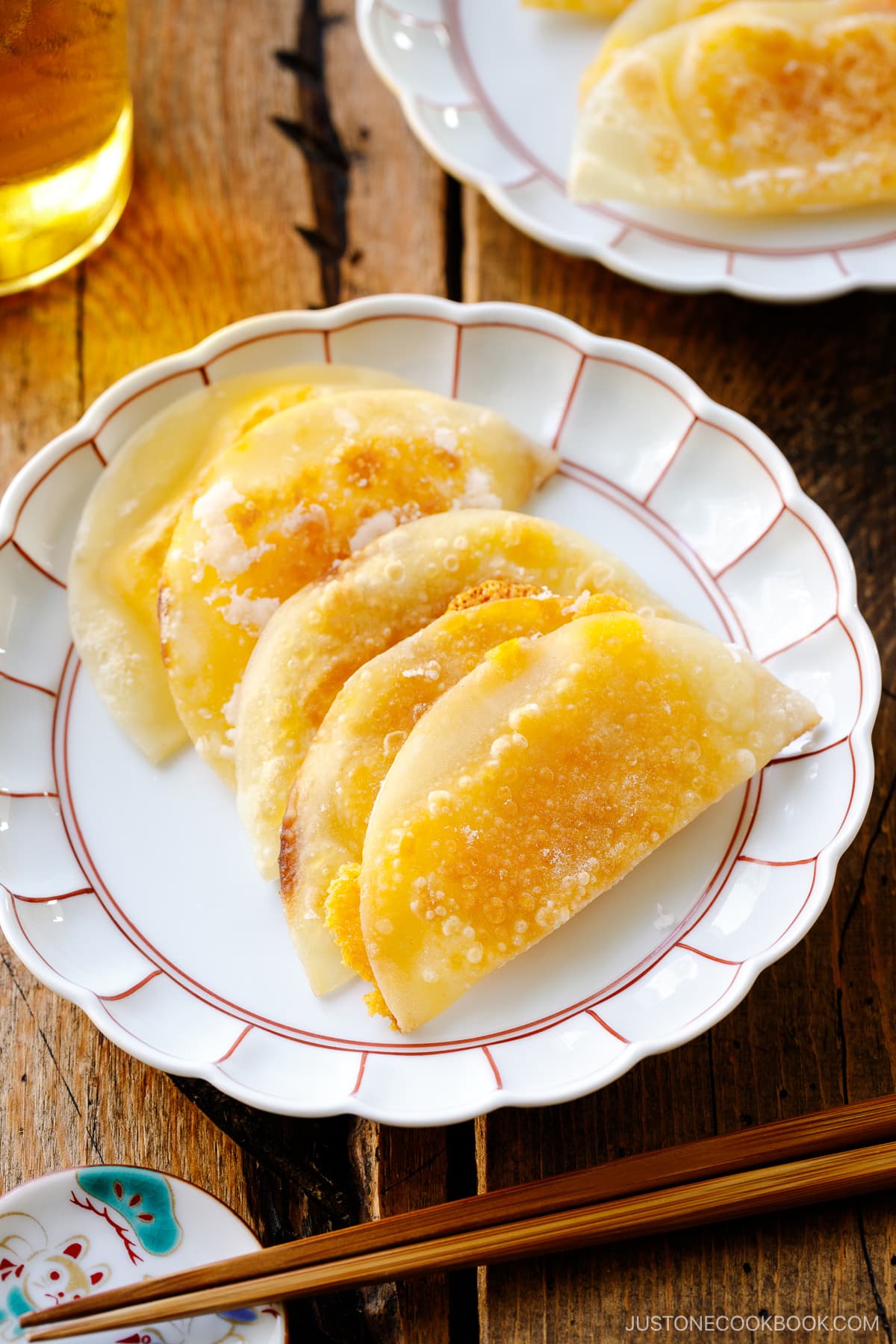
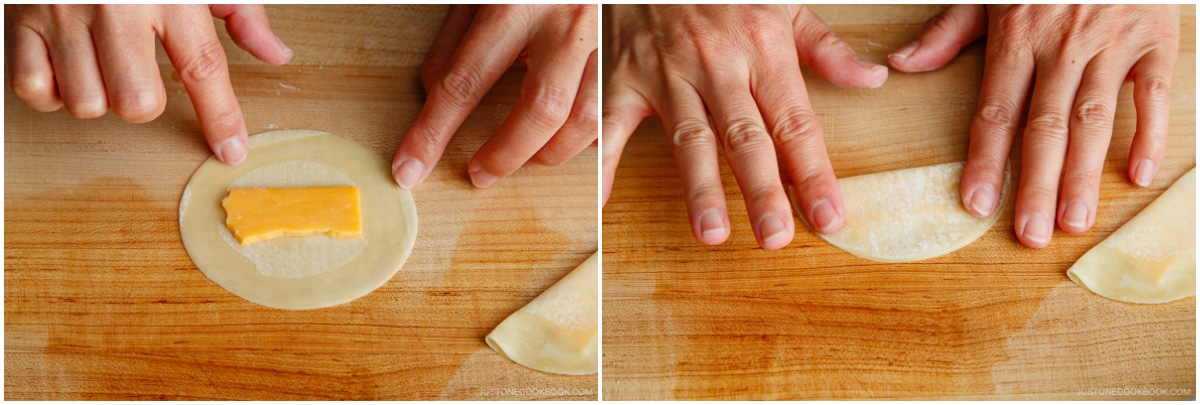
To store leftovers: Cooked gyoza: Cool, transfer to an airtight container, and store in the fridge for up to 3 days or in the freezer for a month. Filling: Make mini meatballs or patties, cook them in a frying pan, cool and pack in an airtight container, and refrigerate or freeze. Wrappers: I love making crispy cheese wraps with the extra gyoza skins. Fill each wrapper with sliced cheese, fold in half, and press to seal. Pan-fry until golden on both sides.
FAQs
What is gyoza and how is it different from Chinese potstickers?
Gyoza are Japanese pan-fried dumplings inspired by Chinese jiaozi. After World War II, returnees from Manchuria introduced them to Japan, where they evolved into smaller dumplings with thinner wrappers and a finer filling. They’re crisp on the bottom, juicy inside, and a beloved home-cooking favorite.
What is gyoza made of?
Japanese gyoza are made with thin wrappers filled with ground pork, finely chopped green cabbage, green onions, shiitake mushrooms, garlic, ginger, soy sauce, sake, and sesame oil. They’re pan-fried until golden on the bottom, then steamed.
How do you cook gyoza so they’re crispy on the bottom and juicy inside?
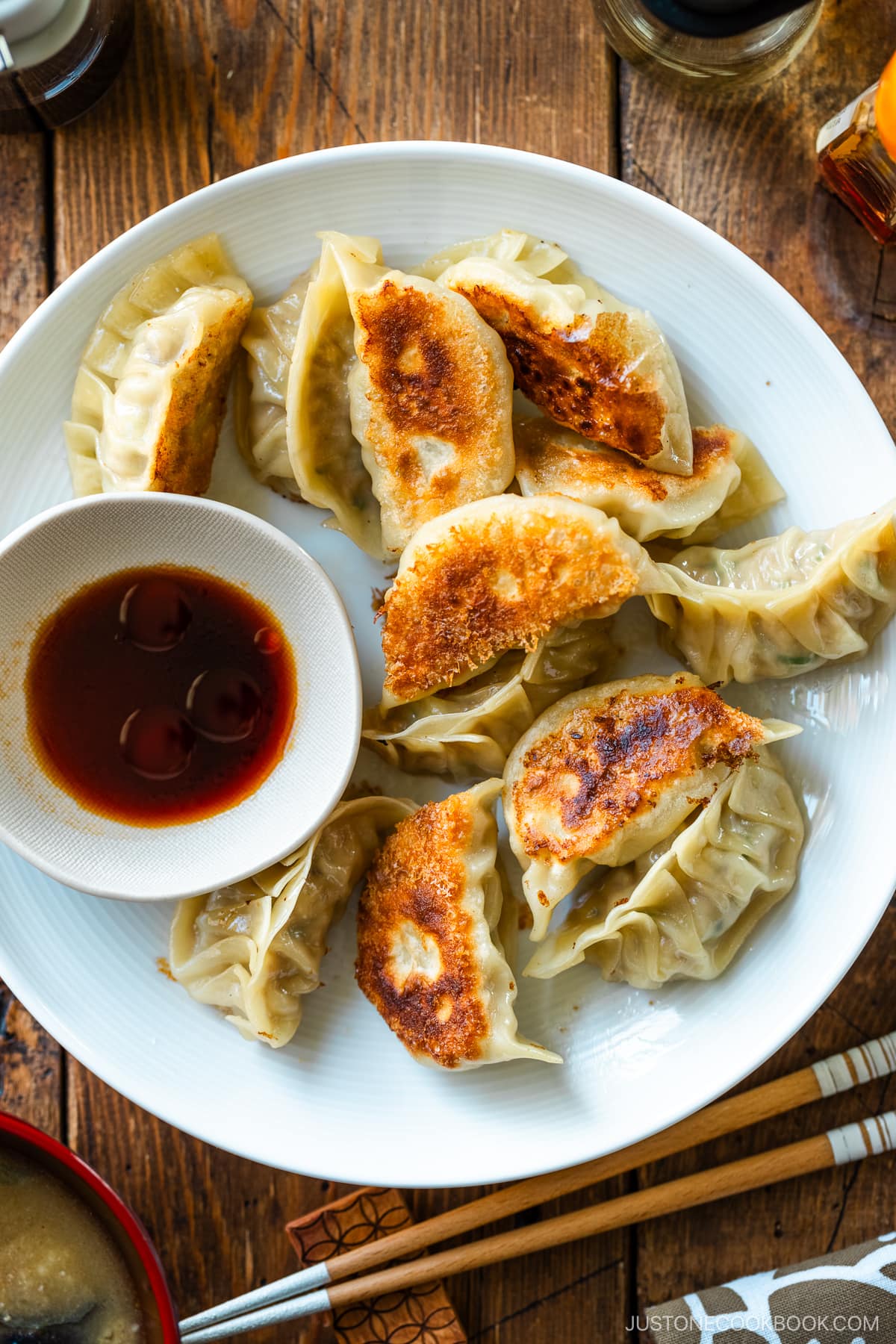
Arrange gyoza in a hot pan with oil and cook until the bottoms turn golden brown. Add water, cover, and steam until cooked through. Remove the lid to evaporate moisture, drizzle sesame oil, and cook again until crisp. This pan-fry-and-steam method gives perfect texture.
Can you freeze gyoza and cook them later?
Yes. Freeze freshly folded, uncooked gyoza in a single layer, then transfer to a freezer bag for up to one month. Cook them straight from frozen in a hot pan. Follow the regular instructions, but steam for an extra 1–2 minutes so they heat through completely.
More Dumpling Recipes
If you love this Gyoza, you’re in for a treat with these other irresistible Chinese-style dumpling recipes.
- Wonton Soup
- Pork Shumai (Steamed Pork Dumplings)
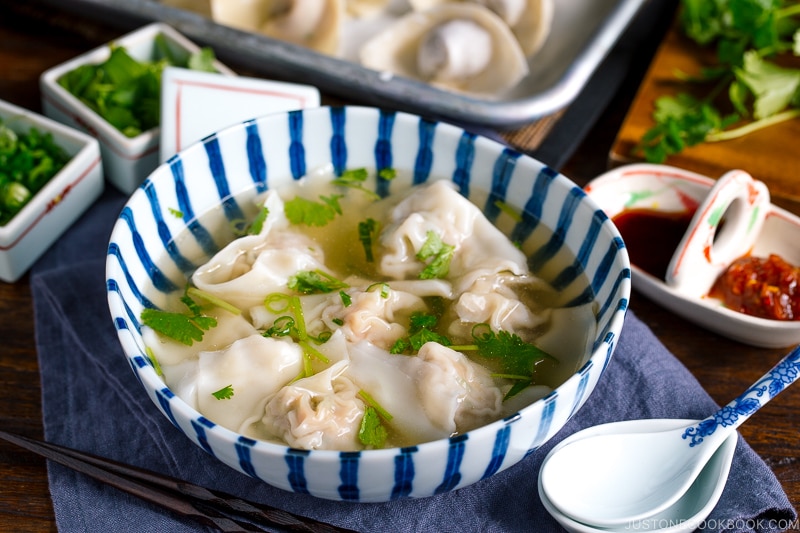
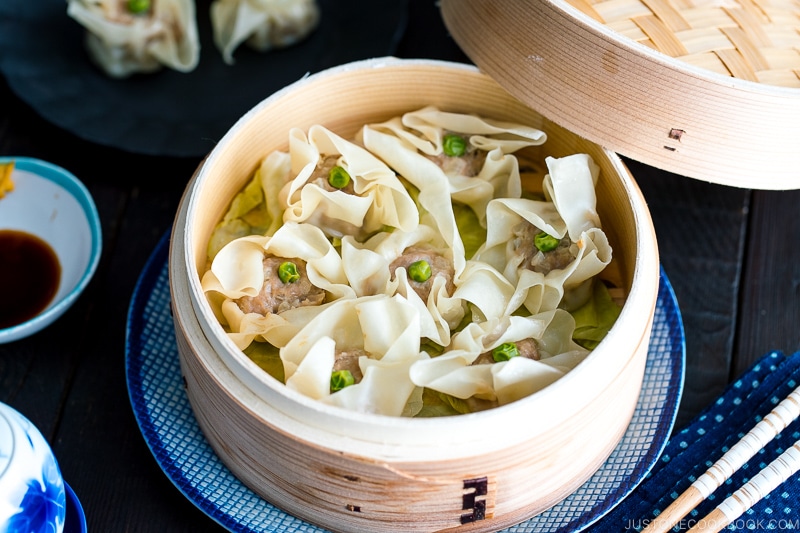
I’d love to hear how yours turned out! 💛 Please leave a star rating and comment below to share your experience. Your feedback not only supports Just One Cookbook but also helps other home cooks discover recipes they can trust.
Gyoza (Japanese Potstickers)
Ingredients
- ½ lb ground pork
- ¾ lb green cabbage (¼ large head)
- 2 shiitake mushrooms
- 2 green onions/scallions
- 1 tsp ginger (grated, with juice; from a 1-inch, 2.5-cm knob)
- 2 cloves garlic
- 2 tsp sake (to remove the pork‘s gamey taste; optional)
- 2 tsp toasted sesame oil
- 2 tsp soy sauce
- ⅛ tsp freshly ground black pepper
- 1 tsp Diamond Crystal kosher salt (for the cabbage)
For Folding
- 1 package gyoza wrappers (52 sheets per package (10 oz, 284 g); you can make homemade Gyoza Wrappers)
- water (to seal the wrappers)
For Frying (per batch)
- 1 Tbsp neutral oil
- 1 tsp toasted sesame oil
- 4 Tbsp water
For the Dipping Sauce (per serving)
- 1 Tbsp soy sauce
- 1 Tbsp rice vinegar (unseasoned)
- ⅛ tsp la-yu (Japanese chili oil) (you can make Homemade La-yu)
Instructions
- Gather all the ingredients.
To Make the Filling
- Cut the thick core from ¾ lb green cabbage and cut the leaves into ⅓-inch (1 cm) strips.
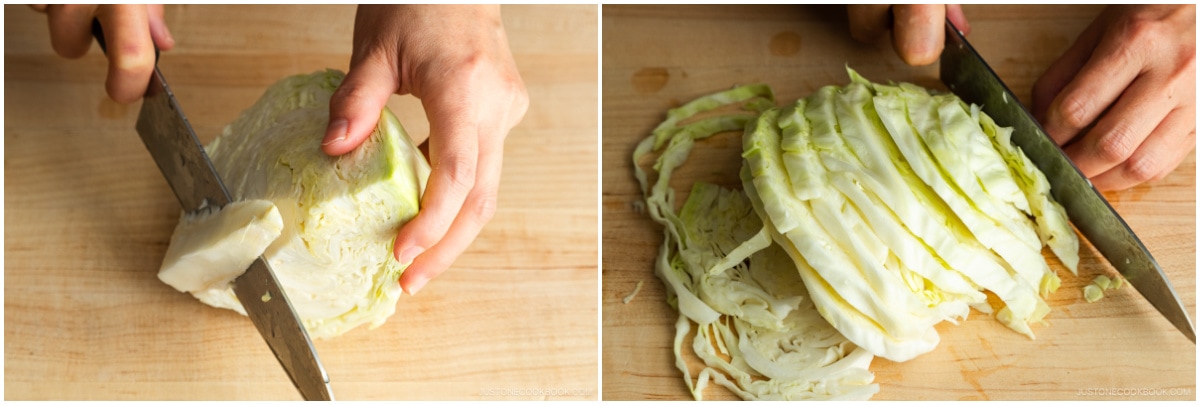
- Finely chop crosswise. Pay extra attention to the thick white ribs—mince them until very fine.
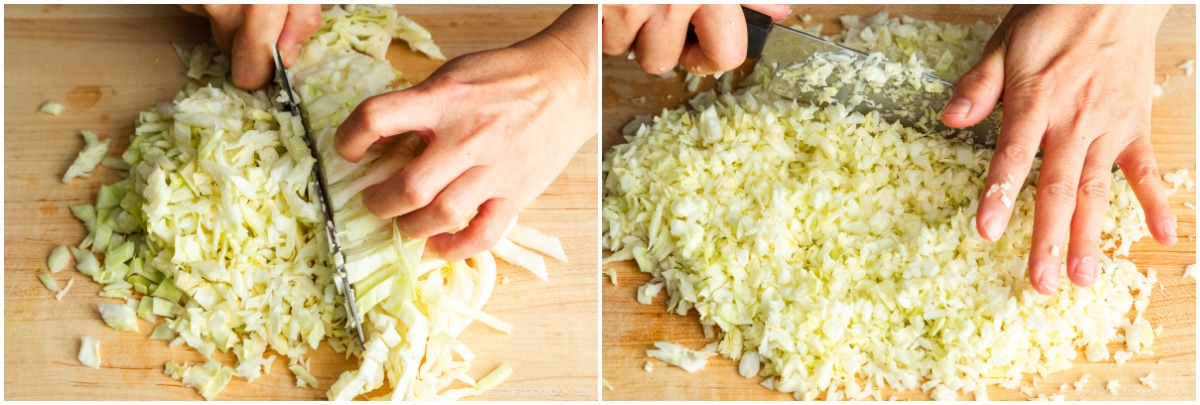
- Sprinkle with 1 tsp Diamond Crystal kosher salt and rub it in with your hands. Transfer to a bowl and let sit until wilted.Nami's Tip: Salting draws out the moisture so the wrappers don't get soggy. Alternatively, you can blanch or microwave the thick, hard leaves until soft, or skip wilting altogether.
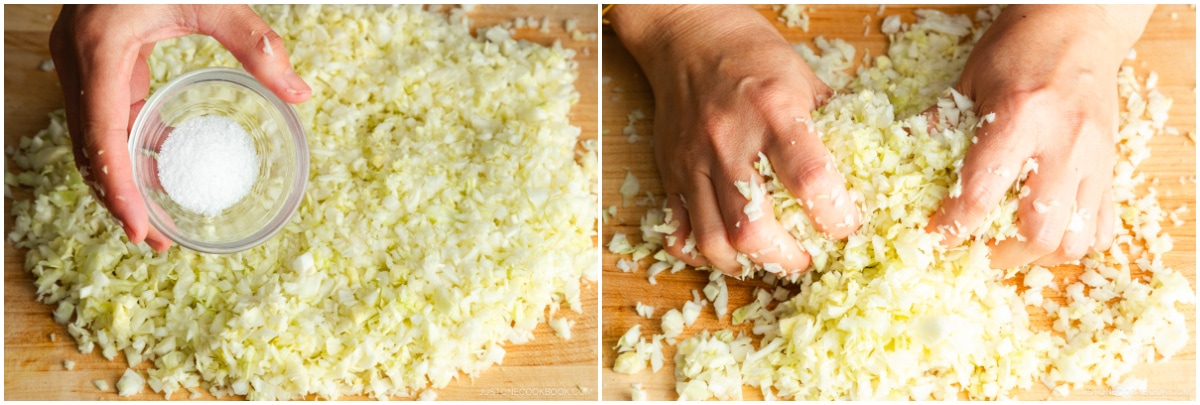
- Mince 2 green onions/scallions into small pieces.
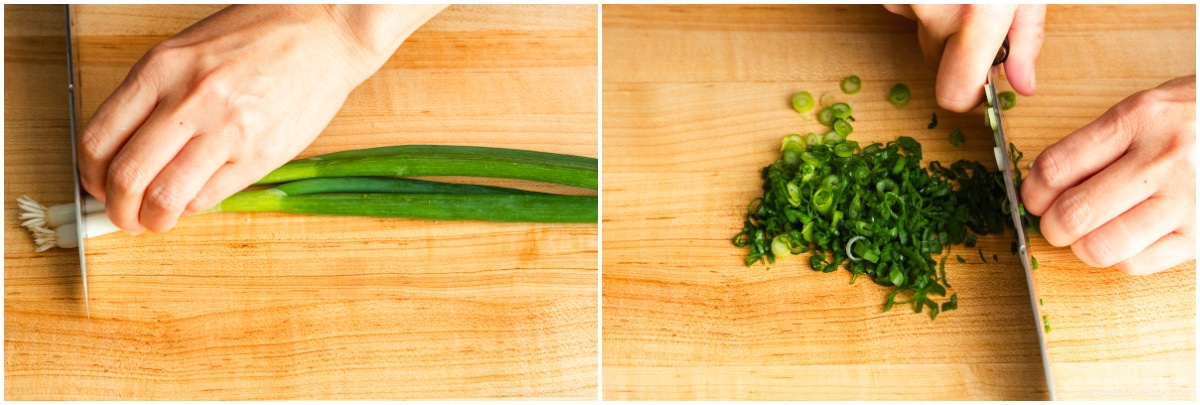
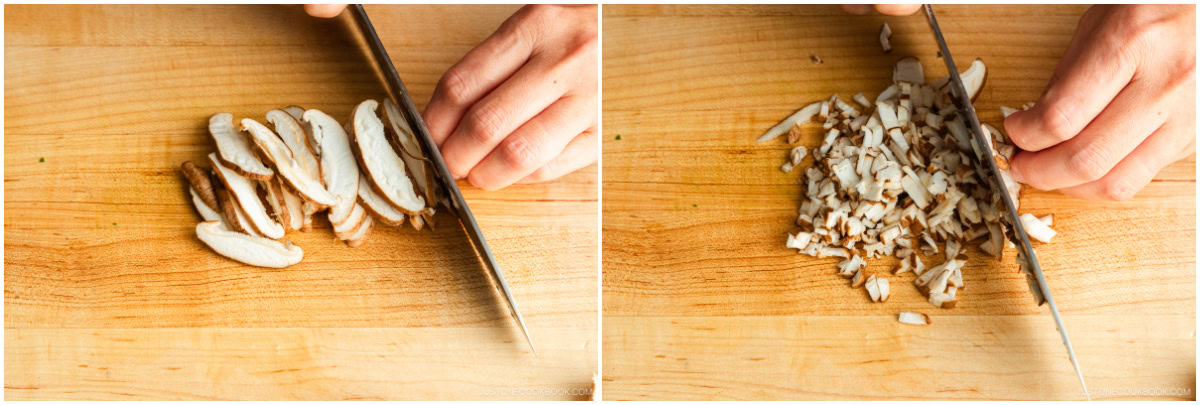
- Cut off the stems from 2 shiitake mushrooms, thinly slice the caps, then mince the slices into small pieces.
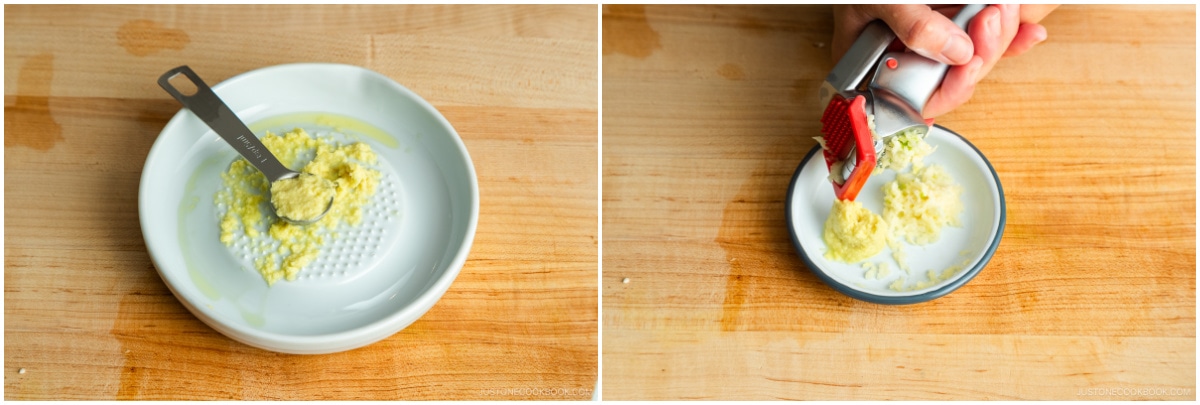
- Grate the ginger with a ceramic grater and add 1 tsp ginger (grated, with juice) to a small plate. Mince or press 2 cloves garlic (I use a garlic press) and add to the plate.
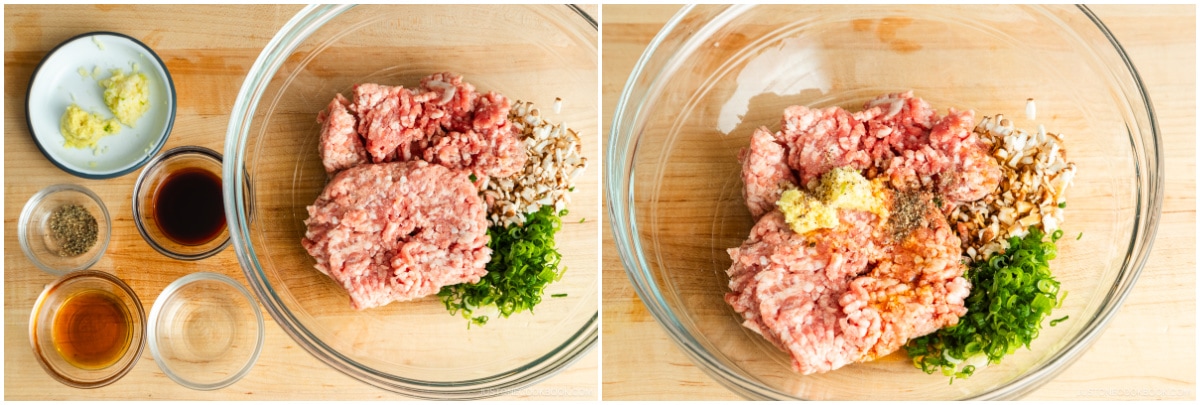
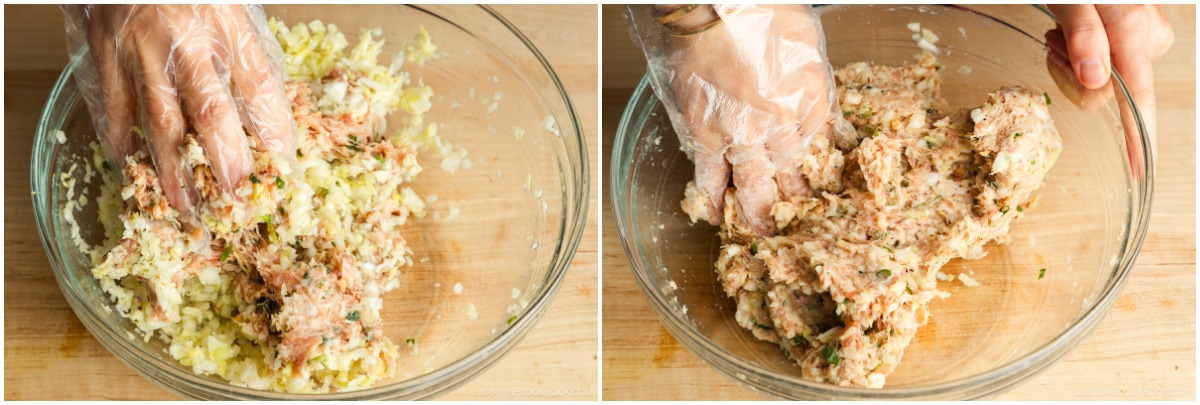
- Add the ½ lb ground pork, green onions, and shiitake mushrooms to a large bowl. Add 2 tsp sake, 2 tsp toasted sesame oil, 2 tsp soy sauce, ⅛ tsp freshly ground black pepper, ginger, and garlic.
- Put on plastic disposable gloves if preferred, then knead the mixture until sticky and pale.Nami's Tip: Kneading binds the meat proteins so the texture is springy and smooth.
- Squeeze the water from the salted cabbage and add to the pork mixture.
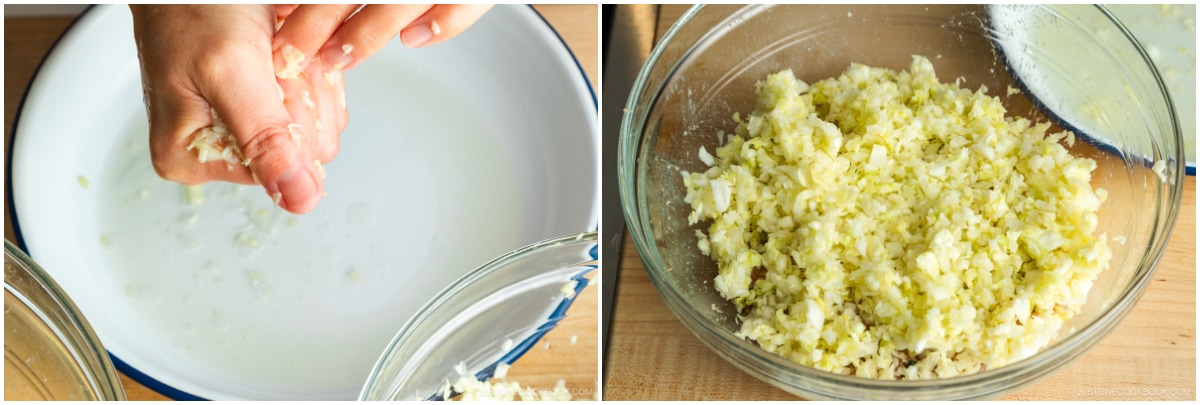
- Knead the filling until the cabbage is fully incorporated and the mixture is uniform.
To Fill
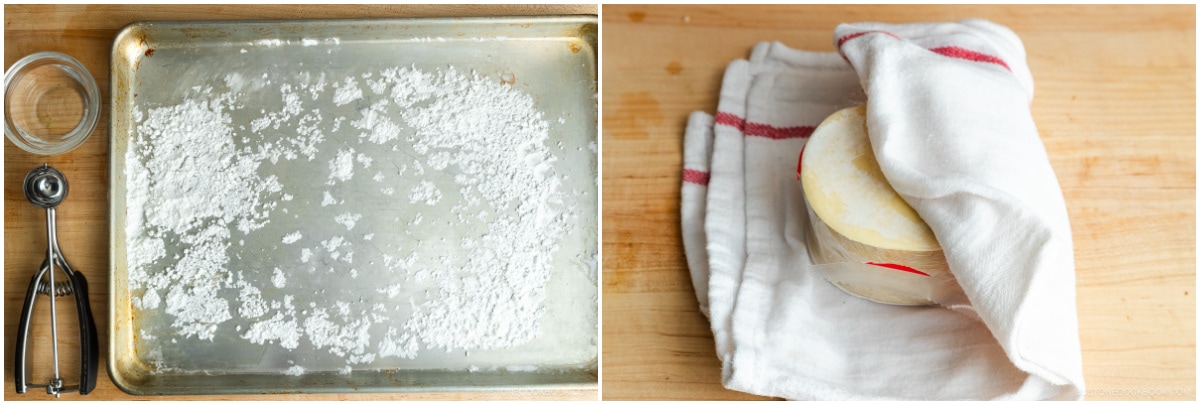
- Prepare a small bowl of water and a baking sheet lined with parchment paper or dusted with 2 Tbsp potato starch (or cornstarch). Open 1 package gyoza wrappers and cover them with a damp towel or plastic wrap at all times.Nami's Tip: The gyoza skin edges dry out quickly. Covering with a damp kitchen cloth or paper towel keeps them moist and easy to use.
- Hold one wrapper in the palm of your non-dominant hand (left hand for me). Measure 1 level Tbsp (or a scant ¾ Tbsp for beginners) of filling with a small cookie scoop. Place the filling in the center of the wrapper and flatten it with the scooper bowl to press out any trapped air.Nami's Tip: Do not overstuff the gyoza or the filling will squeeze out and make folding difficult.
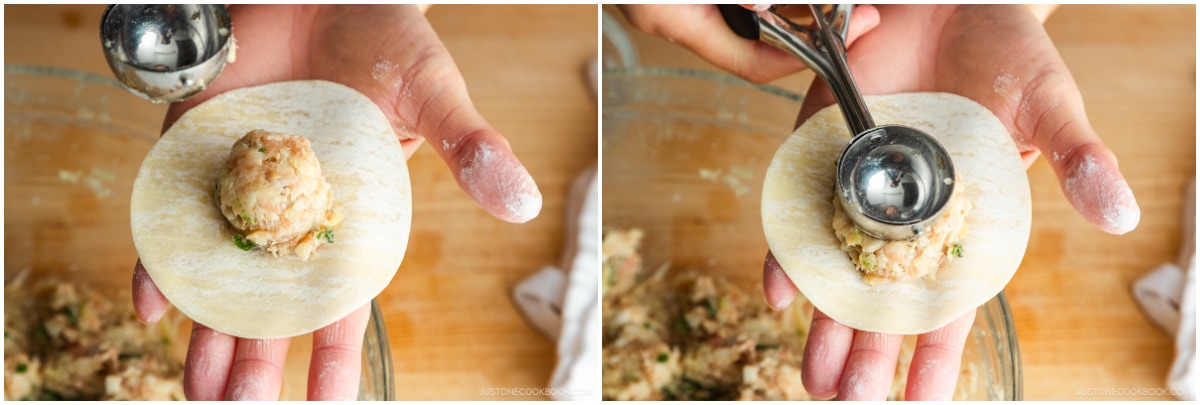
- Dip one finger in water and use it to moisten a circle on the wrapper's outer ¼ inch (6 mm). Fold the wrapper in half over the filling. Pinch the two sides together at the top center, but don’t seal it yet.
To Fold
- These steps show pleats leaning toward the center. For pleats leaning to one side, see my How to Fold Gyoza post.
- Right side: Starting to the right of top center, fold a pleat leaning toward the center into the top half of the wrapper using your right thumb and index finger. Tightly press the folded pleat against the back half of the wrapper using your left thumb and index finger.
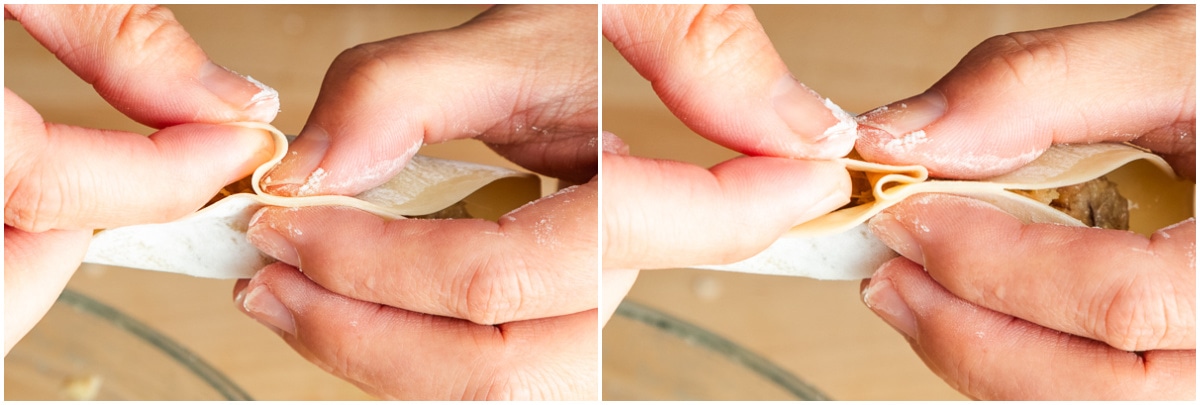
- The images below show the pleat from the front.
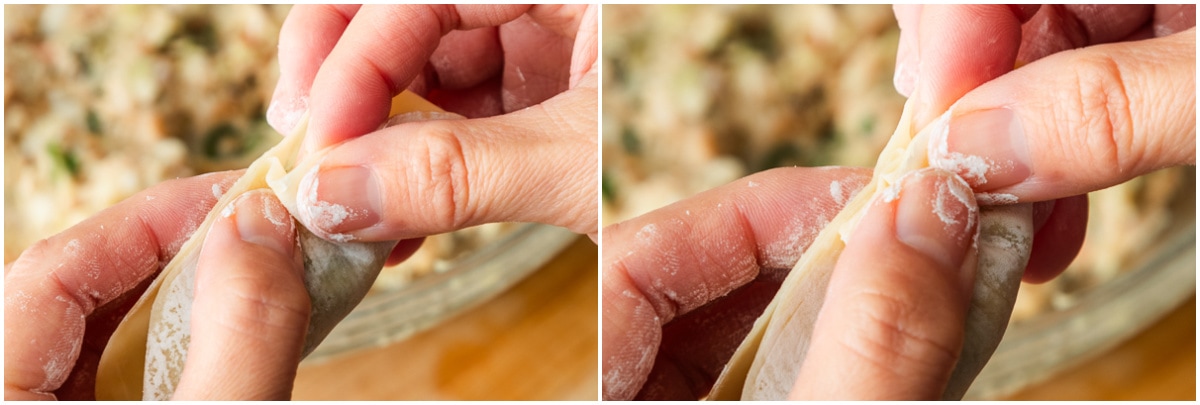
- Fold 2–3 more pleats along the right side every ¼ inch (6 mm).
- The images below show the pleats.
- Press to seal any gaps.
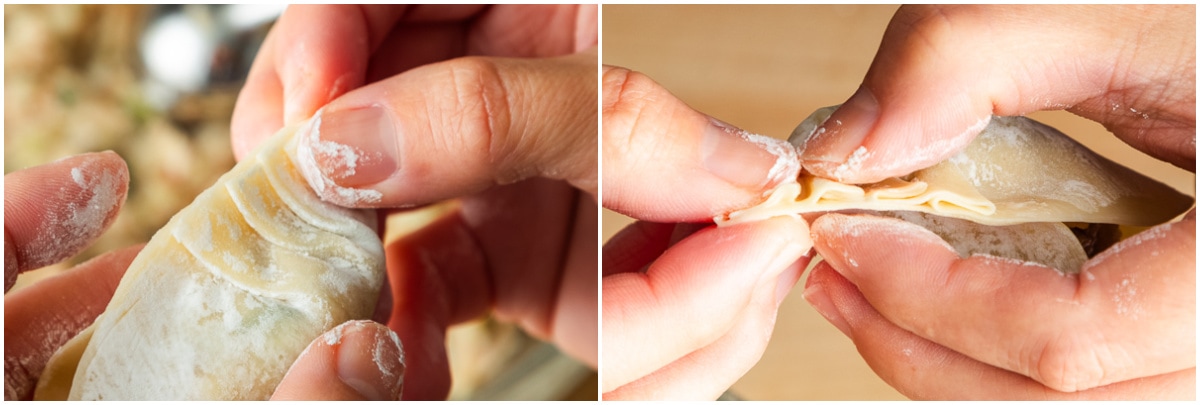
- Left side: Starting to the left of top center, fold a pleat leaning toward the center into the top half of the wrapper using your left thumb and index finger. Tightly press the folded pleat against the back half of the wrapper using your right thumb and index finger.
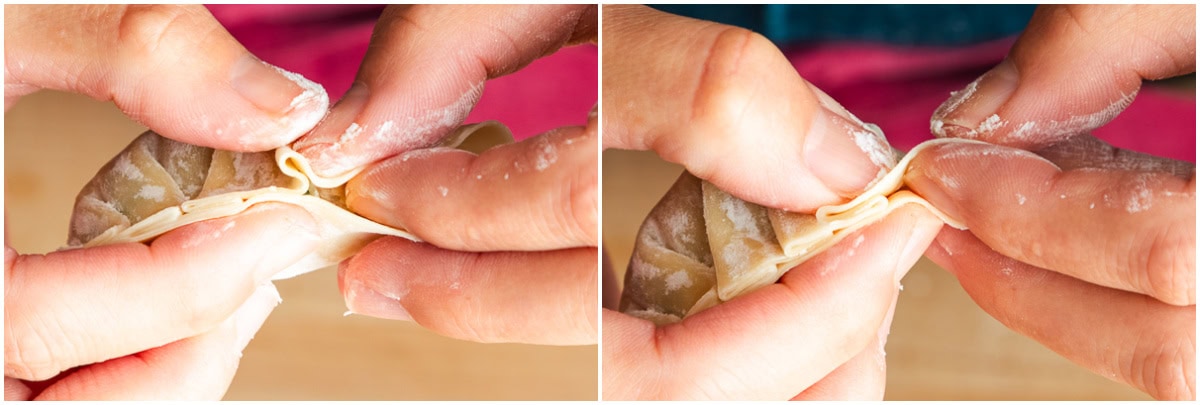
- The images below show the pleat from the front.
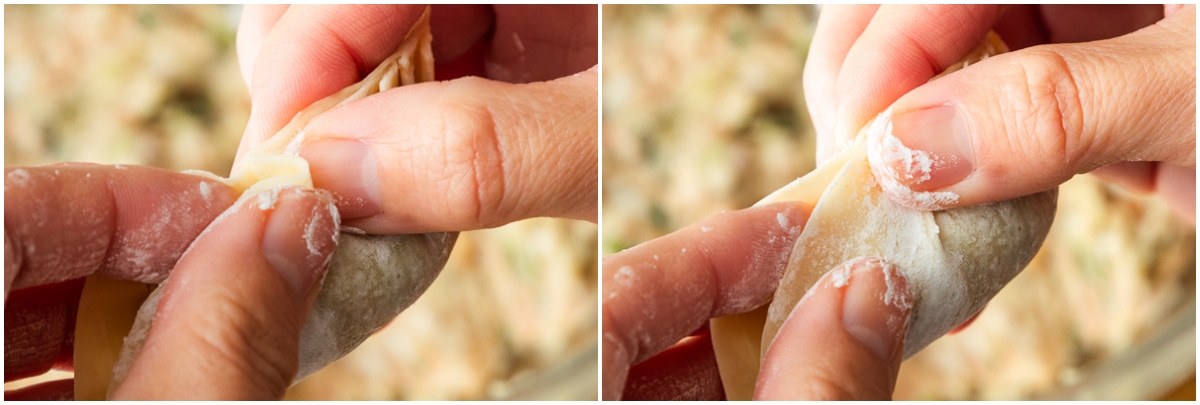
- Fold 2–3 more pleats along the left side every ¼ inch (6 mm).
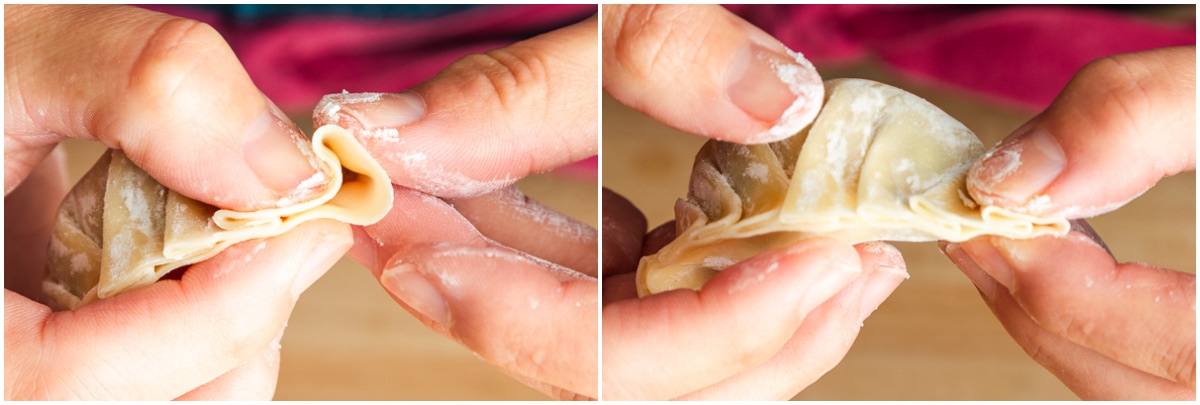
- The images below show the pleats.
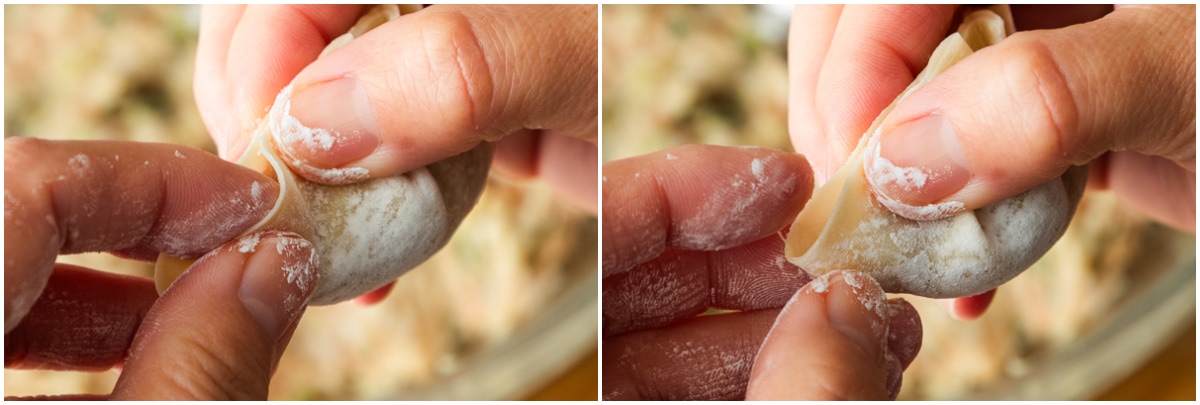
- Press one last time to seal any gaps and secure the pleats.
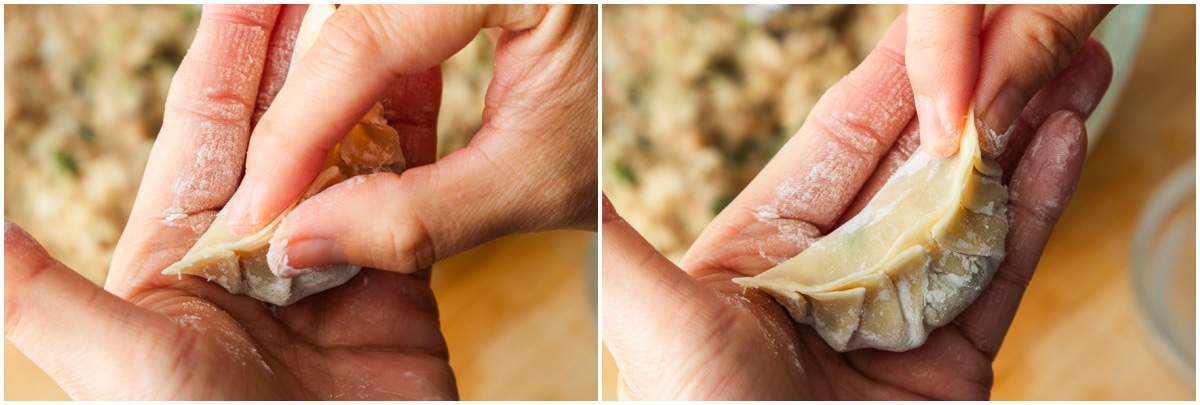
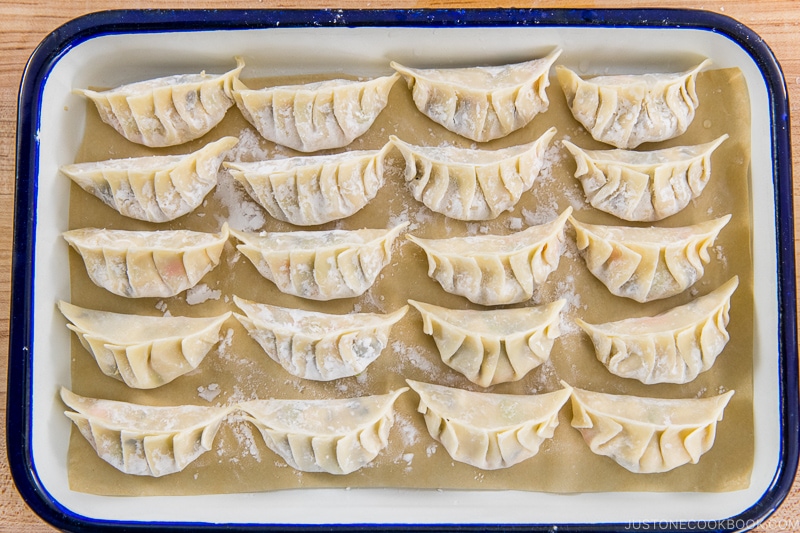
- Evenly distribute the filling and make a flat side on the bottom so the gyoza sits upright.
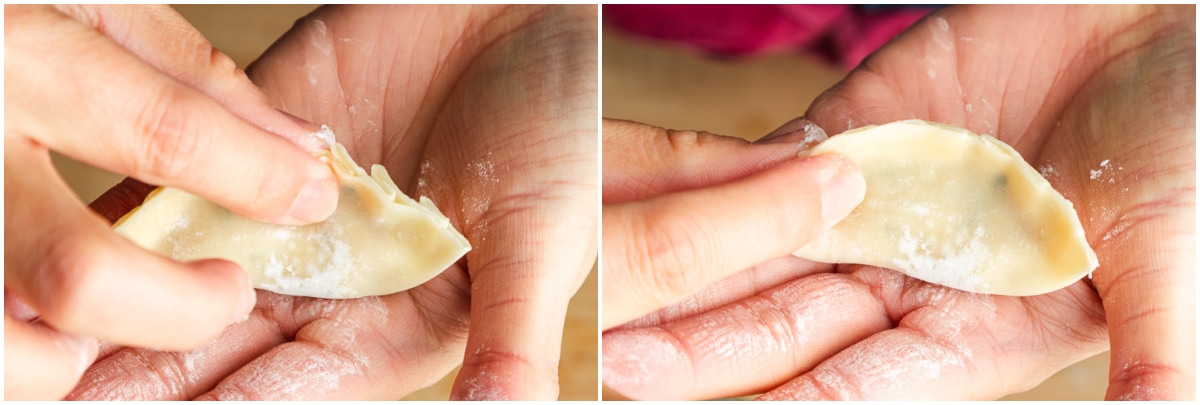
- Place on the baking sheet and cover with plastic wrap to avoid drying. Repeat with the remaining wrappers and filling. Cook or freeze the folded dumplings right away. Nami's Tip: Freeze or cook before the filling releases moisture and makes the wrappers soggy.
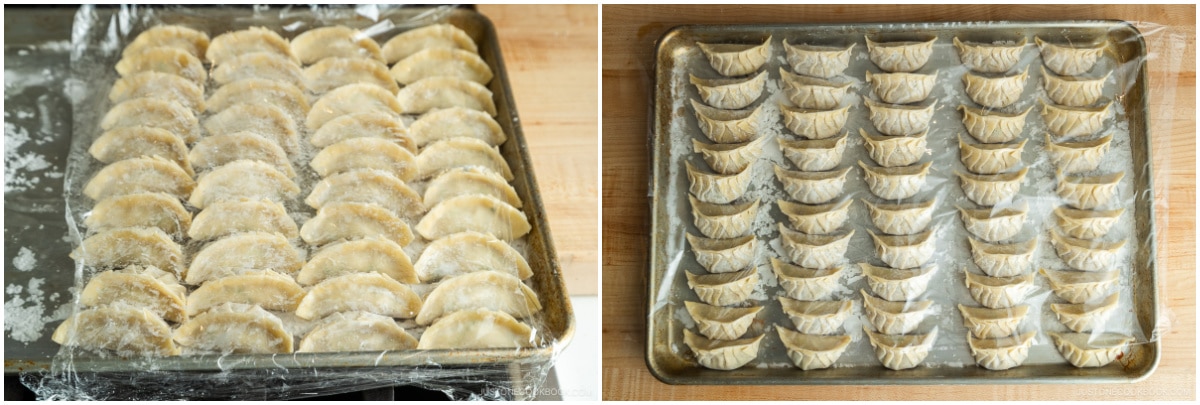
To Freeze Uncooked Gyoza (optional)
- To store uncooked gyoza to cook later, lay them in a single layer without touching on a sheet pan or plate. Cover with plastic wrap or a large resealable bag, place in the freezer, and flash freeze until solid (or at least frozen on the outside).
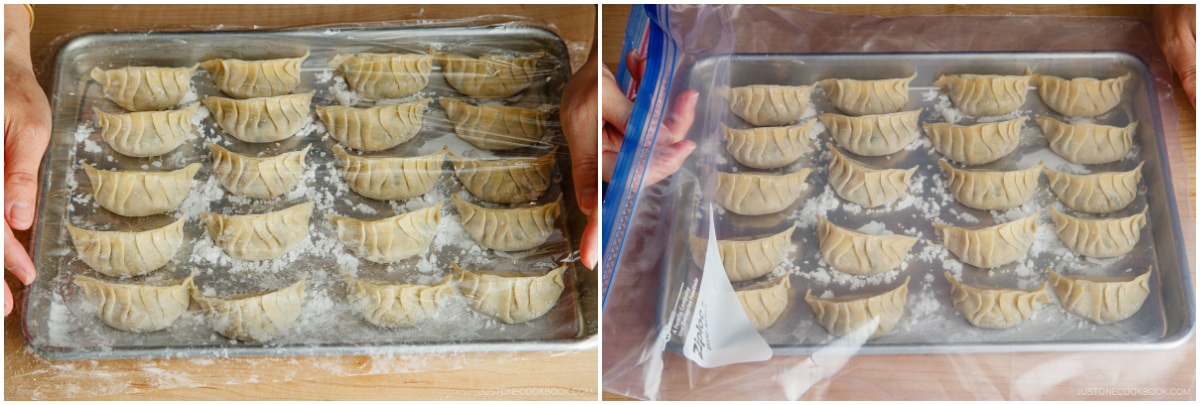
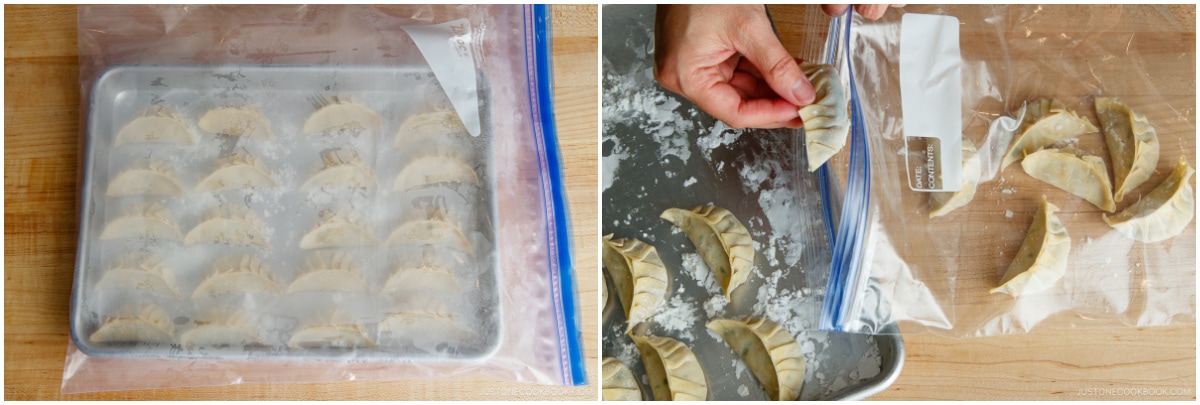
- Pack the frozen gyoza in an airtight freezer bag and store in the freezer for up to a month. When ready to cook, place the frozen gyoza directly in your hot frying pan. Follow the regular cooking instructions below and steam them for an extra 1–2 minutes.Nami's Tip: Because you flash froze them, the gyoza won’t stick to each other in the bag.
To Cook the Fresh Gyoza
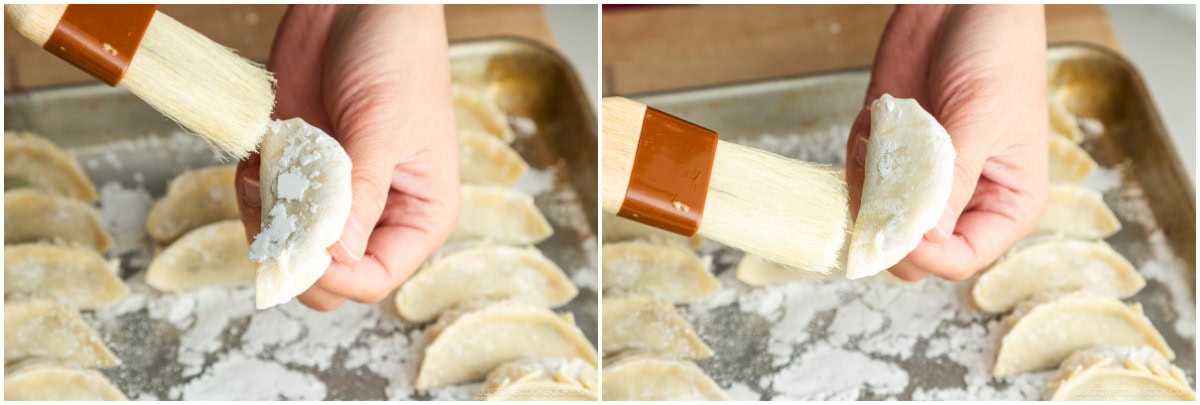
- Dust off any potato starch from the gyoza bottoms using a pastry brush.
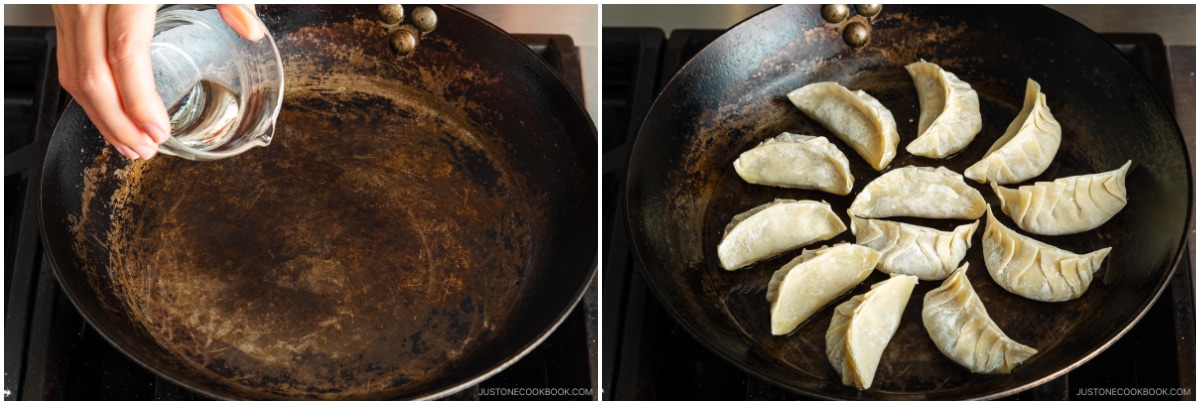
- Heat a large nonstick or carbon steel frying pan over medium heat (I use an 11" carbon steel pan). When hot, add 1 Tbsp neutral oil and place the gyoza in the pan, flat side down in a single layer in a circular pattern. Leave space between each piece so they don‘t touch.Nami's Tip: Cook the gyoza in batches or use two frying pans.
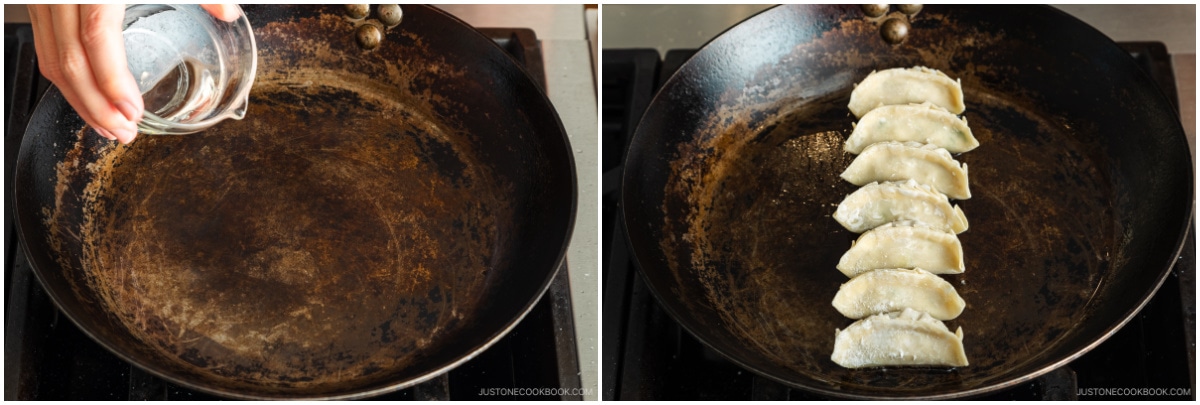
- Arrange them in one or two rows if preferred, leaving space between each piece.
- Cook about 3 minutes, until the bottoms are golden brown and release cleanly from the pan. Add 4 Tbsp water to the pan and immediately cover with a lid.
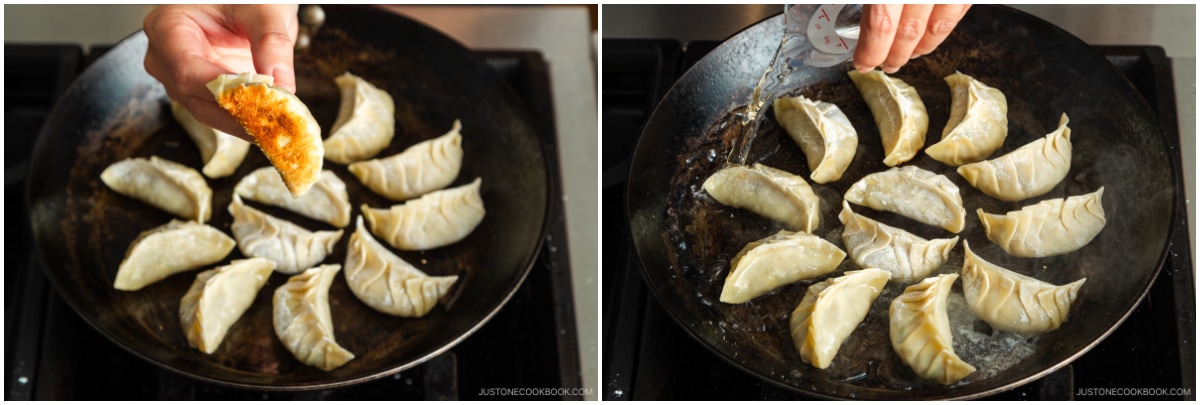
- Steam for about 3 minutes, until most of the water evaporates. Nami's Tip: Steam frozen gyoza an extra 1–2 minutes.
- Remove the lid and cook until the water fully evaporates, about 1 minute. Drizzle 1 tsp toasted sesame oil around the gyoza and cook, uncovered, until the bottoms are deep golden and crisp.
- Transfer to a plate. Cook the other batches.
To Serve
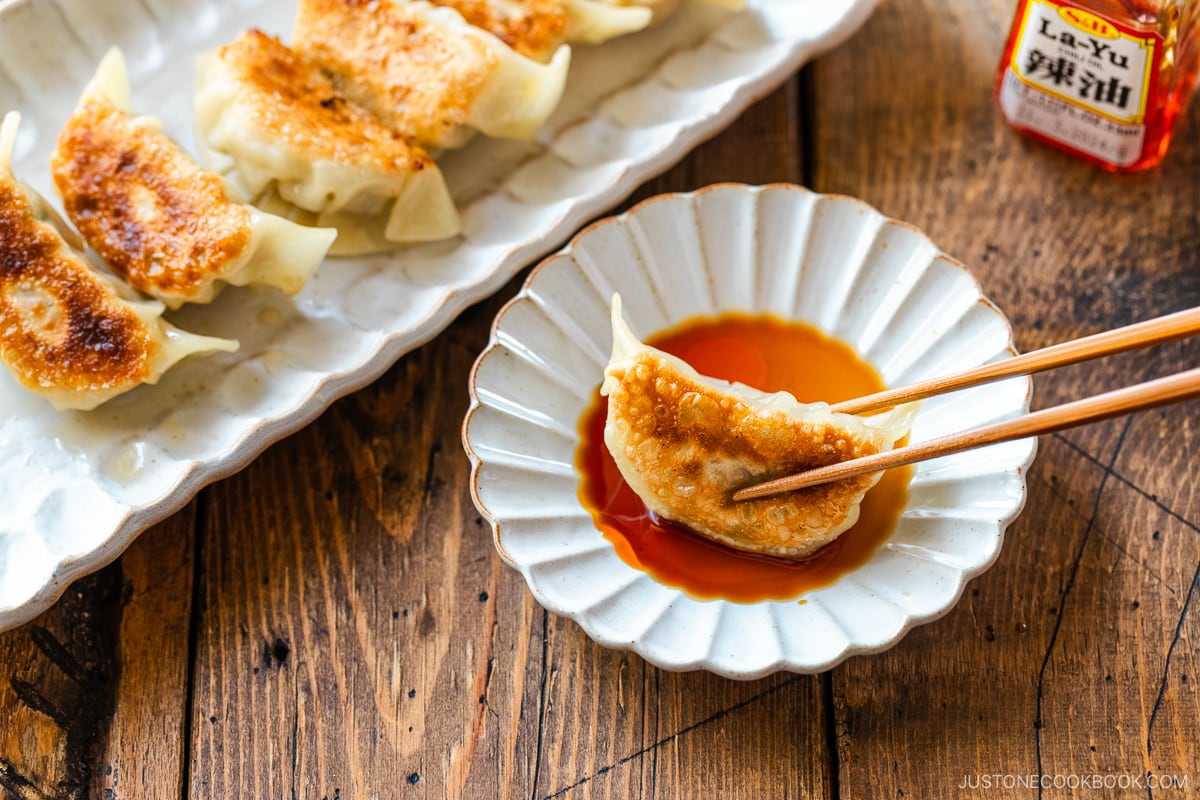
- Dipping sauce (per serving): Mix 1 Tbsp rice vinegar, 1 Tbsp soy sauce, and optional ⅛ tsp la-yu in an individual sauce plate or bowl.Transfer the gyoza to a plate and serve with dipping sauce on the side.
To Store
- Cool leftover cooked gyoza, transfer to an airtight container, and store in the refrigerator for up to 3 days or in the freezer for up to a month.
- Shape leftover filling into mini meatballs or patties and pan-fry until cooked through. Cool, pack in an airtight container, and store in the fridge for up to 3 days or in the freezer for up to a month.
- Fill leftover wrappers with sliced cheese, fold and press to seal, and pan-fry until golden on both sides. They are a favorite with kids!
Notes
- Add garlic chives. Stir in minced nira (garlic chives) for a pungent kick—a classic addition my mom always made.
- Swap the protein. Ground beef, turkey, chicken, or lamb all work in place of pork.
- Make it vegan. Use a mix of firm tofu, mushrooms, and vegetables. My Vegetable Gyoza recipe shows you how.
- Make miso dipping sauce. Mix in miso and sugar for a rich flavor.
- Try a different fold. For pleats to one side, see my How to Fold Gyoza post.
Nutrition
Did you make this recipe?
Tag @justonecookbook on Instagram so we can see your delicious creation!
Editor’s Note: The post was originally published on Feb 9, 2011. It was updated with new step-by-step and final images and the slightly revised recipe on April 13, 2024. It was republished with more information in the blog post on January 23, 2025.