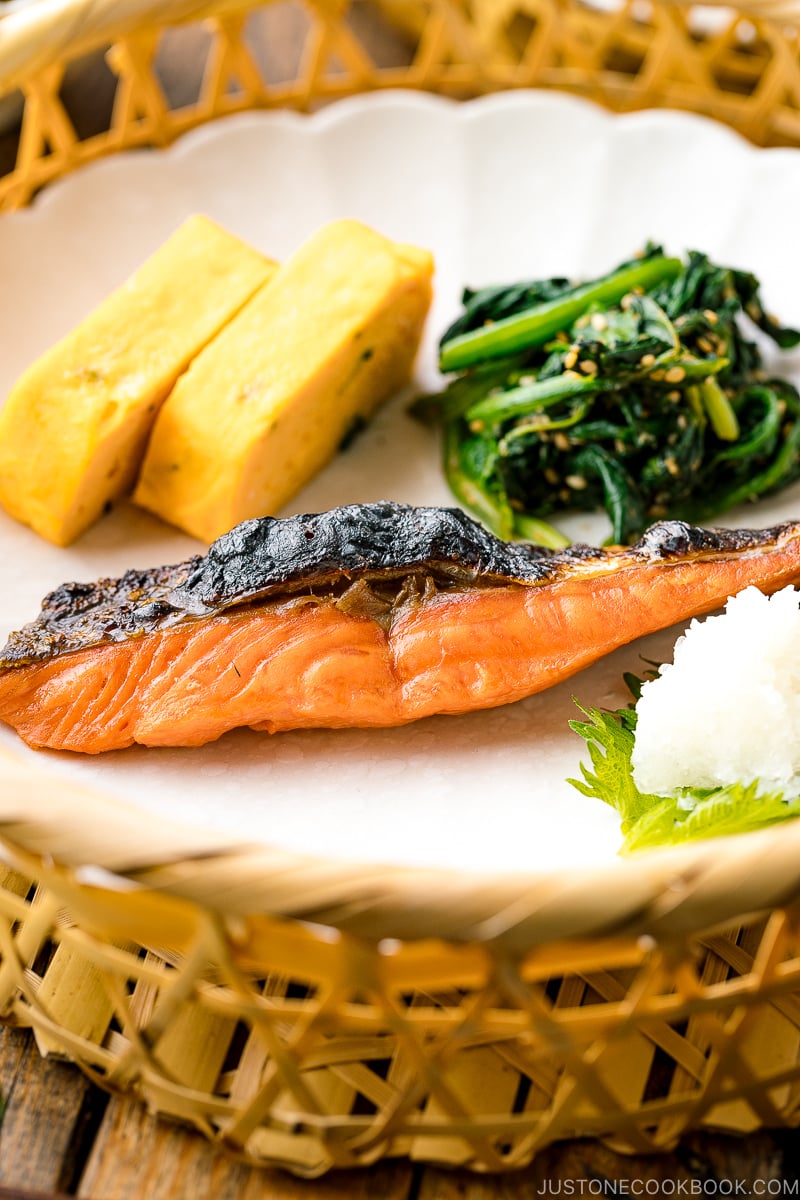
Surrounded by the ocean, Japan has relied on fish and seafood as a major source of protein for the Japanese people for centuries. I have many favorite fish and seafood dishes myself, but Japanese Salted Salmon (Shiozake or Shiojake) has to be one of the most classic grilled fish we enjoy of all time!
The natural richness and charred flavor of the grilled salmon are simply wonderful to eat as a part of breakfast, lunch, or dinner. You’ll need only 3 simple ingredients to make this recipe at home!
What is Japanese Salted Salmon?
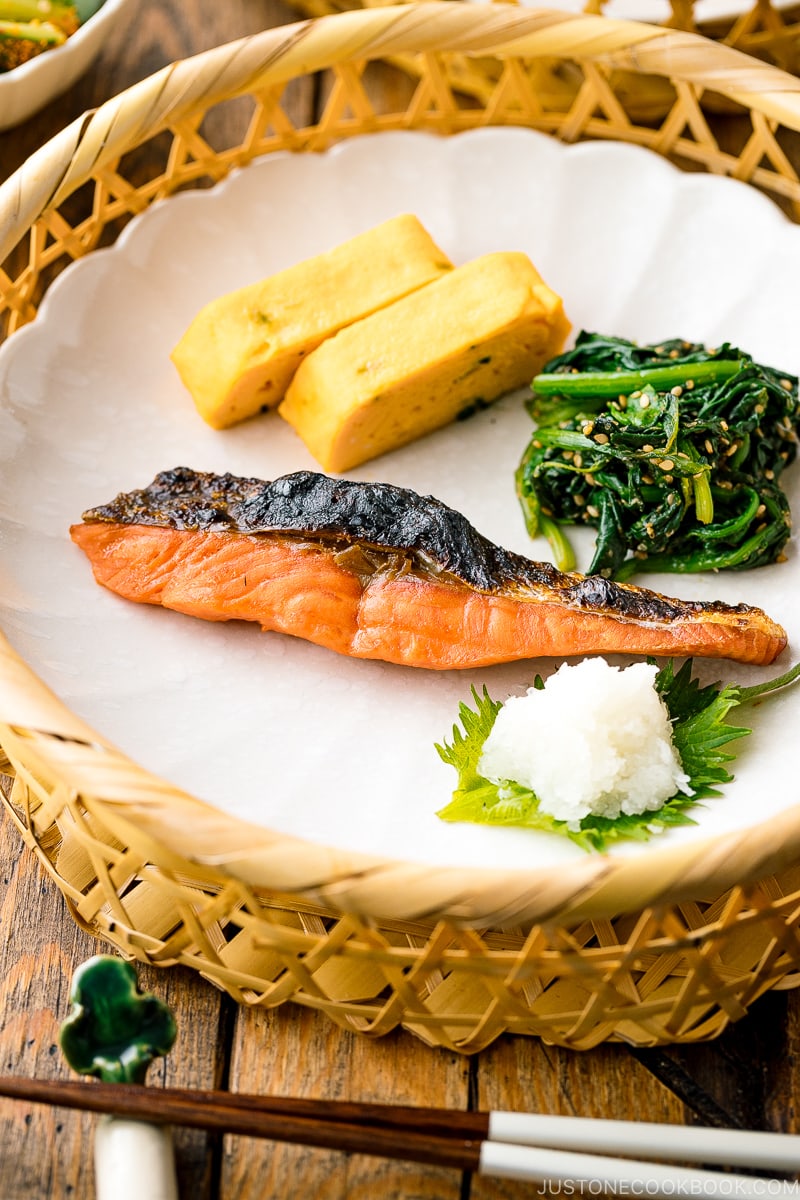
Japanese Salted Salmon is called Shiozake or Shiojake (塩鮭) and it’s made of salmon and salt with the addition of sake to clean the fish.
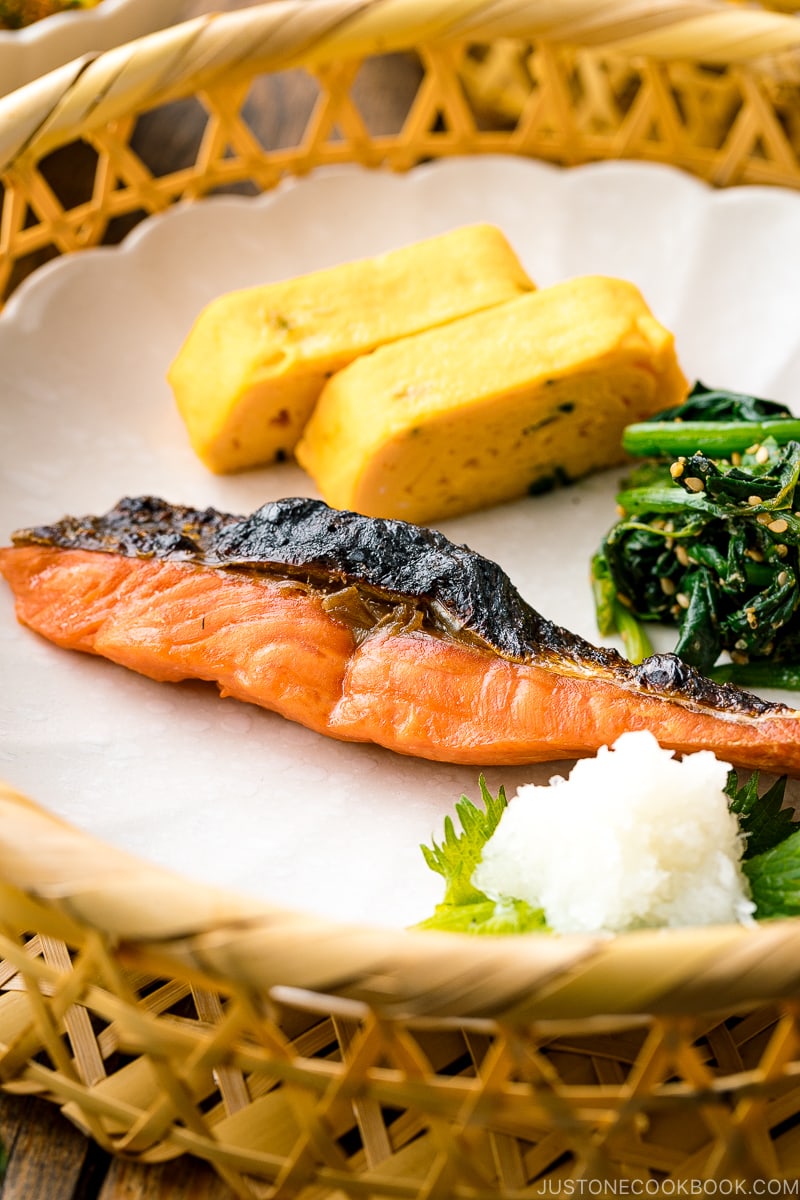
If you have been to Japan, you probably recall seeing or trying a traditional Japanese breakfast similar to the picture below.
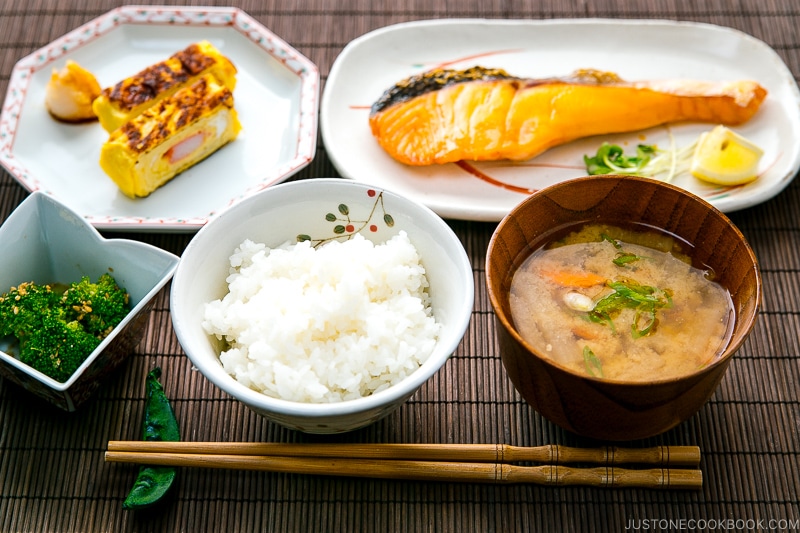
The breakfast set includes salted salmon (shiozake), steamed rice, miso soup (I made Tonjiru), a vegetable side (I made broccoli gomaae), and an egg dish (I made Tamagoyaki).
Aside from traditional Japanese breakfast, you may find salted salmon in a bento lunch box or as a filling for Japanese Rice Balls (Onigiri). Salted salmon is so versatile that I also use it in my Salmon Fried Rice, Ochazuke (a simple rice dish in green tea), and Okayu (Rice Porridge).
I used to buy prepared salted salmon from a Japanese supermarket for convenience. However, it can be a bit salty. Since my children love salted salmon and its crispy skin, I decided to slice the salmon fillets myself and started making my own salted salmon at home.
Turns out, it was ridiculously easy and economical that I didn’t need to buy the prepared salted salmon from a Japanese grocery store anymore. I hope you are inspired to make your own, too!
Ingredients for Japanese Salted Salmon
- Japanese-style salmon fillets (I recommend firmer and less-fatty Sockeye salmon; you can slice your own fillets)
- Salt (I use Diamond Crystal kosher salt)
- Sake to clean the fish
That’s it, just 3 simple ingredients!
How to Make Japanese Salted Salmon
- Marinate the salmon with sake and let rest for 10 minutes. Before salting, you want to make sure to pat the salmon surface dry with paper towels. Then sprinkle salt liberally on all sides, especially on the skin. The salting process not only helps to remove any fishy taste but also plays a role in enhancing umami and firming up the flesh of salmon. We will then wrap the fillets in a few layers in an air-tight container before keeping them chilled in the refrigerator for at least 2 days.
- After 2 days, wrap the fillet in plastic and store them in the freezer.
- Broil the salmon in the oven, or it can be grilled or pan-fried. The salmon will come out tender with a flavorful crispy skin.
You can make a larger batch of salted salmon at once and keep them frozen to enjoy at a later time.
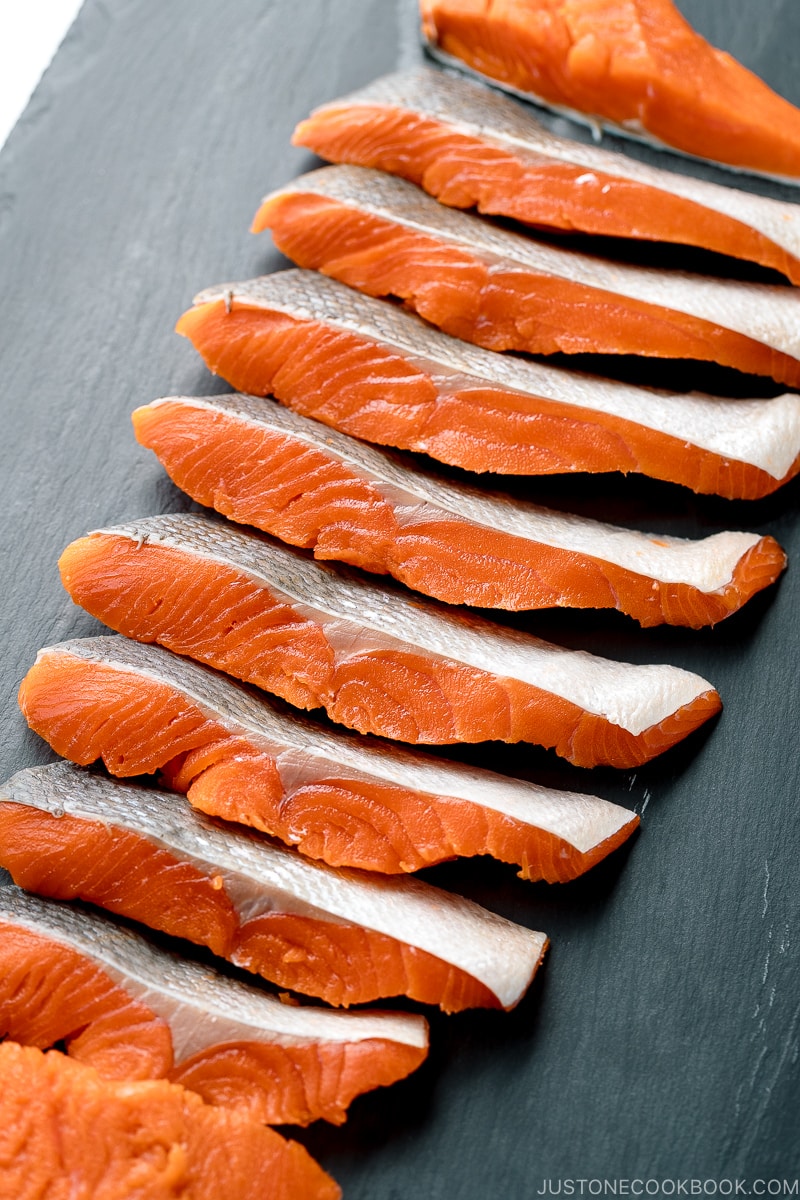
How to Cut Salmon into Japanese-Style Fillets
As I mentioned earlier, it’s very easy to cut a salmon fillet into Japanese-style thin fillets. Why do we have to cut it this way? The fillets are much thinner so it’s quicker to cook through. As it’s diagonally sliced, the salmon fillet has its skin on top of the fillet. It’s perfect for broiling the skin to achieve a crispy texture.
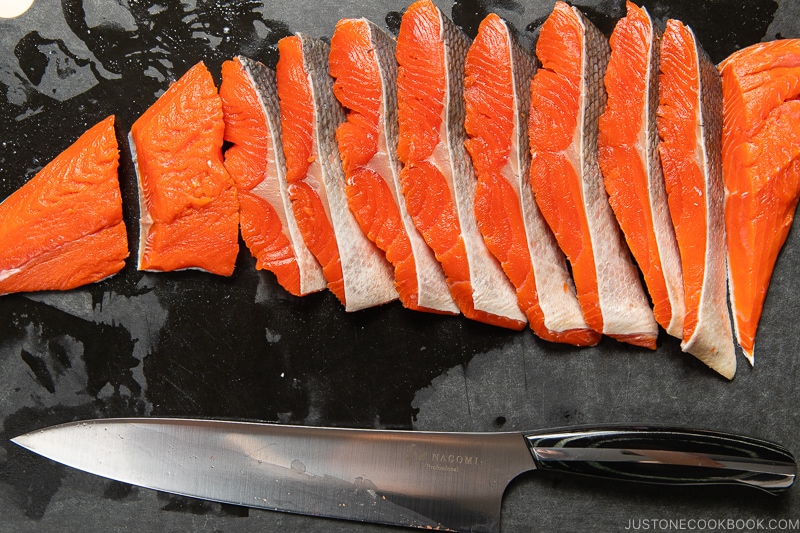
To cut the side of the salmon, place the salmon skin side down with the narrow tail end to your left (the head end is wider). Next, cut off the tail’s narrowest part, which is too small for Japanese-style fillets. Tilt your knife back about 30 degrees and diagonally slice the salmon toward the tail end.
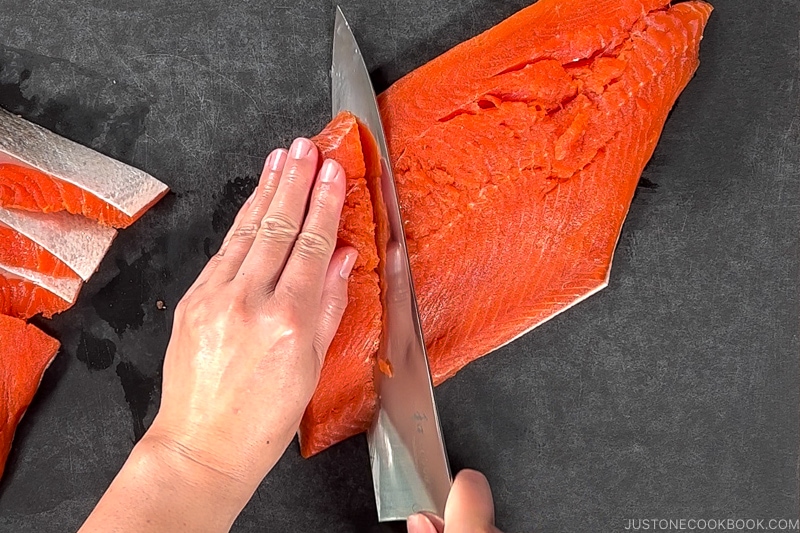
I decide the portion size based on the look of the salmon fillet and slice the fillet into 1 inch (2.5 cm) thickness. The typical Japanese-style fillets are 60-80 grams (2.1-2.8 ounces), which are much smaller fillets than Western-style fillets.
You can read the detailed tutorial on How to Cut Salmon into Japanese-Style Fillets.
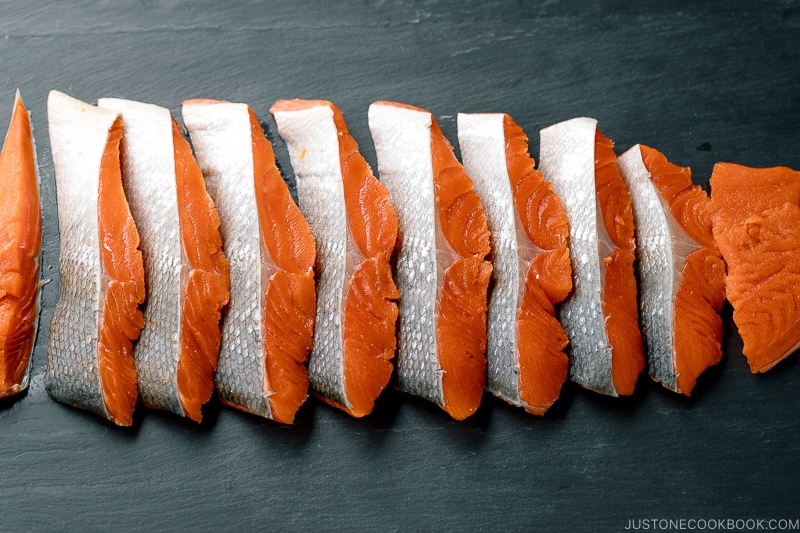
There you have it! You can use the same cutting technique to cut other kinds of salmon for Japanese-style fillets.
Salting Salmon with the Right Amount
Traditionally, when there was no refrigeration, salmon was salted to improve its shelf life and to keep up with the abundance of salmon catches. By salting, the water is removed and the fat is converted to amino acids, which results in improving the taste.
The higher the salt concentration is, the better the preservation is. Depending on the amount of salt, salted salmon is categorized into two types:
- ama-kuchi (甘口) (5-8% salt concentration)
- kara-kuchi (辛口) (8% or more)
However, people are more health-conscious these days, and the supermarkets sell their ama-kuchi salted salmon as 3%, chu-kara (中辛) as 5%, and kara-kuchi as 8% or more.
If you’re not familiar with Japanese fermented foods such as soy sauce, miso, umeboshi, and pickles, you may find the salted salmon a little strong on taste. Even for the Japanese, we do not eat salted salmon by itself, and we always eat a small portion of salted salmon (typically 3 oz or 80 g) with steamed rice.
FAQs
How salty is shiozake?
Japanese salted salmon is intentionally salty with a flavorful profile so it can be eaten with plain rice. In Japan, a 5% salt ratio is common. It’s not meant to be eaten on its own. Japanese people enjoy it in small portions with Japanese rice and mild side dishes.
Can I reduce the salt in Japanese salted salmon?
Yes, you can reduce the amount of salt to about 3–4% of the salmon’s weight. This makes the salmon milder in taste, but it won’t keep as long in the refrigerator and is less suitable for long storage.
How do you remove salt from salted salmon?
Soak the cured salmon in a mixture of 2 parts sake and 1 part mirin for about 3 hours in the refrigerator. Pat dry before cooking. This method removes excess salt while keeping the fish tender.
What to Serve with Shiozake
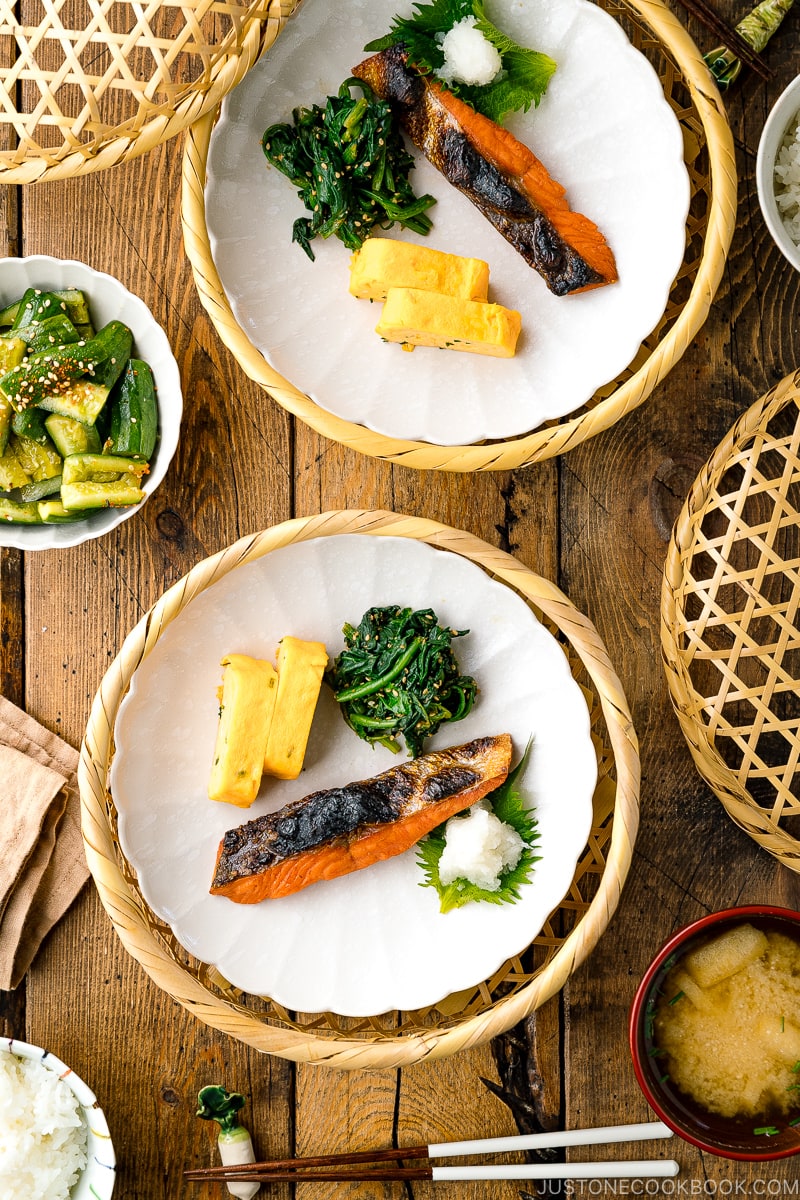
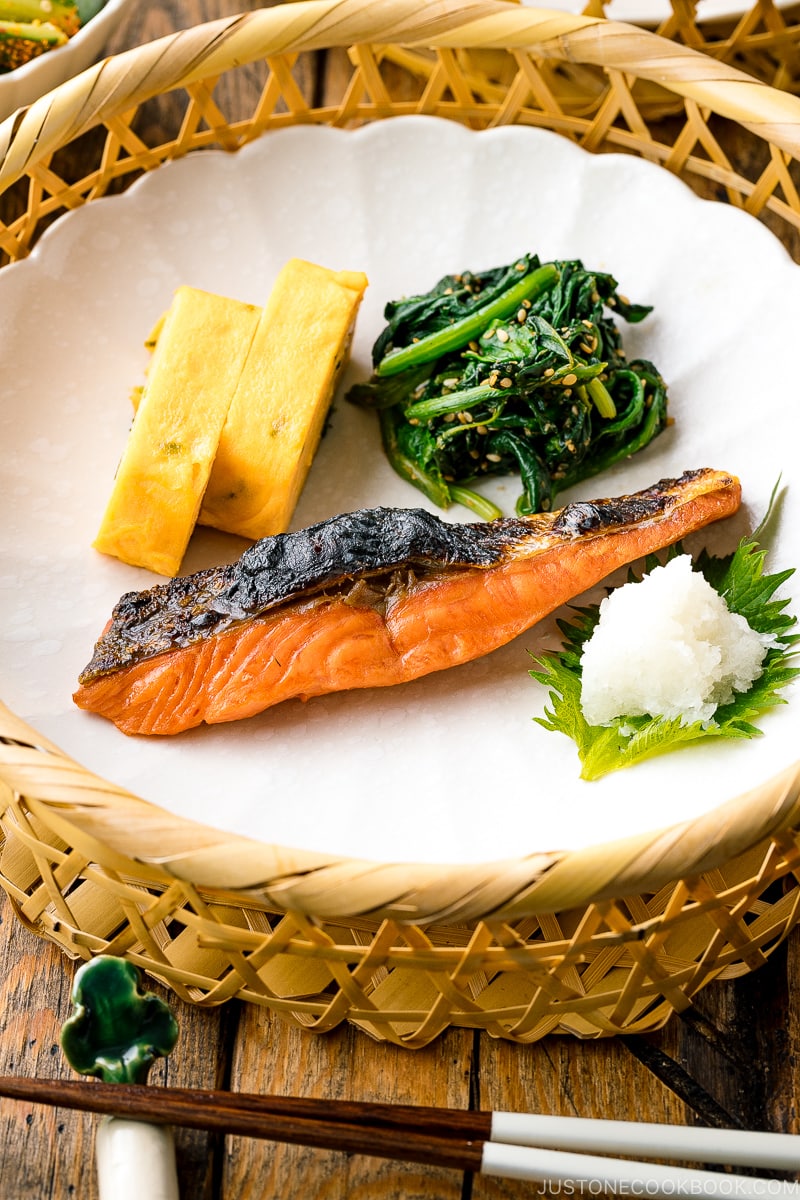
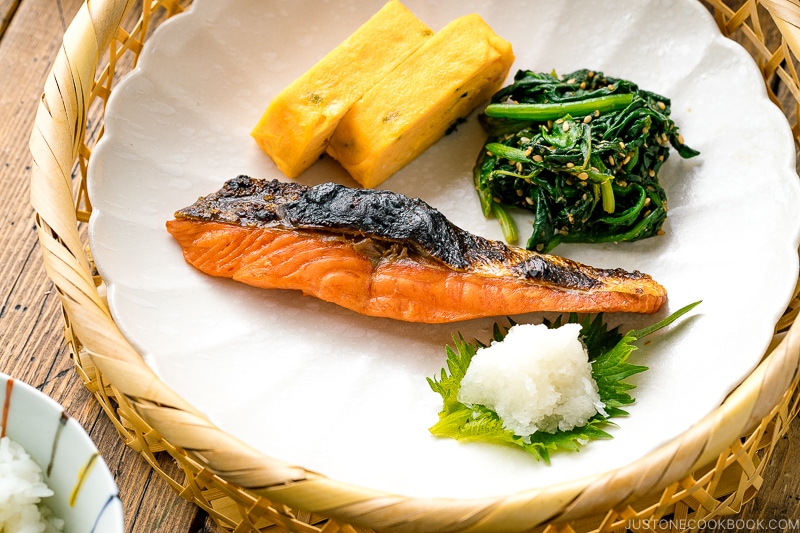
Japanese salted salmon is such a delightful dish to enjoy, especially for traditional Japanese breakfast. Make sure you have good-quality Japanese short-grain rice and miso soup to go with this dish. I’ve also served:
- Japanese Sweet Rolled Omelette (Tamagoyaki)
- Japanese Spinach Salad with Sesame Dressing (Gomaae)
- Soy Sauce Pickled Cucumber
Other Delicious Japanese Salmon Recipes
Wish to learn more about Japanese cooking? Sign up for our free newsletter to receive cooking tips & recipe updates! And stay in touch with me on Facebook, Pinterest, YouTube, and Instagram.
Japanese Salted Salmon (Shiojake/Shiozake)
Ingredients
- 1.3 lb skin-on Japanese-style salmon fillets (store bought or cut your own; I recommend sockeye salmon; see end Notes)
- 3 Tbsp Diamond Crystal kosher salt (5% of the salmon‘s weight in salt of any kind; see Notes)
- 1–2 Tbsp sake
For Serving
- 2 inches daikon radish (grated; optional)
Instructions
- Before You Start: Please note that this recipe has a curing time of 2 days.
To Cut the Fillets (optional)
- If you're using pre-cut fillets, skip to To Salt the Salmon. To cut fillets from a side of salmon, follow my detailed instructions with photos in How to Cut Salmon into Japanese-Style Fillets. Brief overview: Place a side of salmon skin side down with the tail end to your left. (The tail end is narrow and the head end is wider). Cut off the tail‘s narrowest part, which is too small for Japanese-style fillets. Then, tilt your knife back 30 degrees and slice the salmon diagonally toward the tail end about 1 inch (2.5 cm) thick.
- This 1.3 lb (600 g) side of sockeye salmon yielded 8 Japanese-style fillets and 3 additional odd-sized pieces.
To Salt the Salmon
- Sprinkle 1–2 Tbsp sake over 1.3 lb skin-on Japanese-style salmon fillets. Turn to coat all sides. Let sit for 10 minutes.
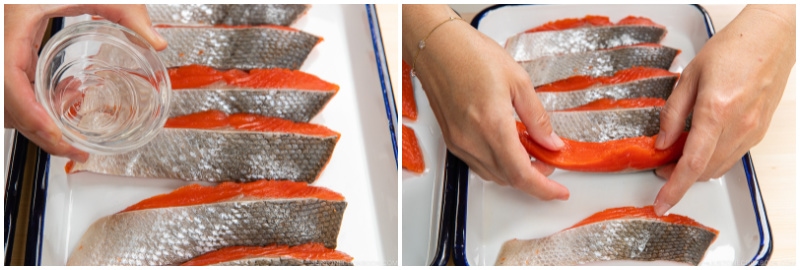
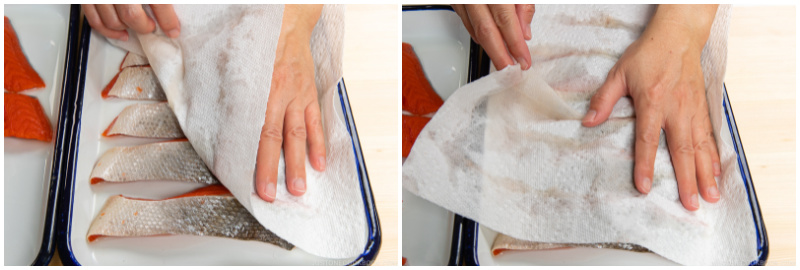
- Pat the salmon dry with a paper towel.
- Sprinkle some of the salt on the skin. Sprinkle the remaining salt on both sides of the fillets. Nami's Tip: I use 5% of the salmon's weight in salt. In Japan, the salt concentration ranges from 3–8% or more; see my blog post for more information.
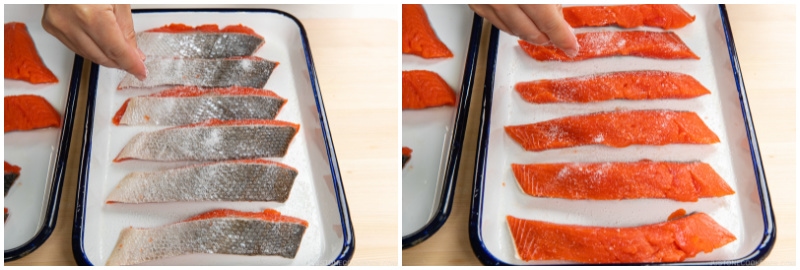
- Press any leftover salt onto the skin.
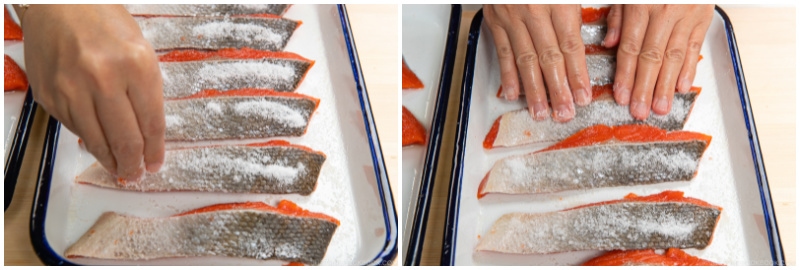
To Pack and Cure
- Line the bottom of an airtight container with a paper towel to absorb moisture. Place a few salted fillets in a single layer in the container, then place another paper towel on top.Nami's Tip: The salt will draw out the moisture from the salmon.
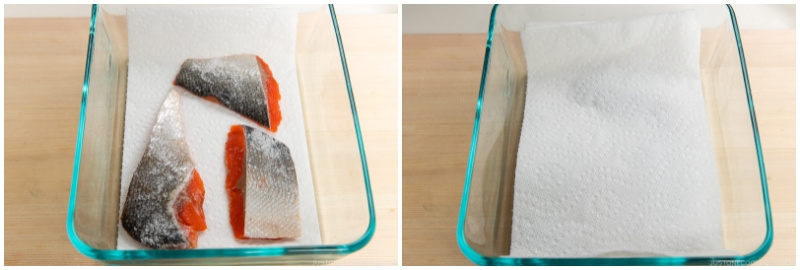
- Repeat for the second and third layers.
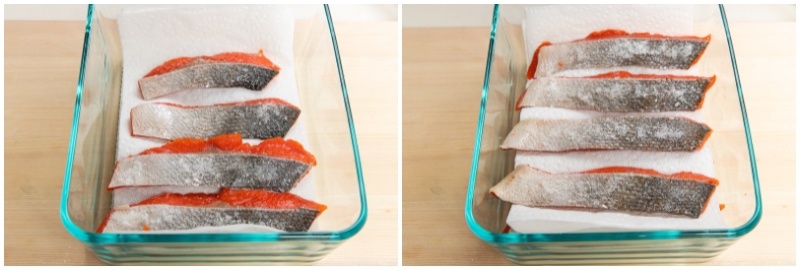
- Lay a final sheet of paper towel on top. Cover and refrigerate for 2 days.
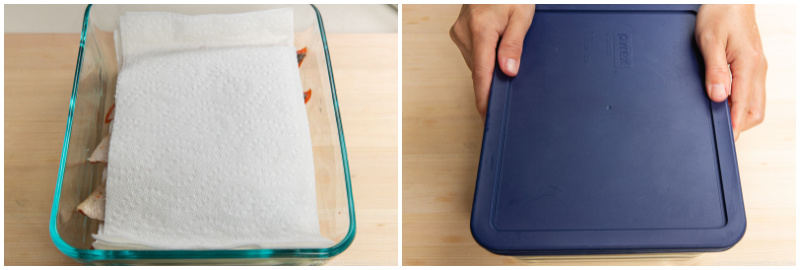
To Pat Dry
- Open the container after 2 days and discard the wet paper towels. The fillets should be darker and firmer.
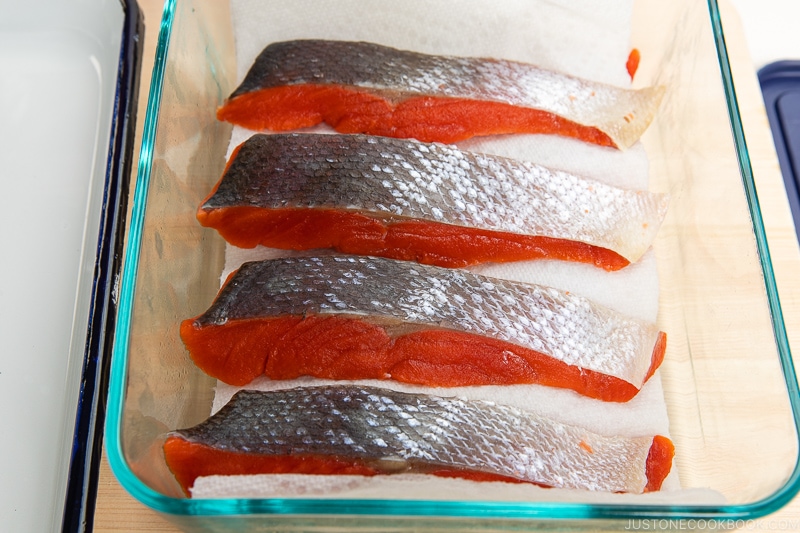
- Gently pat the fillets dry with a clean paper towel. The salted salmon fillets are now ready to use. To cook them now, jump to the “To Broil“ section. To freeze the fillets to use later, see the next step.
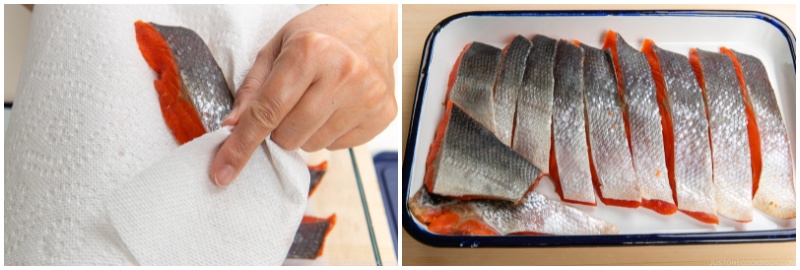
To Freeze for Later (optional)
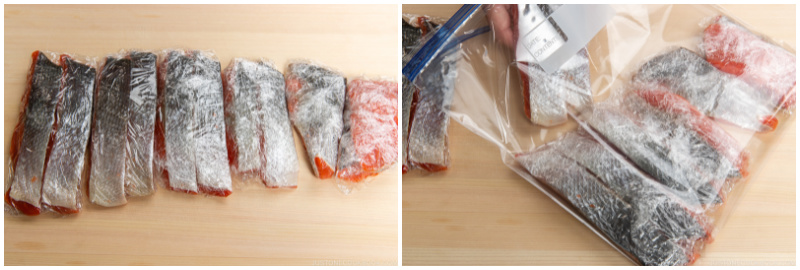
- Wrap the cured salmon fillets individually or in pairs to freeze and cook later. To wrap two fillets together in the same sheet of plastic wrap, see the next step.Nami's Tip: I usually wrap two fillets together, as I often need two for bento boxes or four for a family meal.
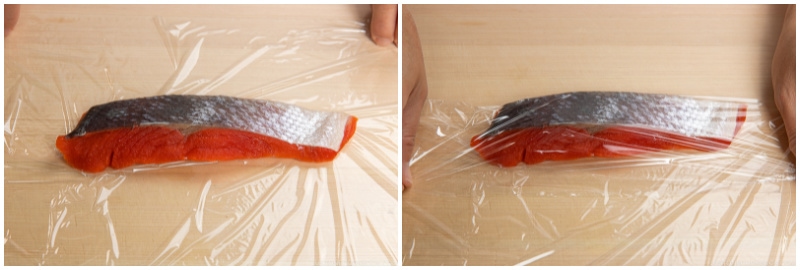
- To wrap two fillets together, fold one corner over one fillet, covering it completely. Place the second fillet next to it, separated by the plastic layer. Roll both tightly in the plastic wrap.Nami's Tip: Separating the fillets with a layer of plastic wrap keeps them from fusing together when frozen. This is helpful when you need to take out just one frozen fillet.
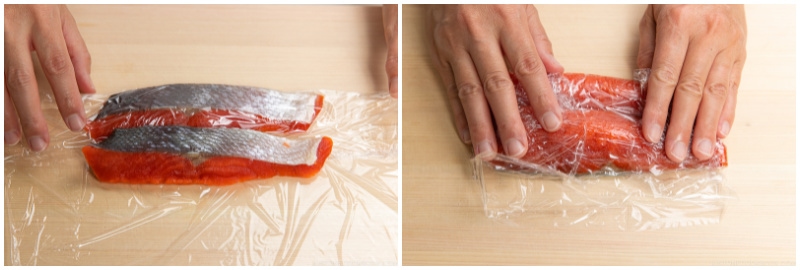
- Wrap the rest of the fillets. Put them in a freezer bag and store in the freezer for up to 1 month.
To Defrost the Frozen Fillets
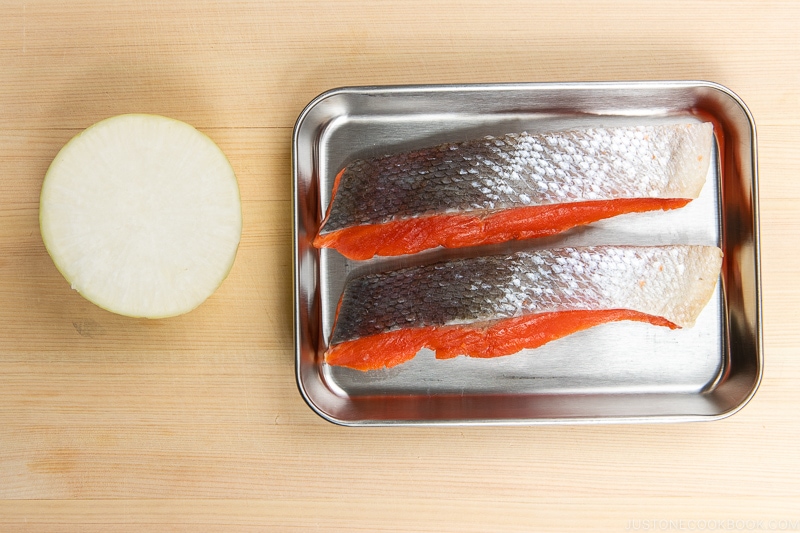
- The night before cooking the salmon, place the frozen wrapped fillets in the refrigerator overnight to defrost completely. Let the salmon sit on the counter for 15–20 minutes to warm to room temperature. When you're ready to cook, gather all the ingredients.
To Broil (recommended)
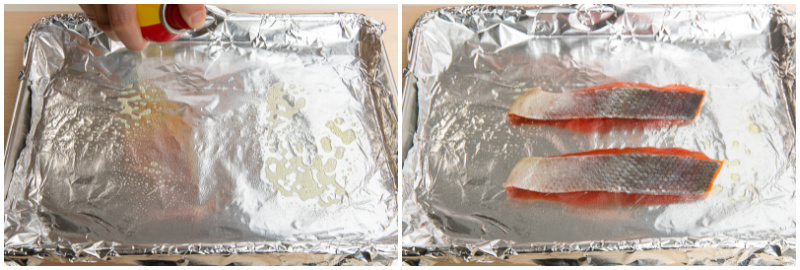
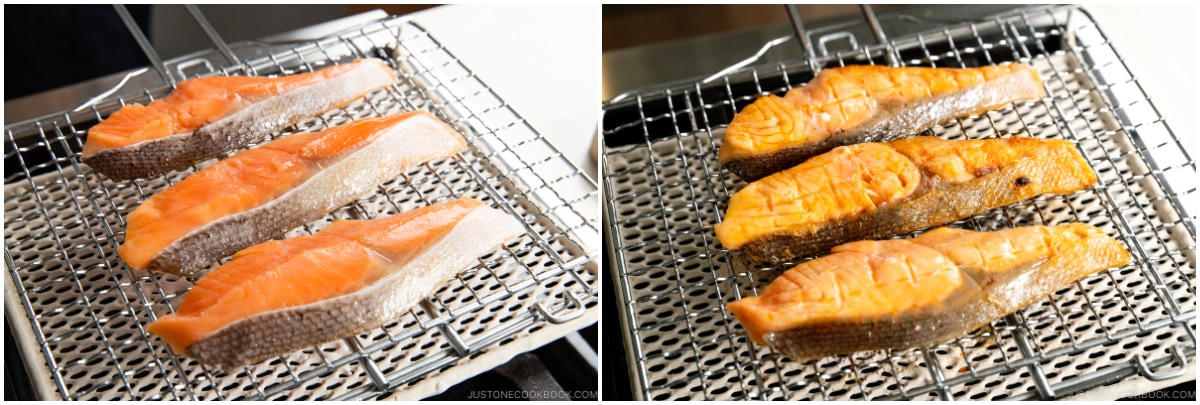
- Place the oven rack in the center position, about 9 inches (23 cm) away from the top heating element. Preheat the oven broiler on High (550ºF/288ºC) for 5 minutes. Line a baking sheet with foil and grease it with a thin coat of (spray) cooking oil. Place the salmon on the foil, skin side up (for crispy skin). Nami's Tip: I use foil for easy clean up. When broiling, you don‘t control the temperature in the oven. Instead, you control the distance between the broiler and the surface of the food. It‘s similar to using hotter and cooler zones on your grill.
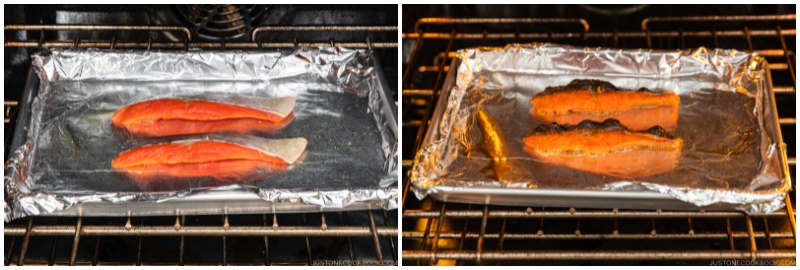
- Broil the salmon for 8–10 minutes, until well done—it should be flaky and more dry. No need to flip it.Nami's Tip: The cooking time varies depending on the thickness of the fish and the distance between the broiler and the food.
To Bake (optional)
- If you don't have a broiler, preheat the oven to 425°F (218ºC) with the rack placed in the middle position. Bake the salmon on a baking sheet lined with parchment paper for 10–12 minutes, until well done (more dry and flaky).
To Grill (optional)
- If you prefer, cook the fillets on a wire fish grill on medium heat over a stovetop or direct fire. Cook about 5 minutes on each side, until well done (more dry and flaky).
To Serve
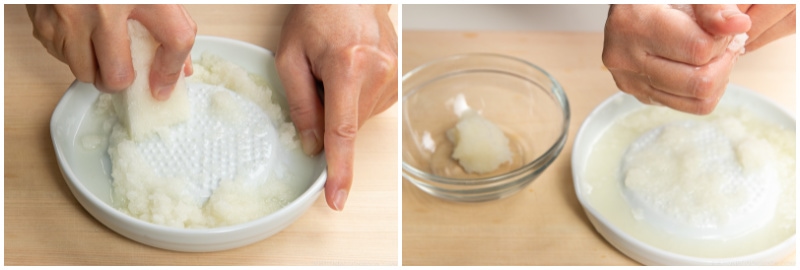
- Peel 2 inches daikon radish. Grate and gently squeeze out most of the liquid, keeping it moist.Nami's Tip: I use a ceramic grater.
To Serve
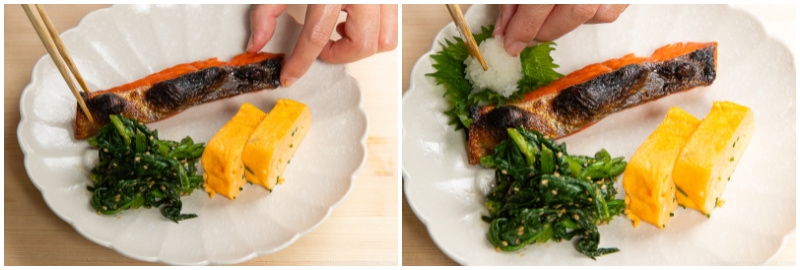
- Serve the broiled salmon with grated daikon on the side. Nami's Tip: I also served Tamagoyaki (Japanese Sweet Rolled Omelet) and Spinach Salad with Sesame Dressing in this meal.
To Store
- Store in an airtight container in the refrigerator for up to 3 days and in the freezer for up to 2 weeks. Do not refreeze previously frozen fish.
Notes
Nutrition
Did you make this recipe?
Tag @justonecookbook on Instagram so we can see your delicious creation!
Editor’s Note: This post was originally published on December 2, 2012. The post has been updated with new images and more helpful content in March 2022.