

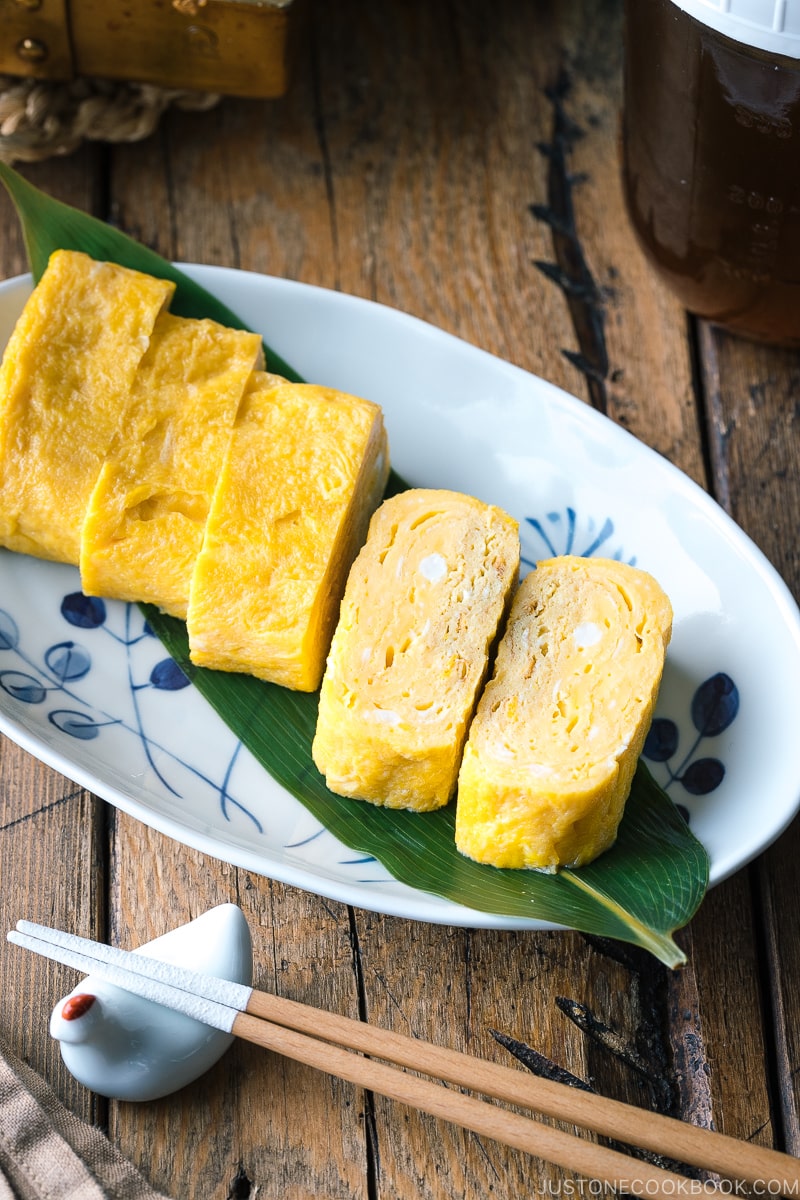
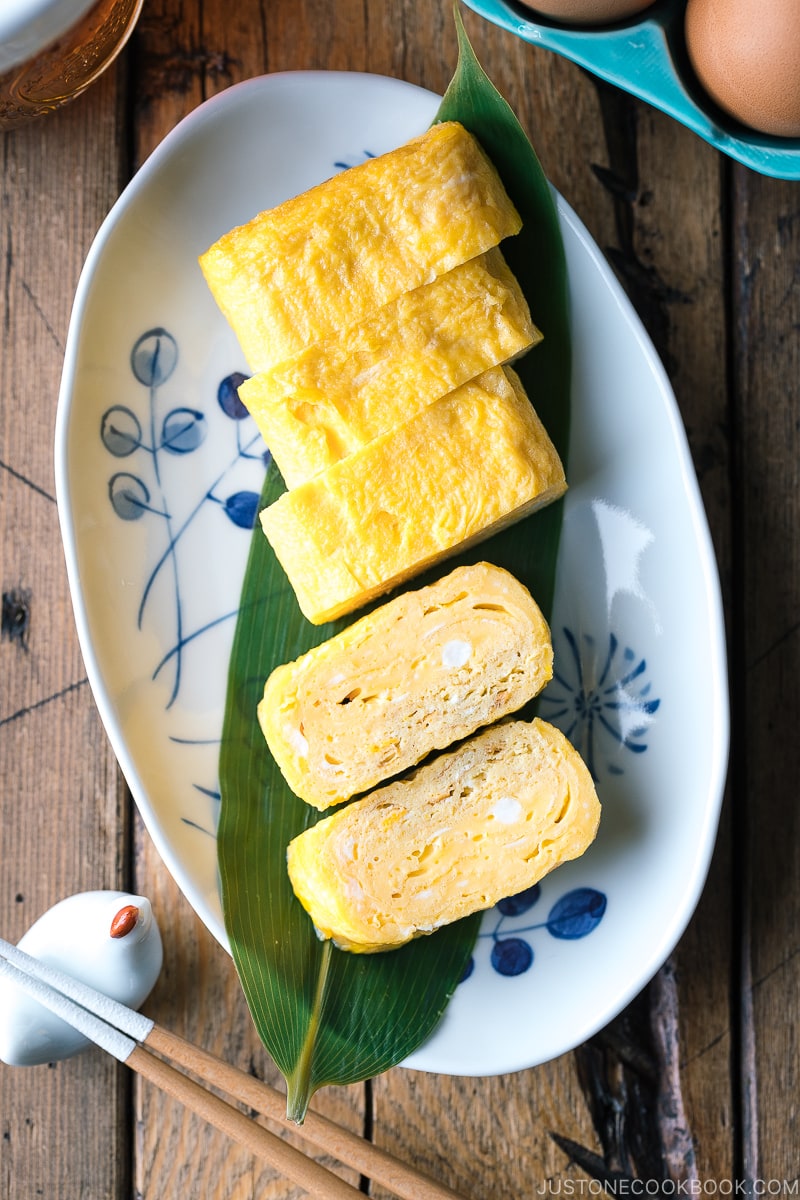
Today, I’m sharing a Tokyo-style Japanese rolled omelete, Sweet Tamagoyaki (Atsuyaki Tamago) (厚焼き玉子). You might have seen this omelette made by Master in the popular Netflix® show—Midnight Diner: Tokyo Stories.

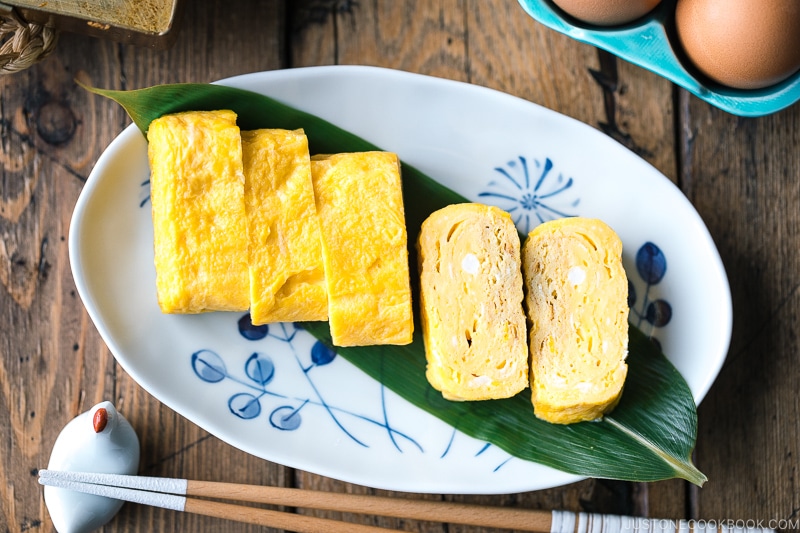
What is a Tamagoyaki?
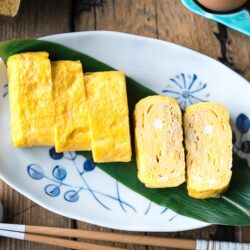
Tamagoyaki (卵焼き, 玉子焼き), the Japanese rolled omelette, is known for its bright yellow, miniature pillow-shaped appearance. This petite egg dish is ubiquitous in Japan and is a favored option for breakfast or as a filling for bento boxes.
The preparation involves rolling thin layers of seasoned and slightly sweetened egg mixture to create a compact, rectangular shape.
Types of Japanese Rolled Omelette (Tamagoyaki)
Classic Tamagoyaki (Japanese Rolled Omelette)
プレーン玉子焼き
The simplest form — made with little to no dashi, making it the easiest version to roll and a great starting point for beginners.
- Dashi
- Little to none
- Flavor
- Neutral / mild
- Texture
- Firm, easy to roll
- Best for
- Bento & breakfast
Dashimaki Tamago (Japanese Dashi Rolled Omelette)
だし巻き卵 · Kansai/Osaka
The Kansai-style version with a high dashi ratio. Savory, silky, and delicate — best eaten immediately straight from the pan.
- Dashi
- High ratio
- Flavor
- Savory, umami-rich
- Texture
- Silky, delicate
- Best for
- Eat immediately
Sweet Tamagoyaki (Atsuyaki Tamago)
厚焼き玉子 · Kanto/Tokyo
The Kanto-style version — sweeter and firmer with less dashi. Holds its shape well, making it ideal for bento boxes and meal prep.
- Dashi
- Less dashi
- Flavor
- Sweeter
- Texture
- Firmer, structured
- Best for
- Bento, storage
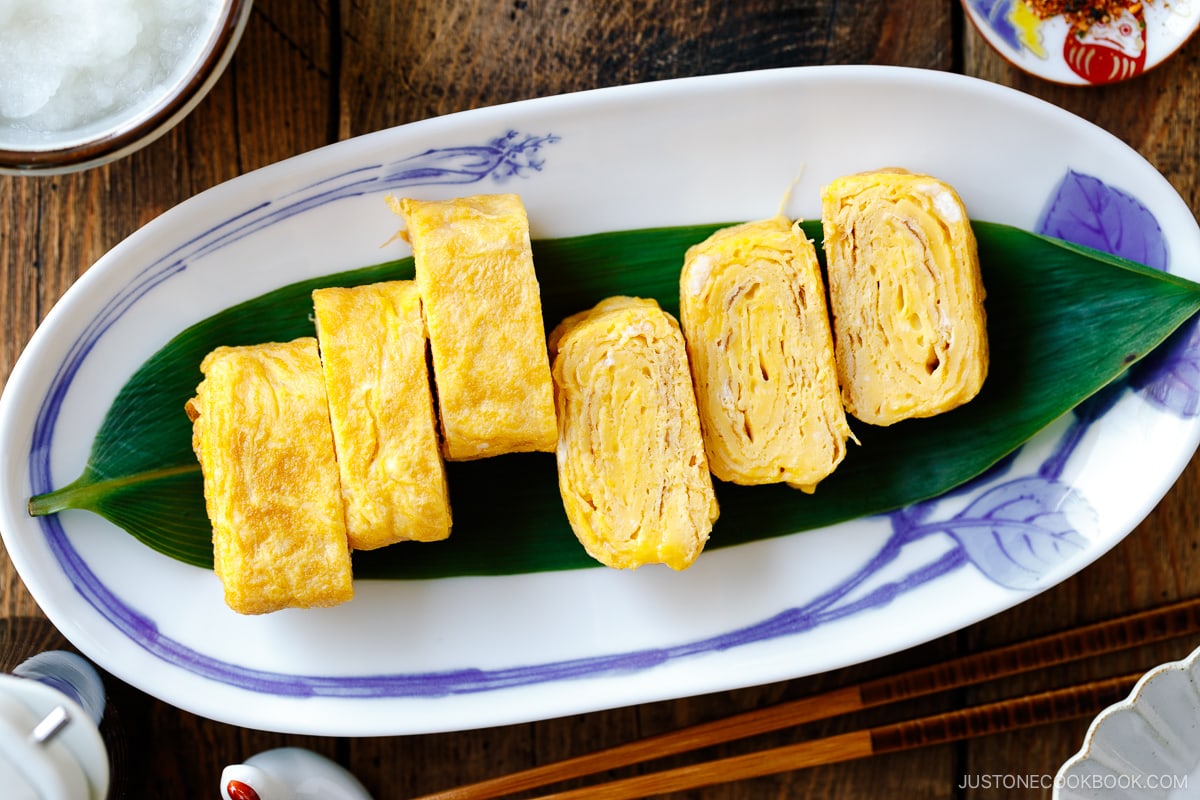
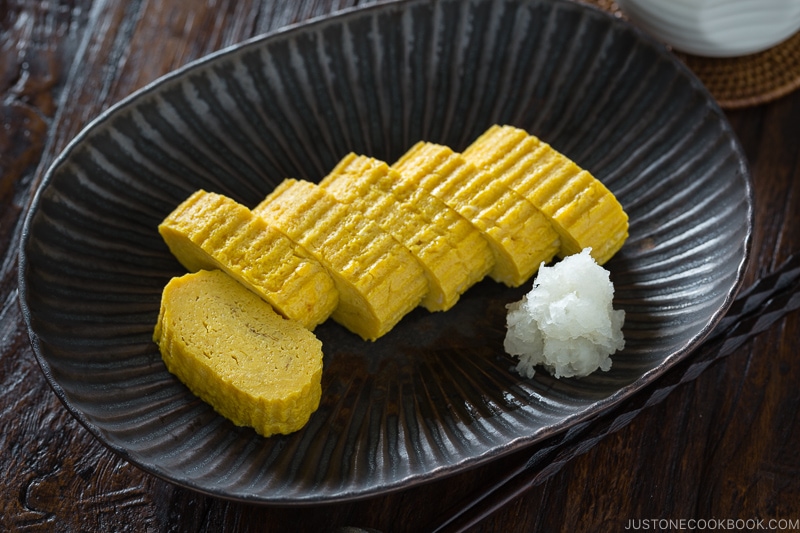
Ingredients for Sweet Tamagoyaki
The best thing about this recipe is that you can make tamagoyaki fast! I prepare sweet dashi ahead of time and make this sweet tamagoyaki for my children’s lunch.
- eggs
- sweet dashi (kanro dashi) — please read more information below
- cooking oil
How to Make Sweet Dashi (Kanro Dashi)
This golden liquid is called Kanro Dashi (甘露だし) in Japanese, but let’s just call it Sweet Dashi. It’s simply made of dashi (Japanese soup stock), sugar, soy sauce, and salt.
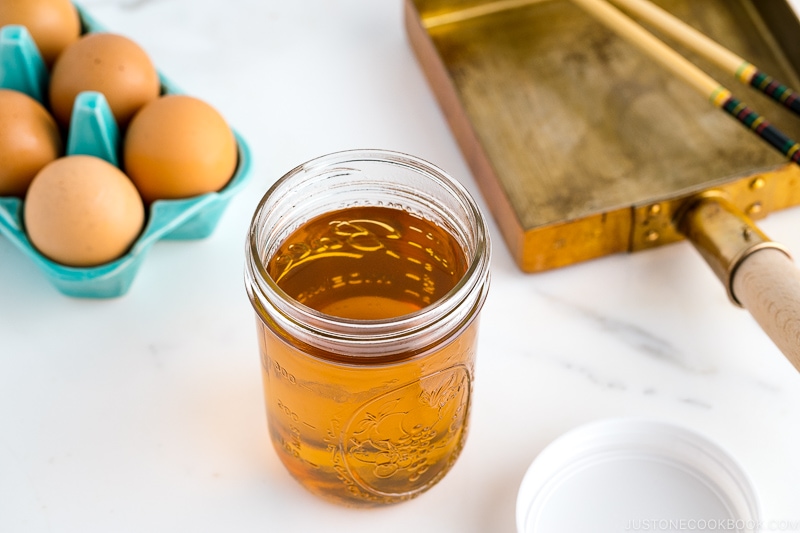
For dashi, use a dashi packet or dashi powder to make dashi instantly, or make kombu and katsuo dashi or vegan dashi from scratch—which takes just 20 minutes.
I usually make one batch and use the sweet dashi throughout the week. Any leftovers work beautifully as a base for simmered dishes or braised vegetables.
If you make tamagoyaki regularly, keep a batch of this sweet dashi in the pantry—it makes meal prep much faster.
How to Make Atsuyaki Tamago
- Make the sweet dashi. First, let’s make good dashi (Japanese soup stock). See the section below for more information on dashi. Once you have dashi, mix it with sugar, soy sauce, and salt. The key is to make this sweet dashi ahead of time and keep it in the fridge.
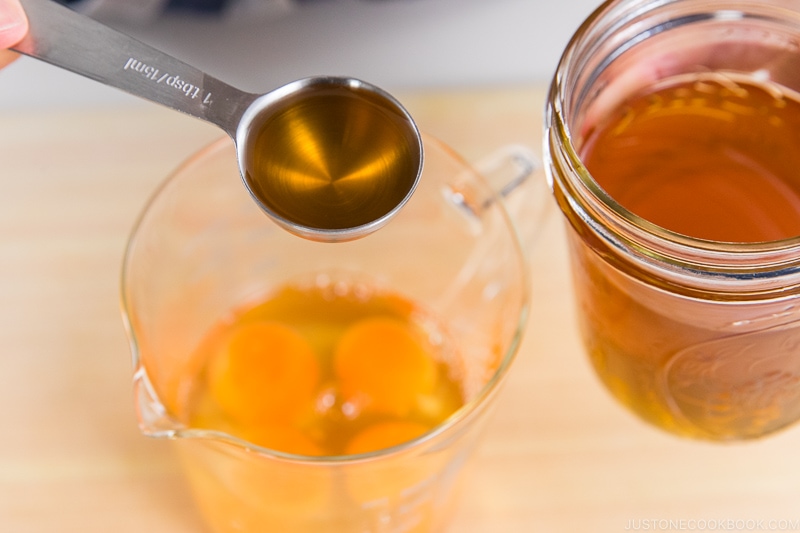
- Prepare the egg mixture. I use 1 tablespoon of sweet dashi for 1 large egg. Don’t overmix the egg yolks and egg whites.
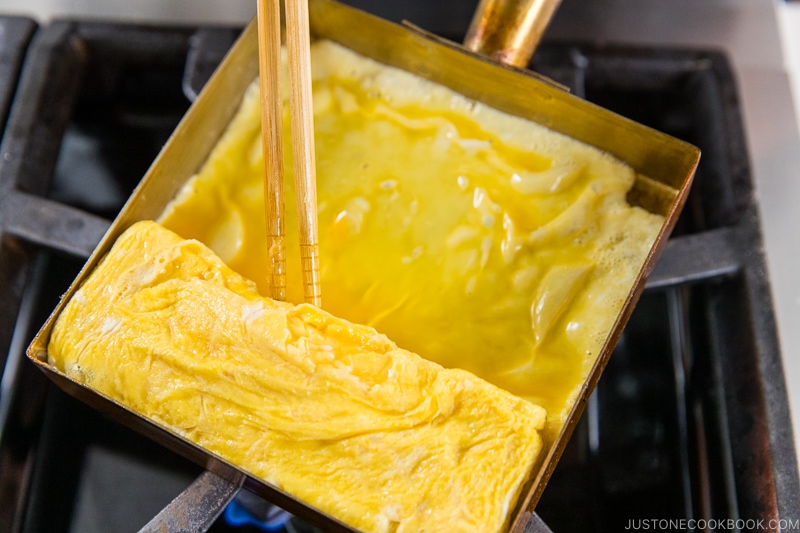
- Cook the egg and start rolling. Detailed step-by-step instructions are provided in the recipe card below.
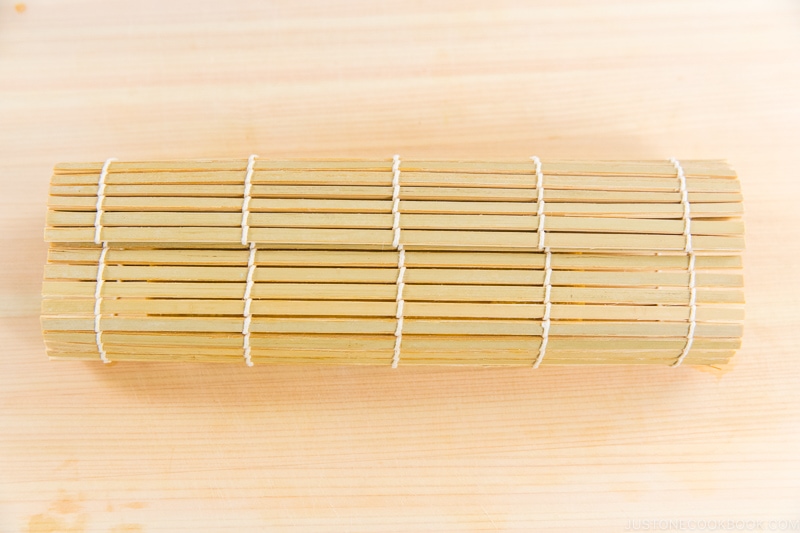
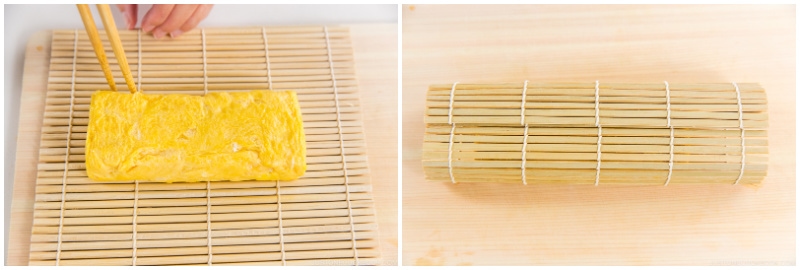
- Wrap Tamagoyaki with the sushi mat. Wrap the hot tamagoyaki in the bamboo sushi mat to mold it into a proper shape.
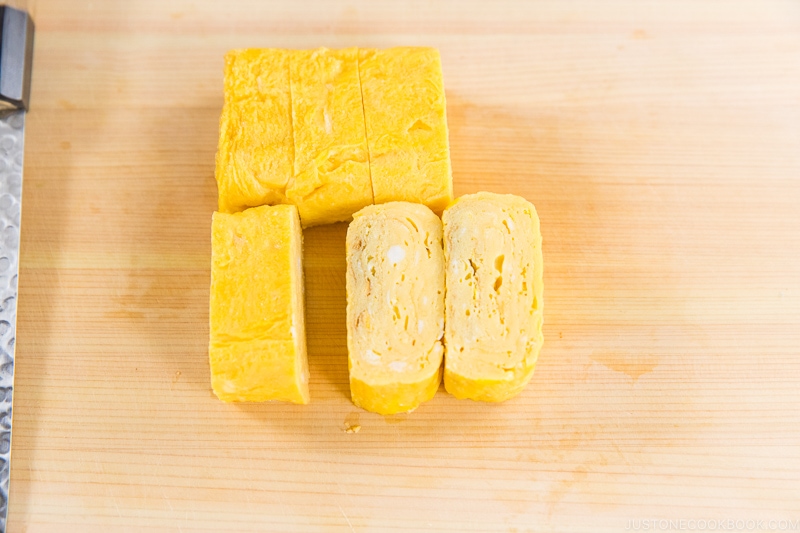
- Cut into thick slices. The tamagoyaki pan I used for this recipe is 6 x 6 inches (15 x 15 cm), so I cut into 1 inch thickness. Feel free to adjust the thickness.

Nami’s Recipe Tips
- Make the kanro dashi ahead of time – Premix the sweetened dashi before cooking—it saves a step and ensures the sugar is fully dissolved.
- Grease the pan generously – The sugar increases sticking, so don’t skimp on oil even if you’re using a non-stick pan.
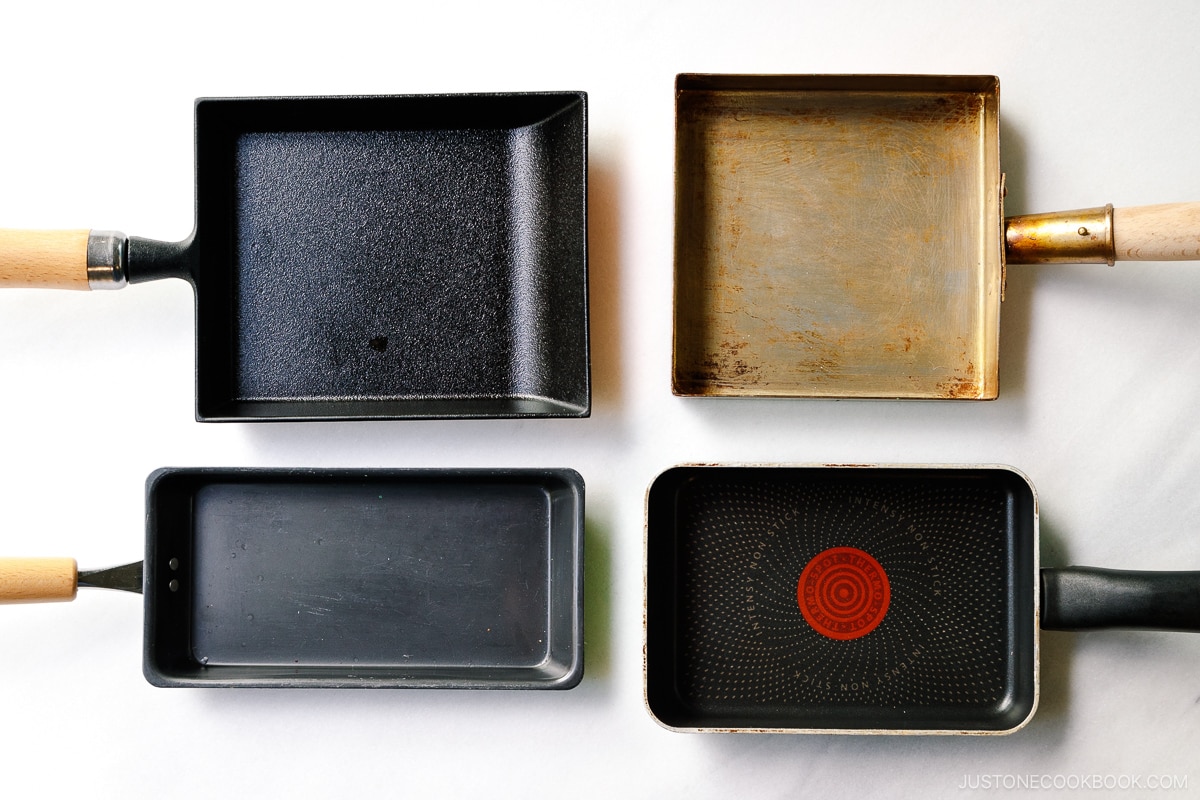
- Adjust heat based on your pan – Different pan materials retain and conduct heat differently—copper heats fast, cast iron holds heat longer—so adjust your stove accordingly rather than following the heat setting literally.
- Start rolling before the surface is fully set – Because the layers are thicker, waiting too long makes rolling difficult and can cause cracking.
- Watch the heat carefully – The sugar in the egg mixture makes it prone to burning. Keep the heat at medium and don’t rush it.
- Shape firmly with a bamboo mat – Atsuyaki tamago holds its shape better when pressed and molded while still warm.
- Practice makes perfect – I’ve been making tamagoyaki since middle school, yet I still get rusty after a long break. Don’t get discouraged after a few tries—you’ll get the rhythm back quickly once you’re at it again.
What to Serve with Tamagoyaki
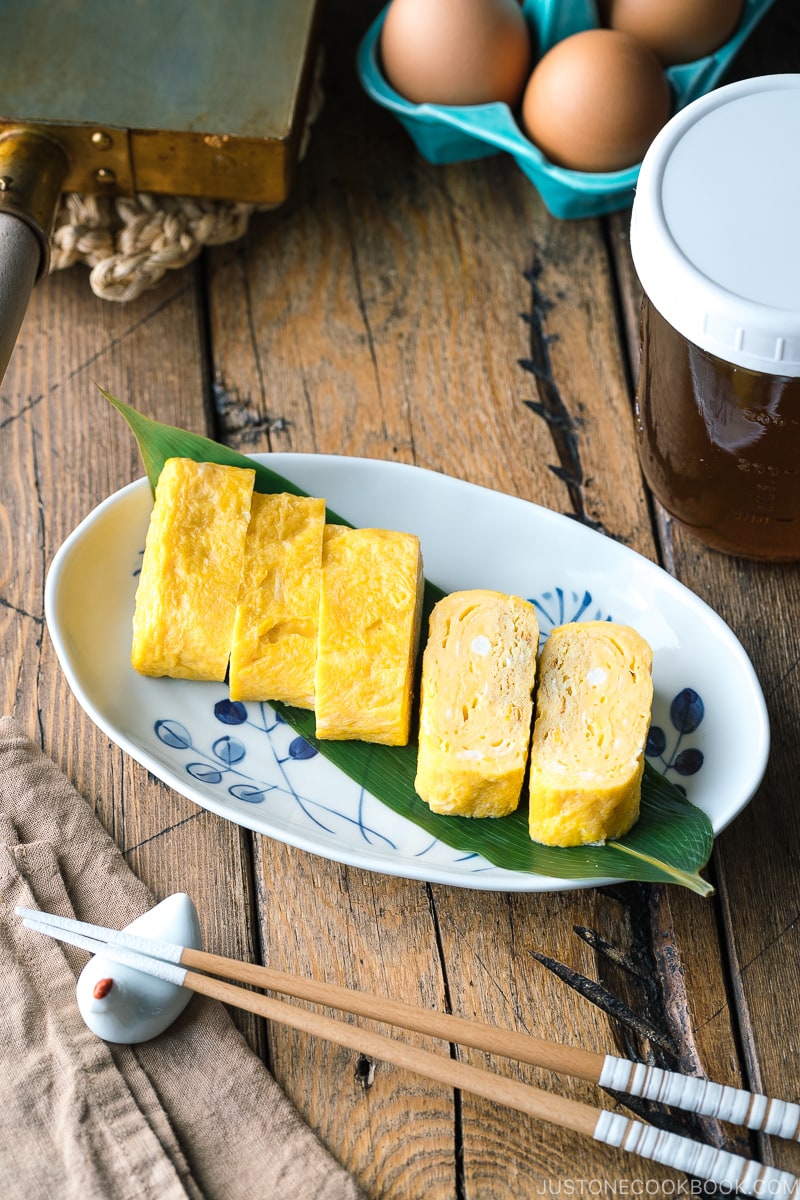
Tamagoyaki is a versatile side, but I think it is extra special when enjoyed in a traditional Japanese-style breakfast. If you’re up for a hearty Japanese breakfast, try it on a weekend! Here are some ideas to serve tamagoyaki with:
- Steamed Rice
- Salted Salmon
- Spinach gomaae or Green Bean Shiraae
- Tsukemono (Japanese Pickles)
- Miso Soup
FAQs
Can I use a round frying pan for tamagoyaki?
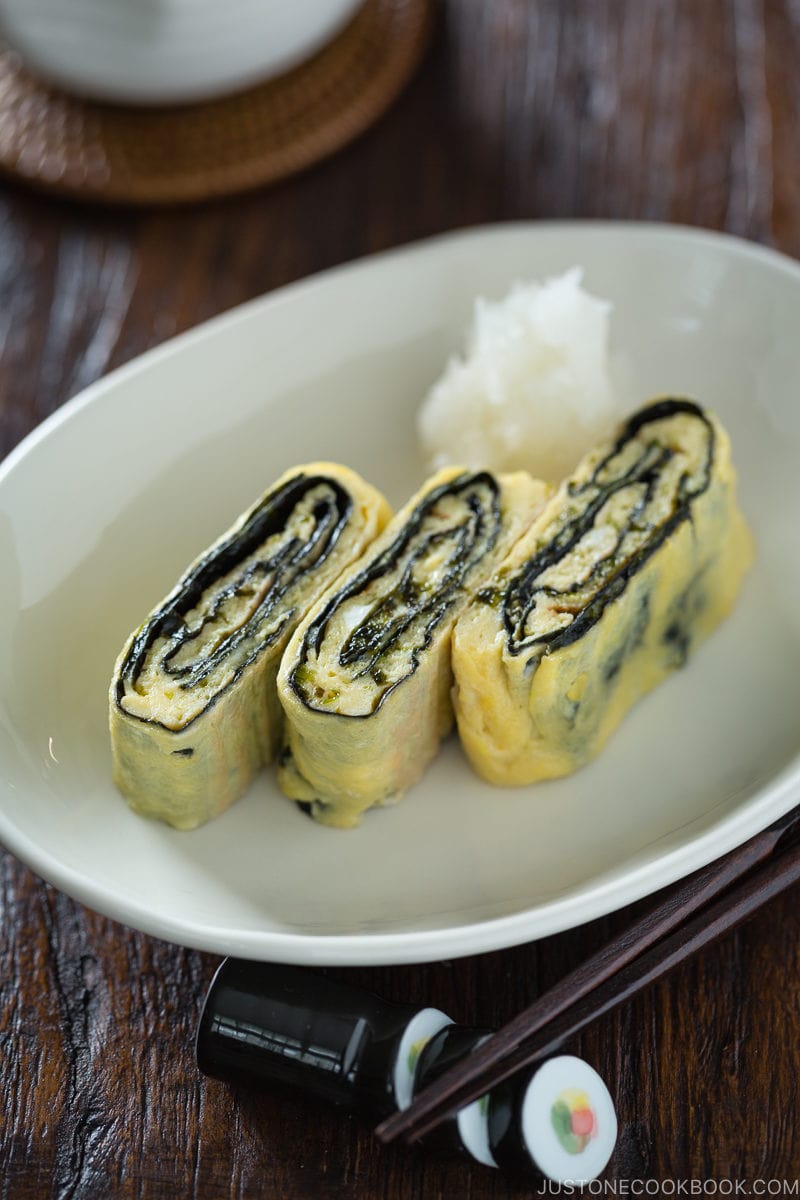
Yes! I’ve made tamagoyaki in a round pan many times and it works fine. The only downsides are cosmetic—the roll will be flatter, the ends uneven, and slightly looser since the curved edges make it harder to tighten as you roll.
What pan do you recommend for tamagoyaki?
If you make tamagoyaki often, a good pan makes a difference. Over the years I’ve tried many—non-stick, carbon steel, and copper—before landing on my favorite: a cast iron tamagoyaki pan from Iwachu, a 120-year-old Nambu ironware (南部鉄器) maker in Japan. It’s heavy, but it heats evenly and becomes nearly non-stick over time.
That said, the pan only takes you so far. Beautiful tamagoyaki takes practice—don’t give up!
I’d love to hear how yours turned out! 💛 Please leave a star rating and comment below to share your experience. Your feedback not only supports Just One Cookbook but also helps other home cooks discover recipes they can trust.
Sweet Tamagoyaki (Atsuyaki Tamago)
Ingredients
- 4 large eggs (50 g w/o shell)
- 4 Tbsp sweet dashi (recipe follows)
- 2 Tbsp neutral oil (to cook the egg)
For the Sweet Dashi (makes 1¾ cups)
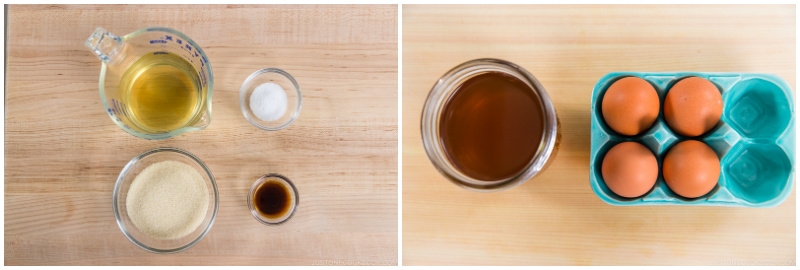
- 1¼ cups dashi (Japanese soup stock) (use standard Awase Dashi, dashi packet or powder, or Vegan Dashi)
- ½ cup sugar
- 1½ tsp soy sauce
- 2 tsp Diamond Crystal kosher salt
Instructions
- Gather all the ingredients for the sweet dashi and rolled omelet.
To Make the Sweet Dashi
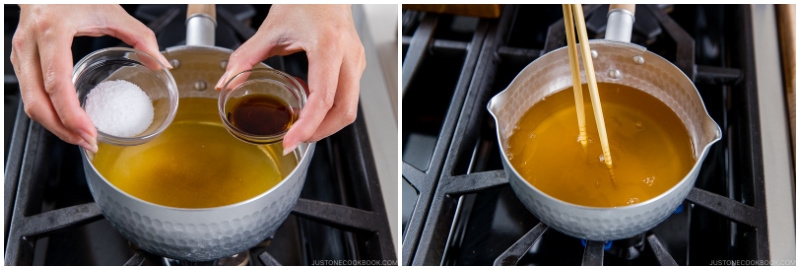
- In a small saucepan, combine 1¼ cups dashi (Japanese soup stock) and ½ cup sugar.
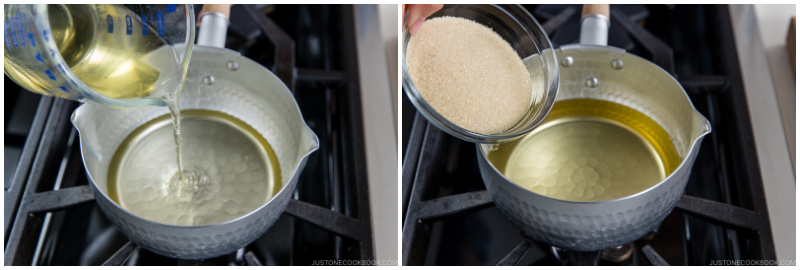
- Add 1½ tsp soy sauce and 2 tsp Diamond Crystal kosher salt. Turn the heat to medium and mix well together.
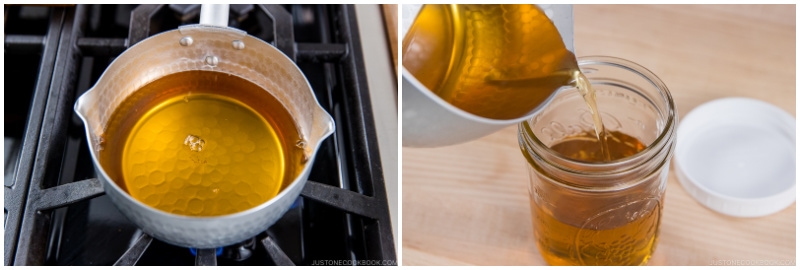
- When the sugar is dissolved, turn off the heat and transfer into a mason jar. Let cool completely before closing the lid. Store in the refrigerator for up to a week or freeze it in batches. For example, my tamagoyaki pan requires 4 eggs and 4 Tbsp sweet dashi, so I‘d freeze 4 Tbsp portions of sweet dashi. You can also use an ice cube tray to freeze it.
To Make the Egg Mixture
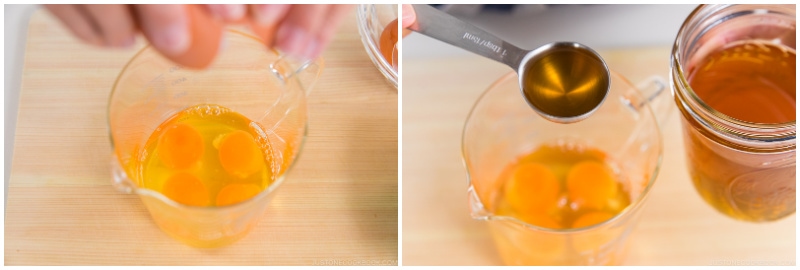
- In a bowl or a liquid measuring cup with a handle, combine 4 large eggs (50 g w/o shell) and 4 Tbsp sweet dashi (1 Tbsp of sweet dashi per large egg). Depending on the size of your tamagoyaki pan (or frying pan), adjust the number of eggs.
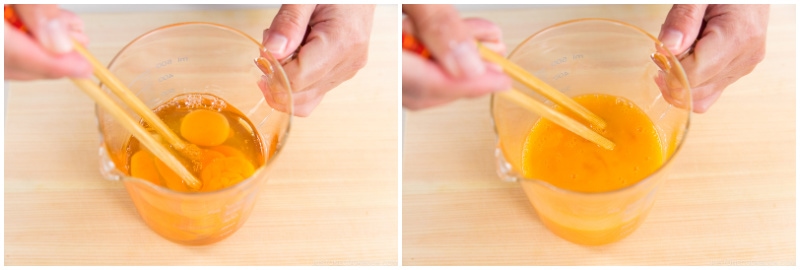
- Using chopsticks, break the egg yolks and whisk to combine with the whites, but do not overbeat. It should have a thick and elastic consistency.
Final Tips Before You Start
- Please remember: 1) The pan must be hot when you add the egg mixture; otherwise, it will stick. 2) To adjust the heat, lift and move the pan away from or toward the heat source. 3) Use your arms and shoulders to move the pan toward you and roll the egg, instead of using just your wrist. It gives you better control and momentum. 4) Only the final layer matters for the look. Don’t worry about small tears and holes until the final layer. Make sure to maintain a good shape throughout cooking, as the final layer can’t hide an irregular shape. 5) Make 4–6 layers for a rectangular tamagoyaki pan and 2–3 layers for a round pan.
To Cook the Tamagoyaki
- Heat the tamagoyaki pan over medium heat. Add 2 Tbsp neutral oil to a small bowl. Grease the bottom and sides of the pan with a folded paper towel soaked in the oil. Make sure to wipe off any excess oil. Test the pan to see if it‘s hot enough: Dip chopsticks in the egg mixture and touch the tips to the frying pan. If the egg sizzles, the pan is ready. Note: I once tried to use a silicone brush instead of a paper towel, but it left excess oil that created an unpleasant look on the omelet with lots of small holes/bubbles.
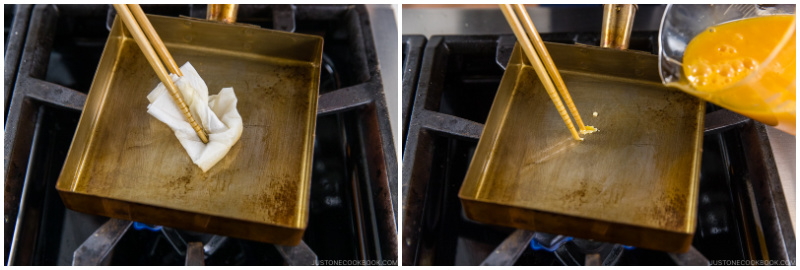
- The 1st layer: Pour in just enough egg mixture to cover the cooking surface. Pop the air bubbles with chopsticks and tilt the pan to fill the holes with excess egg mixture.
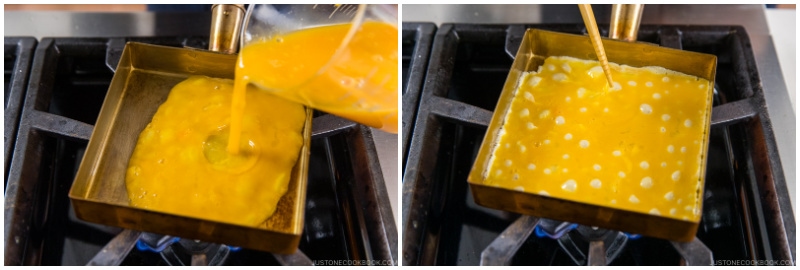
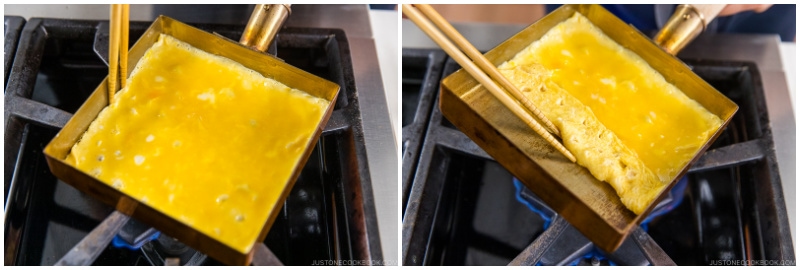
- When the egg is just set (the mixture is not runny but not cooked through), run your chopsticks along the edges to detach the egg from the pan‘s sides. Then, roll the egg toward you, starting from the far edge. If you use chopsticks, lift the frying pan toward you in a rolling motion to create momentum that will help you roll the egg. If you use a spatula, you may need to occasionally remove the pan from the heat so the bottom doesn’t get too hot.
- Once you‘ve finished rolling up the omelet to the side closest to you, grease the bottom and sides of the pan with the paper towel soaked in oil (remember to remove any excess).
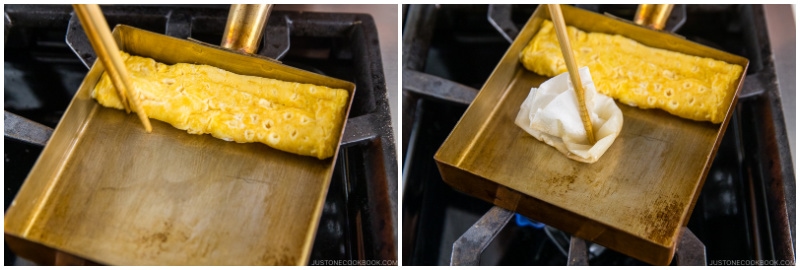
- Move the omelet to the far edge and grease the bottom and sides that you just uncovered. Test the pan again with a bit of the egg mixture. If it sizzles, the pan is hot enough.
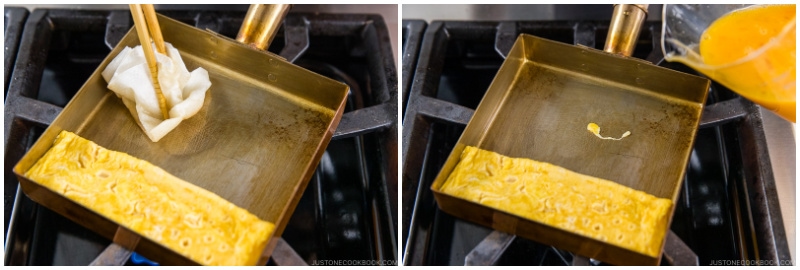
- The 2nd layer: When the pan is ready, pour in just enough egg mixture to cover the cooking surface. Tilt the pan and lift the rolled omelet so some of the egg mixture goes underneath it.
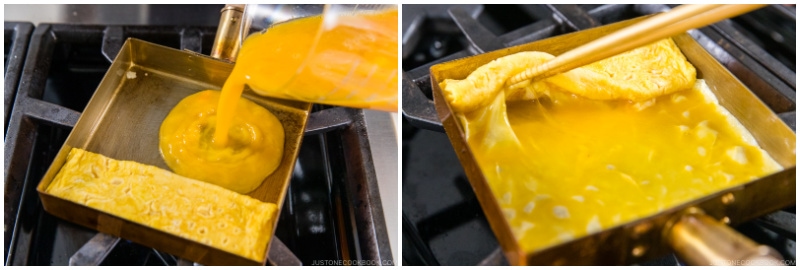
- Pop the air bubbles with chopsticks and tilt the pan to fill up the holes with excess egg. When the egg is just set, run your chopsticks along the edges to detach to egg.
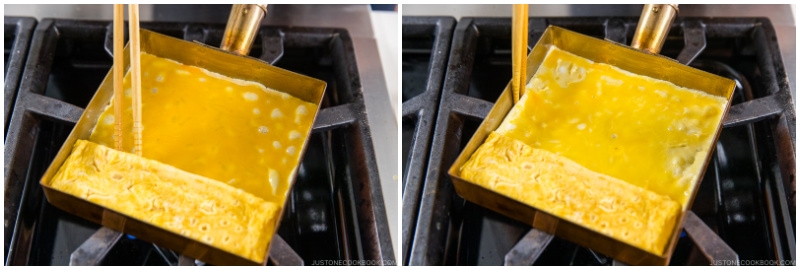
- Roll the omelet toward you again. Once you've finished, grease the bottom and sides again. Move the omelet to the far edge. Grease the pan again and test to see if it‘s hot enough.
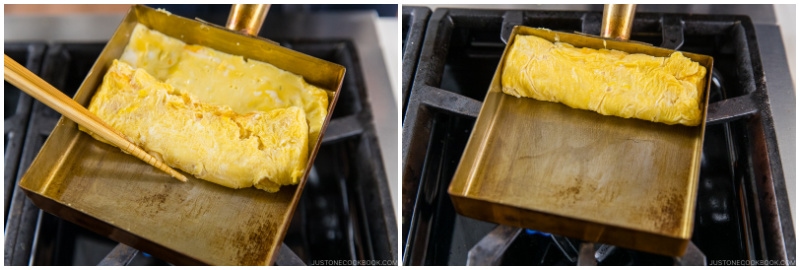
- The 3rd layer: Repeat cooking another layer of the egg mixture. You can create momentum with the pan using your arm and shoulder to roll the egg as it gets heavier.
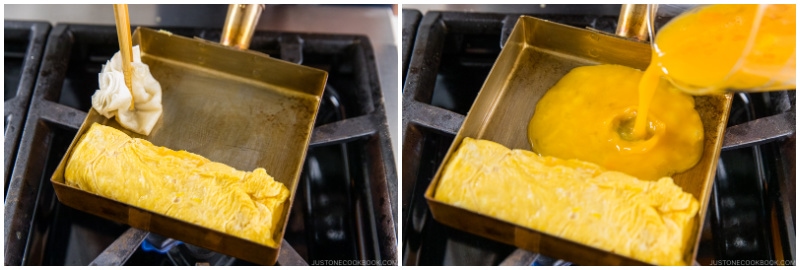
- The 4th layer: Repeat cooking another layer of egg. When the pan is hot, pour in the egg mixture and tilt some of it underneath the rolled egg. Pop the air bubbles, detach from the edges, and start rolling.
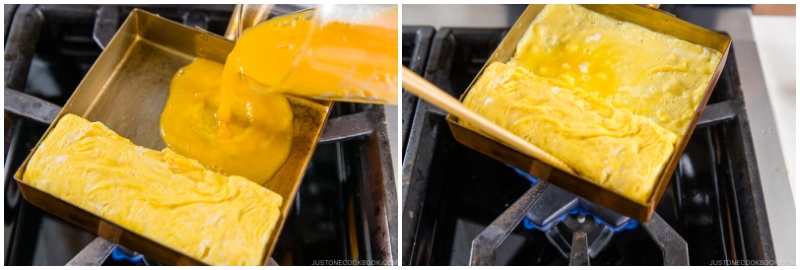
- The final/outer layer: Grease the bottom and sides again. Add the remaining egg mixture, lift up the rolled omelet, and pop the air bubbles. Carefully roll the final layer. This is the outer layer, so make sure not to break it.
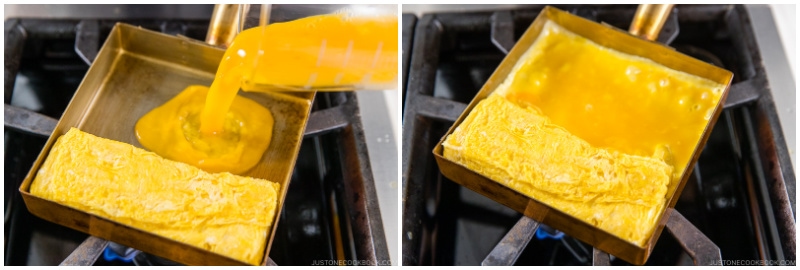
- Shape the rolled egg, pushing it against the edges and corners of the tamagoyaki pan.
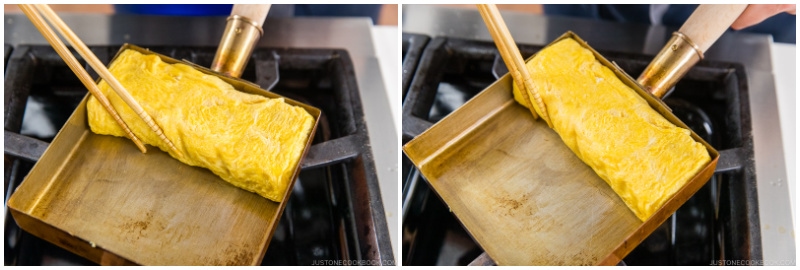
To Mold the Omelet in a Sushi Mat
- Wrap the rolled omelet in a bamboo sushi mat for 5 minutes.
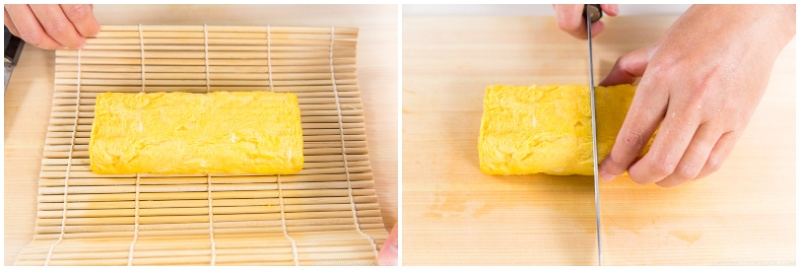
- Open the sushi mat and cut the rolled omelet in half.
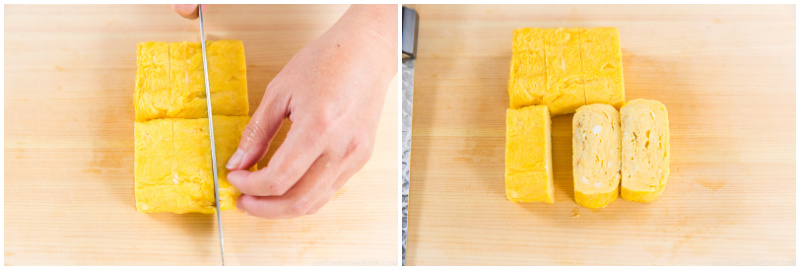
- Then cut each half into 3 equal pieces. Serve immediately or at room temperature. Optionally, you can serve with grated daikon drizzled with soy sauce.
To Store
- You can keep the leftovers in an airtight container and store them in the refrigerator for up to 2–3 days and in the freezer for 2 weeks.
Nutrition
Did you make this recipe?
Tag @justonecookbook on Instagram so we can see your delicious creation!
Editor’s Note: This post was originally published on March 26, 2021, and was updated with new recipe name and additional information on March 31, 2026.