

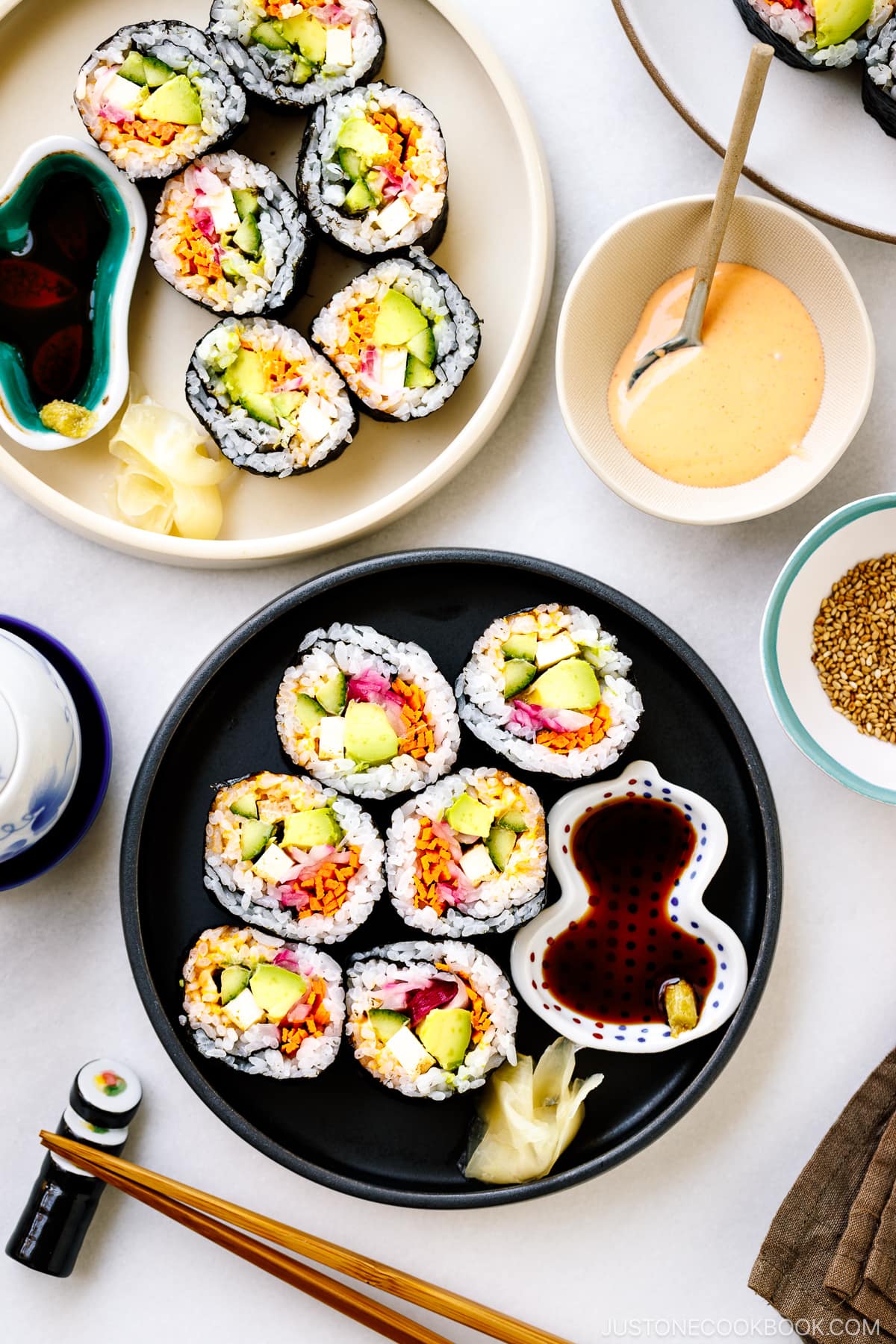
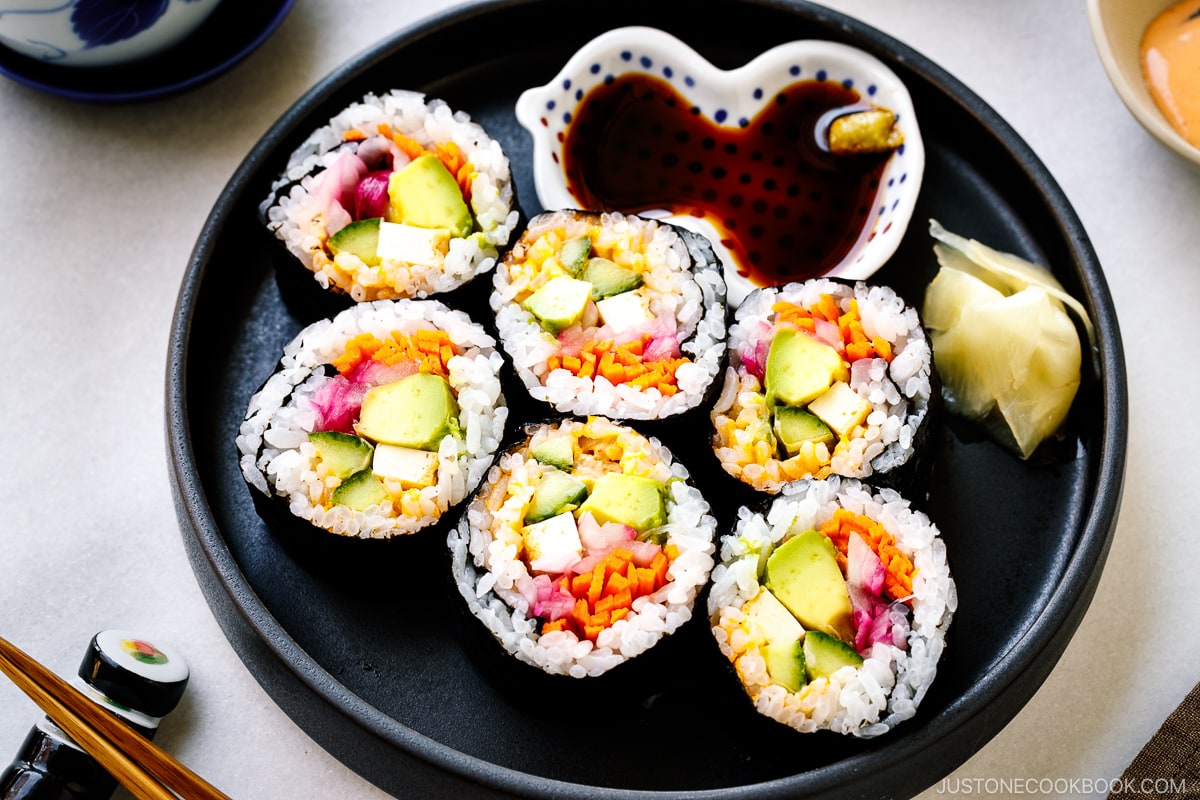
I’ve shared quite a collection of sushi on Just One Cookbook, but today I’m going to show you how to make vegetarian sushi rolls at home. Light, tasty, and colorful, these sushi rolls are going to satisfy everyone. I’ll walk you through the ingredients, variations you can make, and the important tips in sushi-making, so you’d be making them regularly!
If you like sushi rolls, try my Dragon Roll Recipe, California Roll, and Sushi Rolls (Maki Sushi – Hosomaki) next!
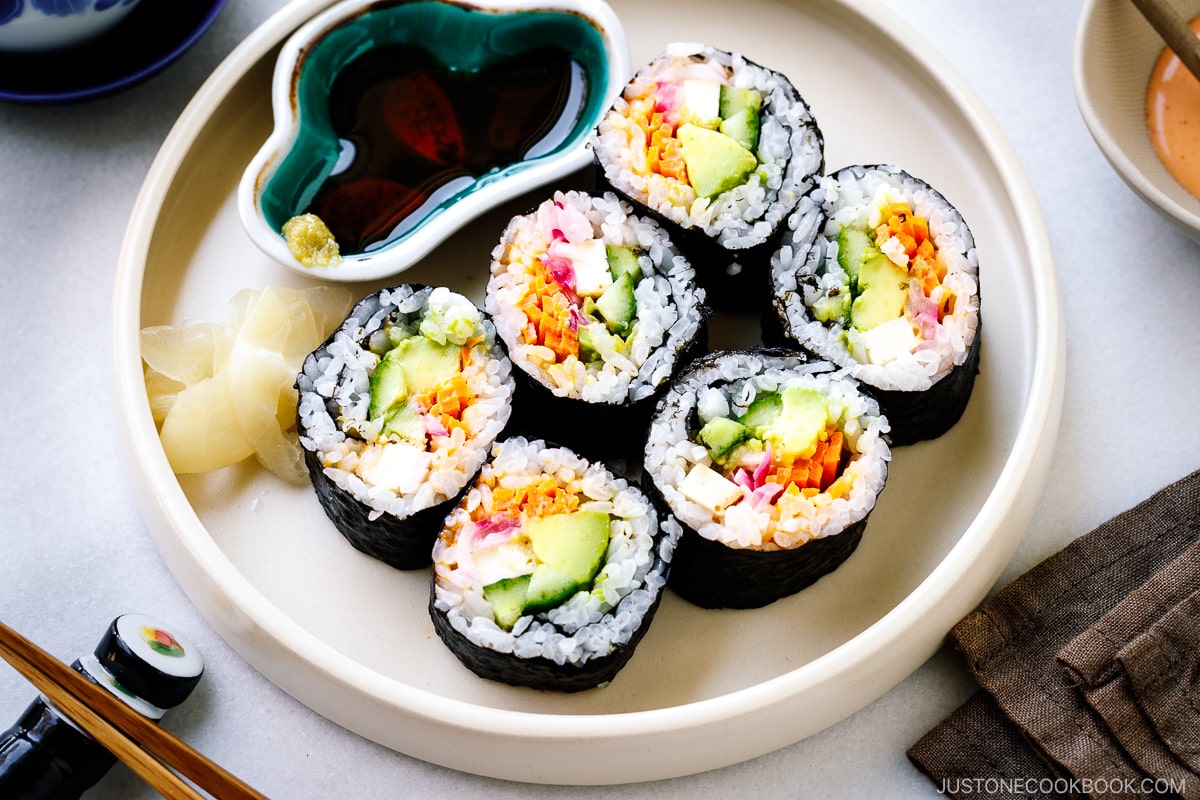
A Quick Note on Sushi Rolls
In Japan, we categorize sushi rolls based on their thickness, instead of dietary categories. (You can read our Ultimate Sushi Guide.) Although you’ll find sushi rolls with vegetable fillings such as cucumber rolls and kanpyo rolls, we don’t typically label them vegetarian as we enjoy a wide variety of ingredients, particularly in sushi.
However, with an increasing number of international visitors to Japan, you might see more vegetarian and vegan-friendly sushi appearing in Japan.
When making your own sushi rolls at home, the most important thing is to make good sushi rice. Learn my step-by-step techniques for cooking the rice and seasoning it in How To Make Sushi Rice. I’ve selected fillings that are easy to find and do not involve additional preps (like deep-frying). You can be as creative as you like, but let’s get the basics covered today.
Why You’ll Love This Recipe
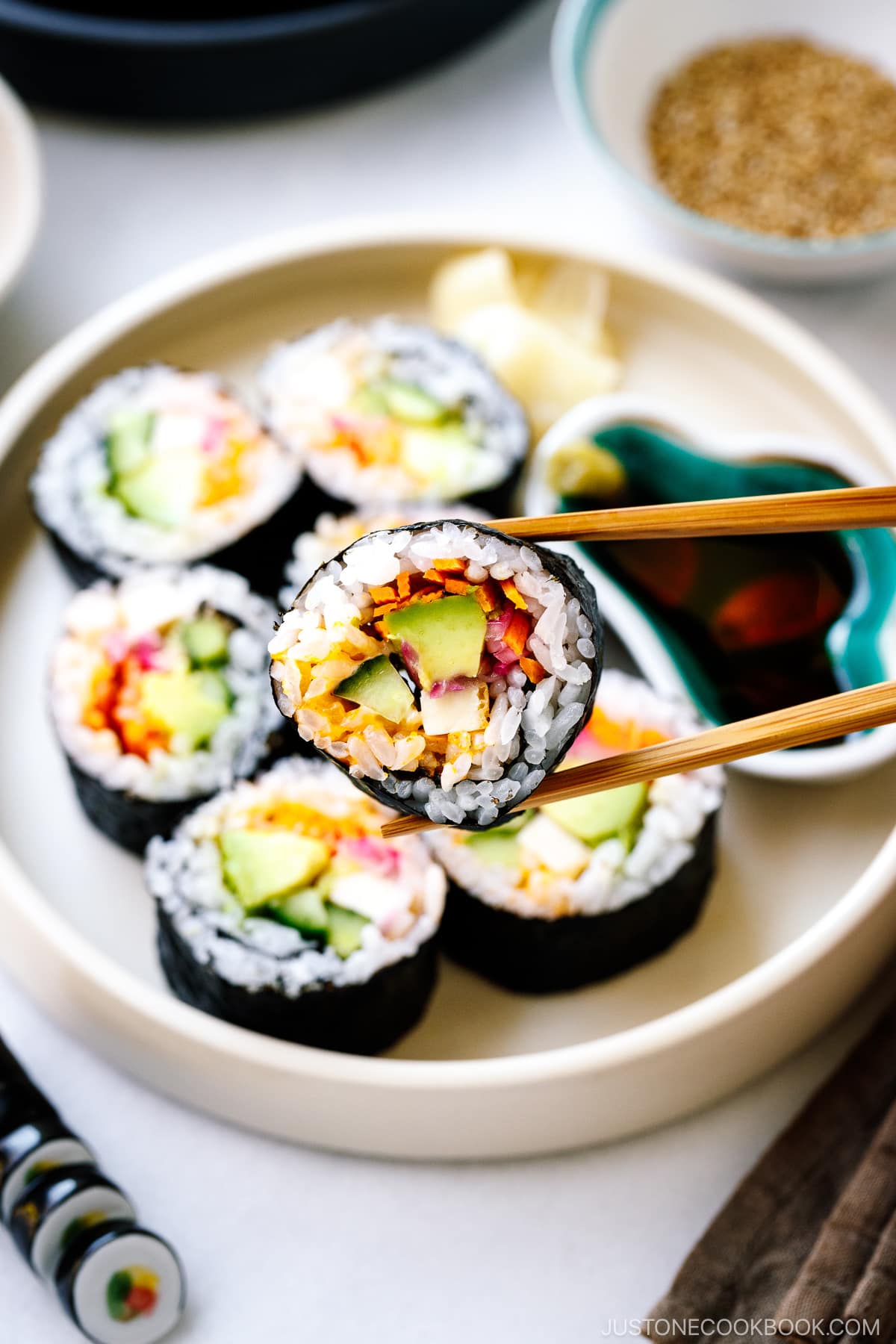
- Easier than you think! For newbies, you might need some practice to achieve good-looking sushi rolls. But trust me, it takes just a few trials to pick up the skill.
- Versatile. You can fill your sushi rolls with different vegetables and ingredients—uncooked or cooked, unseasoned or seasoned.
- Great portable snack, lunch, and picnic. Sushi rolls are great for bringing outside of your home. Pack them in a bento box or ojubako (Japanese lacquered box).
- A crowd-favorite for parties and potlucks. It’s easy to impress a crowd when you show up with a tray of these fun and colorful sushi rolls. Plus, they are made with familiar ingredients that most people enjoy. No wonder they are one of the popular party food items in Japan!
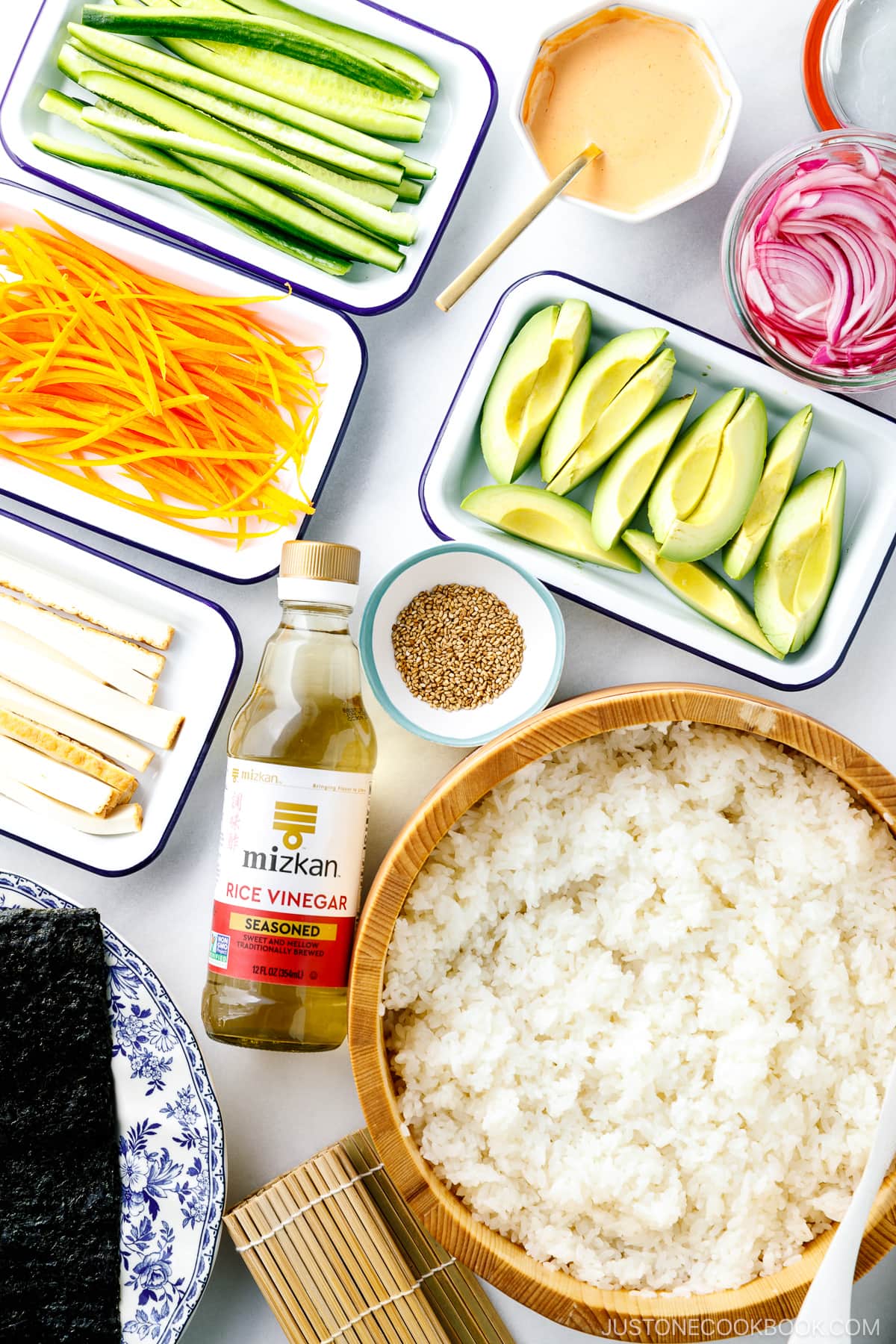
Ingredients for Vegetarian Sushi Rolls
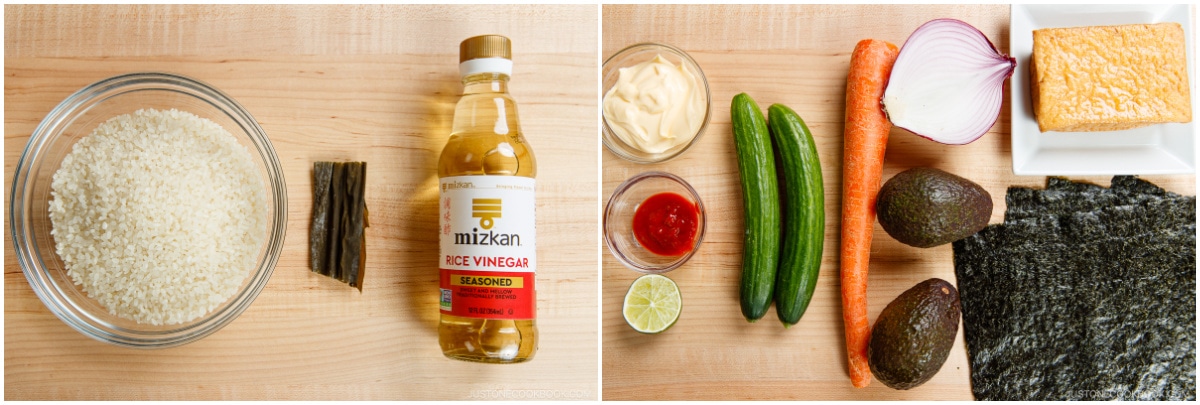
- Japanese short-grain rice
- Kombu (dried kelp) – Optional. If you already have it in your pantry, I recommend using it. If you end up buying kombu, you can make Vegan Dashi (Japanese soup stock) from scratch and make Vegan Miso Soup!
- Mizkan Seasoned rice vinegar (aka “Sushi Vinegar”) – There are two types of rice vinegar: seasoned and unseasoned. I used Mizkan Seasoned Rice Vinegar this time as they are specifically blended for sushi and it’s convenient. If you prefer to use unseasoned rice vinegar, here’s how to make Sushi Vinegar.
- Dried nori seaweed – There are many brands of nori, but if you can afford it, I’d say go with the most expensive (ideally imported) nori you can find on the shelf. I found it hard to compare the quality of nori with the ones we can get in Japan. The standard is vastly different. Please do not consider getting the value pack or cheap nori; or else, you end up with gummy nori seaweed…
- Vegetable fillings: Red onion, cucumber, carrot, avocados, fried firm tofu (tofu cutlet).
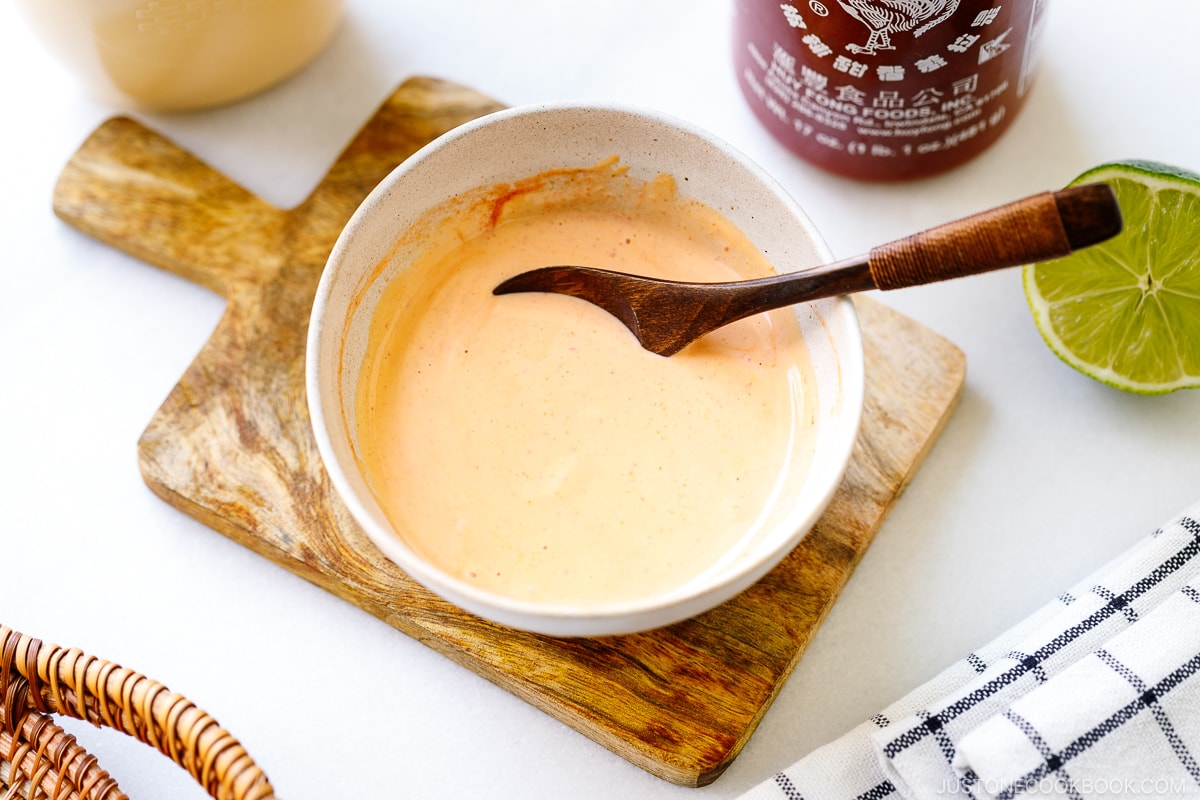
- Spicy mayo: Japanese Kewpie mayonnaise and sriracha sauce.
- Garnishes: soy sauce, wasabi, Sushi Ginger, and white sesame seeds.
How to Make Vegetarian Sushi Rolls
- Make sushi rice by cooking the Japanese short-grain rice, and then seasoning it with Mizkan Seasoned Rice Vinegar. For step-by-step details and tips, see my How to Make Sushi Rice recipe.
- Make quick red onion pickles by marinating thinly sliced red onion with Mizkan Seasoned Rice Vinegar.
- Make spicy mayo by combining Japanese mayonnaise, sriracha sauce, and lime juice.
- Cut all the vegetables and fried tofu into long strips.
- Place the nori seaweed on the bamboo sushi mat, spread the sushi rice, and place the fillings toward the bottom of nori. Then, roll up the sushi mat and seal the edge.
- Slice each sushi roll into 8 pieces. Continue making the rest and serve with soy sauce and wasabi.
More Vegetarian Sushi Filling Ideas
Don’t feel limited by your filling options just because you’re vegetarian or vegan. There’s plenty of room to get creative! I included more ingredient ideas below, and you just need to pick 2-3 items that give you contrasting colors, flavors, and textures. Change up the pairing and you’d have a brand-new sushi roll!
- Daikon radish sprouts or microgreens
- Marinated beet (cut into sticks)
- Shiso leaves (julienned)
- Roasted/grilled shiitake mushrooms, portobello, or other types of mushrooms (sliced)
- Red cabbage (thinly sliced)
- Bell peppers (cut into long strips)
- Roasted/grilled/pan-fried sweet potatoes (cut into long sticks)
- Kimchi or other pickled vegetables such as takuan (pickled daikon)
Where to Buy a Sushi Making Kit
If you want a full kit that has everything you need to make sushi at home, I recommend the JapanBargain Sushi Making Kit. It comes with a hangiri and is my favorite sushi making kit. It’s just $26.99 at Amazon and comes with three mats and three rice paddles, so you can make multiple rolls at once.
Cooking Tips
Tips for Perfect Sushi Rice
While it’s hot, pour the measured seasoned sushi vinegar (or sushi vinegar) over the rice. With a rice paddle, gently “slice“ the rice at a 45-degree angle to incorporate the sushi vinegar mixture and separate the chunks of rice. Do not stir or mix the rice because the grains may break and the rice will become mushy.
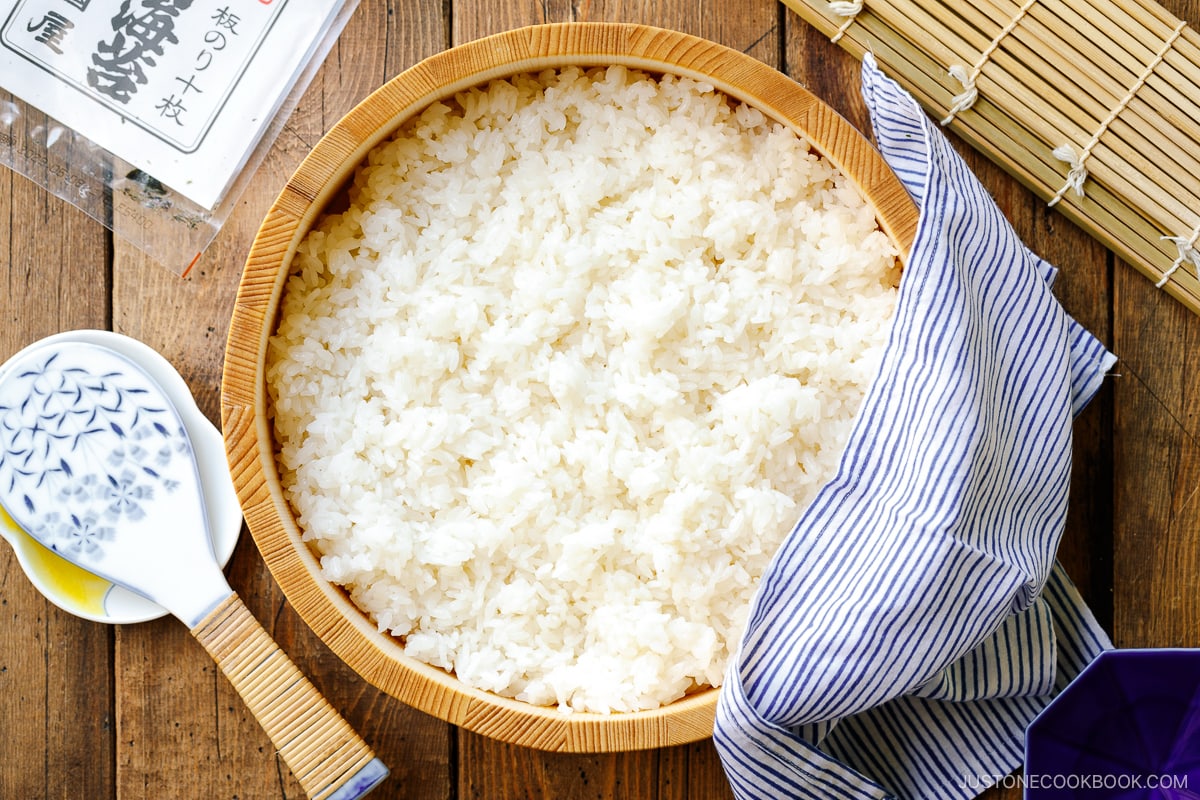
While using this slicing motion, vigorously fan the rice with a paddle fan or another type of fan. This cools the rice and takes away the excess moisture. Fanning makes the rice shine and keeps it from becoming mushy. Then, gently flip the rice in between slices.
Repeat this slicing, fanning, and flipping process until the rice is cooled to the temperature of human skin. Keep the sushi rice covered with a damp towel (or paper towel) for a few hours at room temperature.
Tips for Rolling the Sushi Rolls
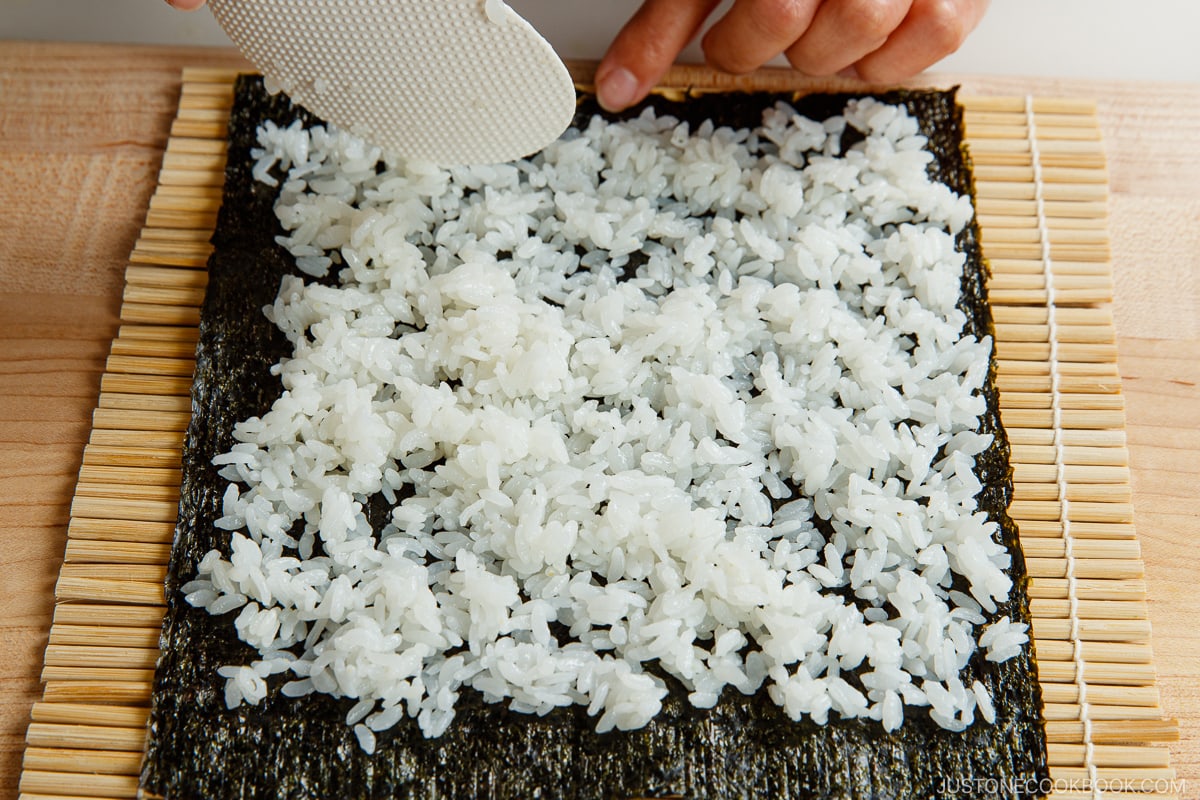
First, place the nori sheet, shiny side down and long side vertically, on top of the bamboo sushi rolling mat. Next, put 1 cup (150 g) of sushi rice on the nori sheet. Gently and evenly spread the rice with a rice paddle or your fingers, leaving about a ½ inch (1.5 cm) strip of nori along the top edge farthest away from you. You don’t spread the rice to the top edge because after you roll, the sushi rice could come out from the seam and it won’t look pretty. Be sure to spread the rice in an even layer; otherwise, your sushi roll will look uneven.
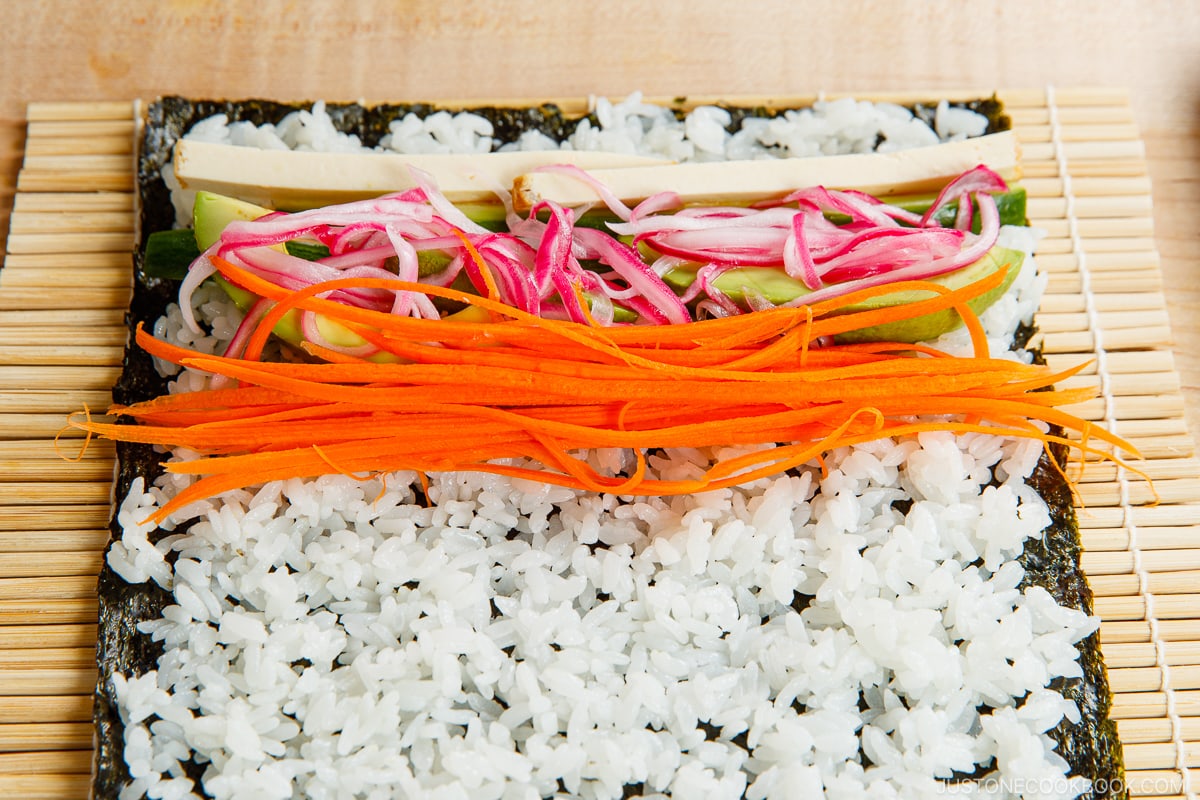
Next, add your filling ingredients. If you are a beginner, place the filling ingredients at about one-third line from the bottom edge; in other words, move up the filling slightly toward the middle line compared to mine (see below). Be careful not to overfill your sushi roll.
Lift the bottom edge of the sushi rolling mat with your thumb and forefinger of both hands. Press your other fingers down on the filling to hold the ingredients in place. Then, roll the nori sheet over the filling tightly and firmly until the bottom edge of the nori reaches the rice on the other side of the filling.
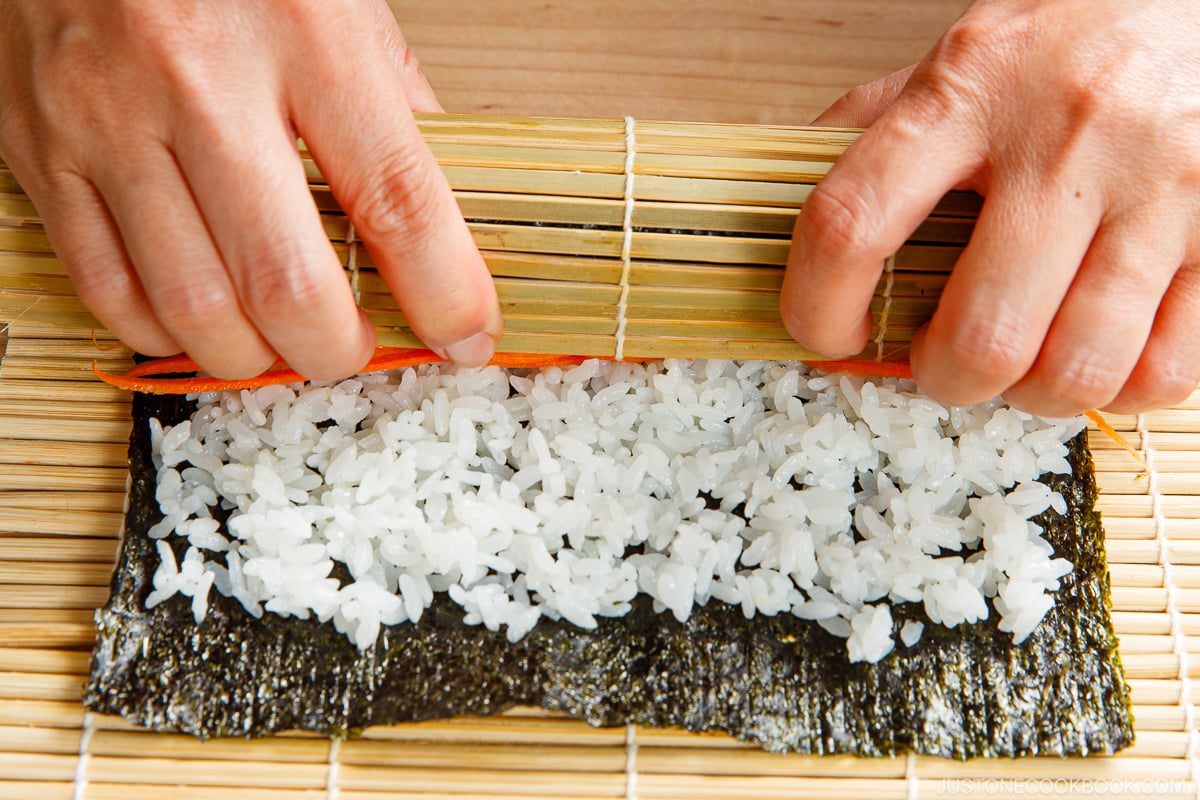
Firmly hold the rolled portion of the bamboo mat in place with one hand. With your other hand, pick up the other end of the bamboo mat at the top edge. Now, pull the two sides against each other to tighten the roll. Release the top edge of the rolling mat and finish rolling.
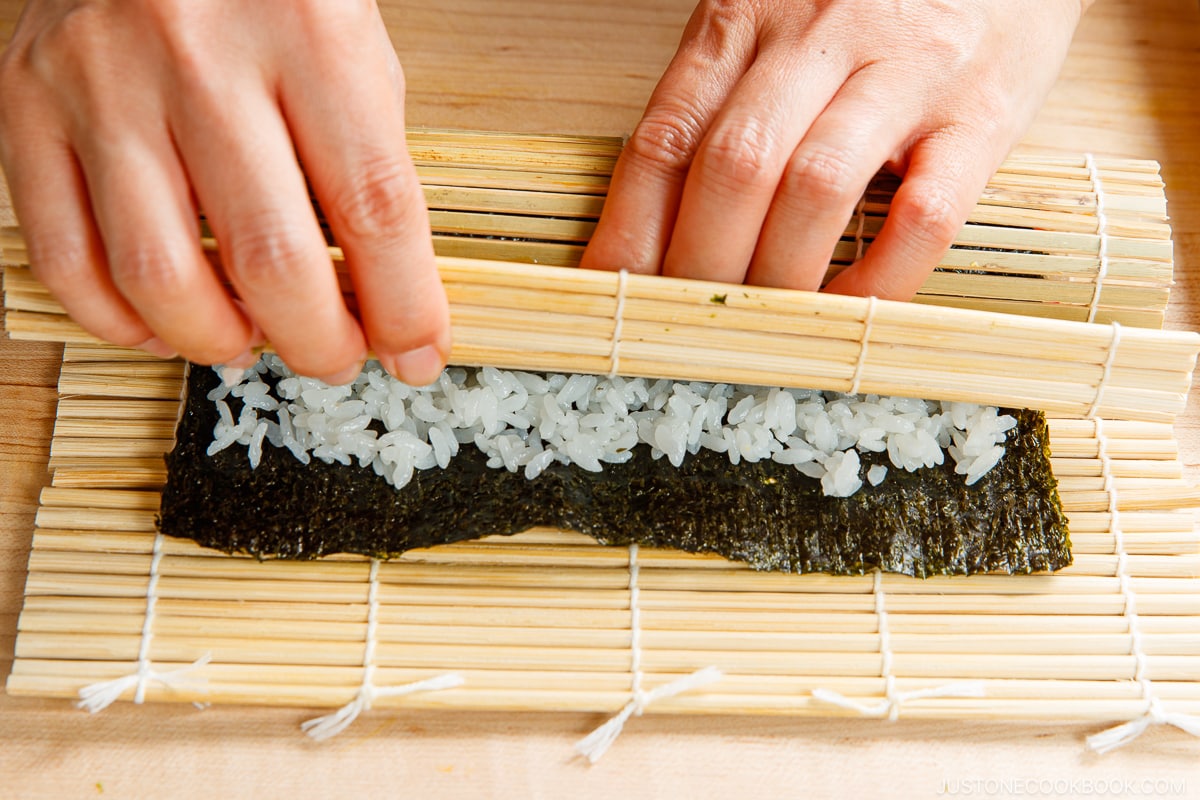
Place the bamboo mat over the rolled sushi and tightly squeeze. Cover the finished sushi roll with plastic wrap so it doesn‘t dry out. Continue rolling the rest of the sushi rolls. Keep them in a cool place under plastic wrap (NOT in the refrigerator) until you are ready to slice and serve.
Storage Tips
For leftover sushi rolls, keep them in a cool place for 8 hours. To refrigerate them overnight, cover them with a thick kitchen towel, so the rice will stay cool but not become cold.
If you have leftover sushi rice, my recommendation is to put it in an airtight container and store it in the freezer for up to a month. You can defrost it overnight in the fridge, and then microwave to room temperature (not hot). Rice gets hard and dry in the refrigerator, but if you really want to refrigerate it, cover the container with a thick kitchen towel.
FAQs
Are vegetarian sushi rolls healthy?
Vegetarian sushi rolls are a light and balanced option made with seasoned sushi rice and fresh vegetables. They’re naturally lower in fat and satisfying without feeling heavy. Using properly prepared rice is key, so be sure to follow my How to Make Sushi Rice tutorial for the best texture and flavor.
Do vegetarian sushi rolls contain fish sauce or dashi?
No. Vegetarian sushi rolls do not use fish sauce or dashi. Their flavor comes from seasoned sushi rice and fresh vegetable fillings. As long as the rice is prepared with rice vinegar, sugar, and salt, the rolls stay completely vegetarian.
What is the difference between vegetarian and vegan sushi rolls?
Vegetarian sushi rolls contain no seafood but may include ingredients like egg or mayonnaise. Vegan sushi rolls avoid all animal products. This vegetarian sushi roll recipe uses only plant-based ingredients, making it suitable for both vegetarian and vegan diets when prepared as written.
Why does my vegetarian sushi roll fall apart?
Vegetarian sushi rolls can fall apart if the rice layer is too thick, the fillings are overpacked, or the roll isn’t wrapped tightly enough. Do not use another type like jasmine or basmati. Japanese short-grain white rice is naturally stickier and helps hold the roll together.
Can I make vegetarian sushi rolls ahead of time?
Vegetarian sushi rolls are best enjoyed the same day they’re made. Sushi rice firms up as it sits, which can affect texture. You can prepare the vegetable fillings ahead of time, then assemble and roll shortly before serving.
Can I use brown rice for vegetarian sushi rolls?
In Japan, brown rice is not typically used for sushi or sushi rolls, as its texture and flavor don’t pair well with classic sushi ingredients. If you’ve seen brownish sushi rice at restaurants outside Japan, it’s often white rice seasoned with akazu (red vinegar). Learn why brown rice is less than ideal in my post Why the Japanese Don’t Make Sushi with Brown Rice.
What to Serve with Vegetarian Sushi Rolls
- Soup – Sushi is always served with a type of miso soup. Keep it simple with Vegetable Miso Soup or make this hearty Kenchinjiru that has lots of root vegetables.
- Salad – How about Spinach with Sesame Sauce and Harusame Salad with glass noodles?
- Sides – Edamame or flavorful Spicy Edamame is a good start! You can also prepare Roasted Kabocha, Kinpira Gobo, or Simmered Taro.
Recommended Tools to Make This Recipe
- Wooden sushi oke or hangiri (container) – I used this mini hangiri sushi party set
- Bamboo sushi rolling mat – You can find it on Amazon.
- Non-stick rice paddle – I use this standing one that I love.
Wish to learn more about Japanese cooking? Sign up for our free newsletter to receive cooking tips & recipe updates! And stay in touch with me on Facebook, Pinterest, YouTube, and Instagram.
Vegetarian Sushi Rolls
Ingredients
For the Sushi Rice
- 2¼ cups uncooked Japanese short-grain white rice (3 rice cooker cups; 540 ml; yields 6⅔ cups (990 g) of cooked rice)
- 2¼ cups water (540 ml)
- 1 piece kombu (dried kelp) (5 g per piece; 2 x 2 inches, 5 x 5 cm; optional, for a nice aroma!)
- ⅓ cup seasoned rice vinegar (sushi vinegar) (bottled, or make Homemade Sushi Vinegar with unseasoned rice vinegar)
For the Sushi Rolls
- 6 sheets nori seaweed
- 1 deep-fried firm tofu cutlet (atsuage) (I use this Organic Tofu Cutlet)
- 2 Japanese or Persian cucumbers
- 1 carrot
- 2 avocados
- splash lime juice
For the Pickled Red Onion
- ½ red onion
- ½ cup seasoned rice vinegar (sushi vinegar)
For the Spicy Mayo
- ¼ cup Japanese Kewpie mayonnaise (for vegan, use vegan mayonnaise)
- 1 Tbsp sriracha sauce
- splash lime juice
Instructions
Before You Start
- You must use Japanese short-grain white rice or your sushi will fall apart. Please note that ¾ cup (1 rice cooker cup, 150 g, 5.3 oz) of uncooked Japanese rice yields roughly 2¼ cups (330 g, 11.6 oz) of cooked rice. One sushi roll requires 1 cup (150 g) of sushi rice.
- Gather all the ingredients.
To Make the Sushi Rice
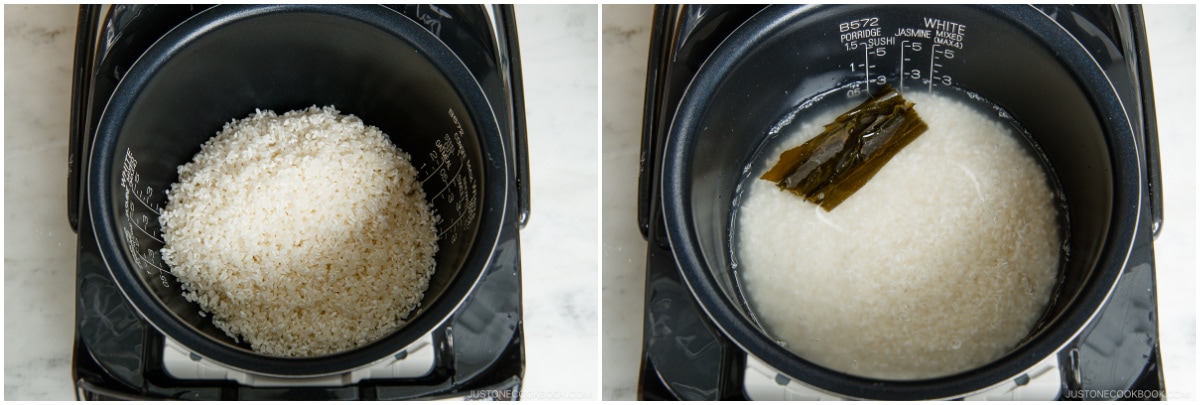
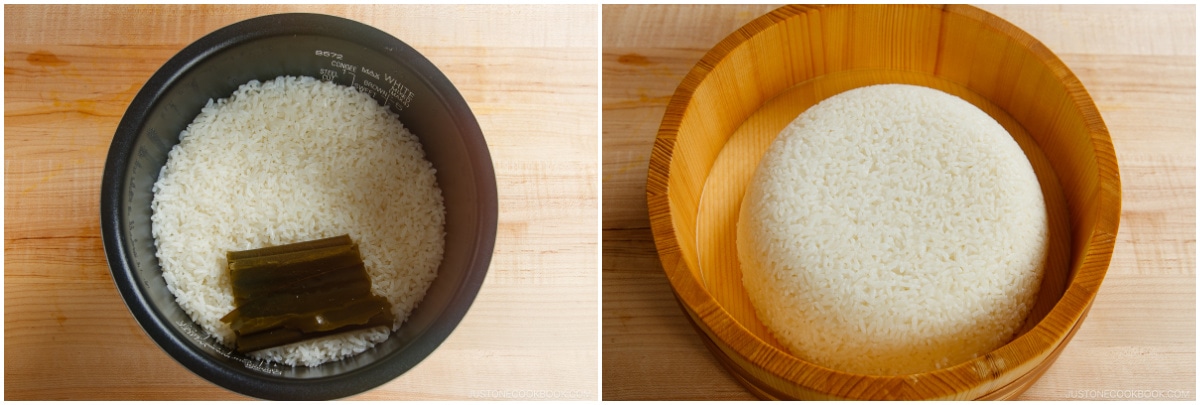
- Rinse 2¼ cups uncooked Japanese short-grain white rice until the water is almost clear (see step-by-step instructions in How to Make Sushi Rice). Drain well and put in the inner pot of a rice cooker. Add 2¼ cups water, level the rice, and place the optional 1 piece kombu (dried kelp) on top. Soak the rice and kombu for 20–30 minutes, then start cooking. Meanwhile, prepare the fillings and toppings.Nami's Tip: Cook sushi rice on the firm side since it will absorb the seasoned vinegar later. Use a rice-to-water ratio of 1 to 1. Alternately, you can simply add water to just below your rice pot's 3 (rice cooker) cups line for White Rice mode or exactly to the 3 cups line for Sushi Rice mode.
- Moisten a wooden sushi oke (hangiri) with running water and drain well, or prepare a baking sheet lined with parchment paper. When the rice is cooked, discard the kombu (or use it to make simmered kombu) and transfer the hot rice to the sushi oke or sheet. Spread it evenly so it will cool faster.
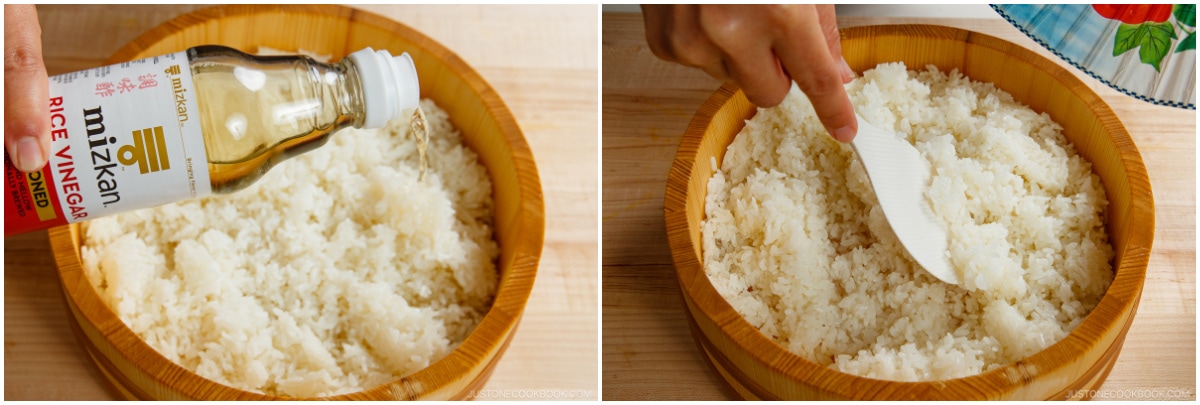
- Pour ⅓ cup seasoned rice vinegar (sushi vinegar) over the hot rice. Gently “slice“ through it with a rice paddle at a 45-degree angle to incorporate the sushi vinegar and separate the rice chunks. Do not stir or mix, as this may break the grains and make the rice mushy. As you slice, vigorously fan the rice with a paddle fan or other fan to cool it, wick away excess moisture, make the grains shine, and keep it from becoming mushy. Flip the rice every few slices. Repeat until it's the temperature of human skin. Cover with a damp towel (or paper towel) at room temperature up to a few hours until ready to use.
To Make the Pickled Red Onion
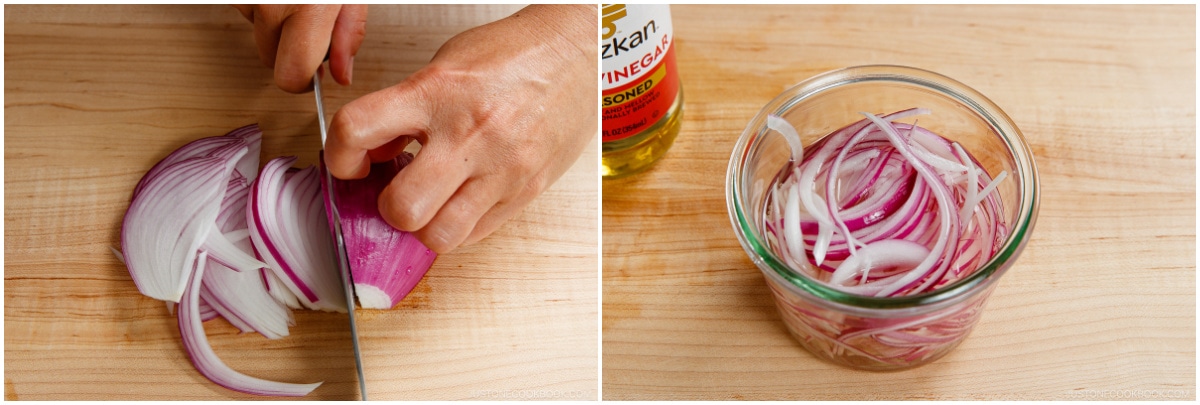
- Thinly slice ½ red onion and transfer it to a glass jar or bowl. Add ½ cup seasoned rice vinegar (sushi vinegar) until just covered. Set it aside.
To Make the Spicy Mayo
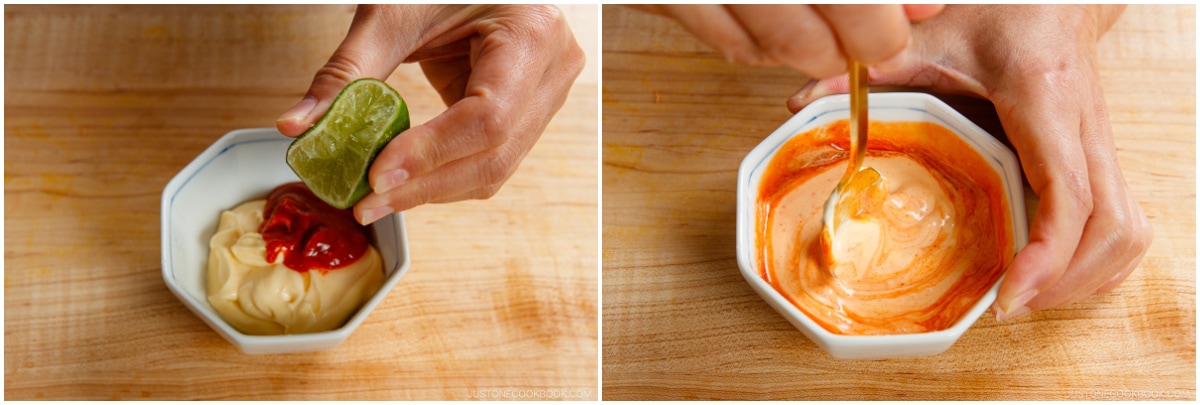
- Combine ¼ cup Japanese Kewpie mayonnaise, 1 Tbsp sriracha sauce, and splash lime juice in a small bowl. Mix it all together and set aside.
To Prepare the Other Fillings
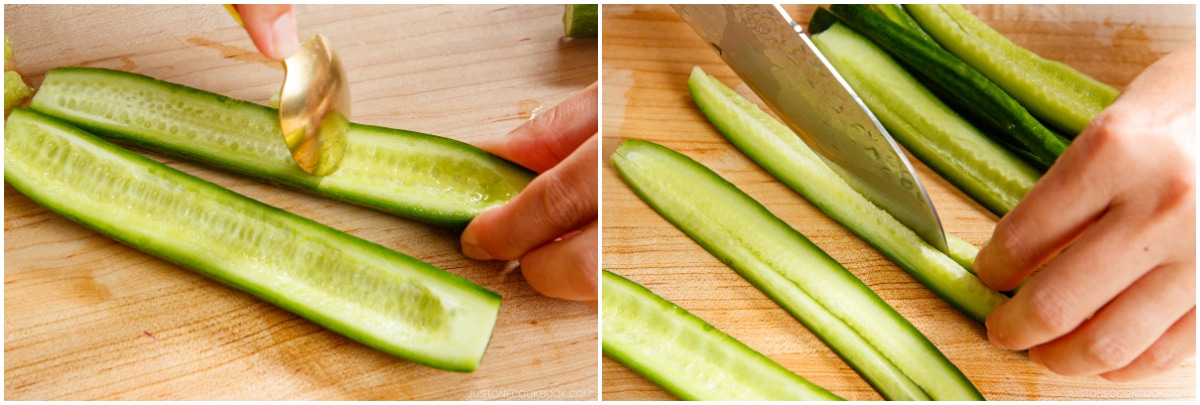
- Cut 2 Japanese or Persian cucumbers in half lengthwise and scoop out the seeds with a spoon. Then, slice each half into 4 long strips. Nami's Tip: Seeds contain water, so we discard them to avoid excess moisture in the sushi rolls.
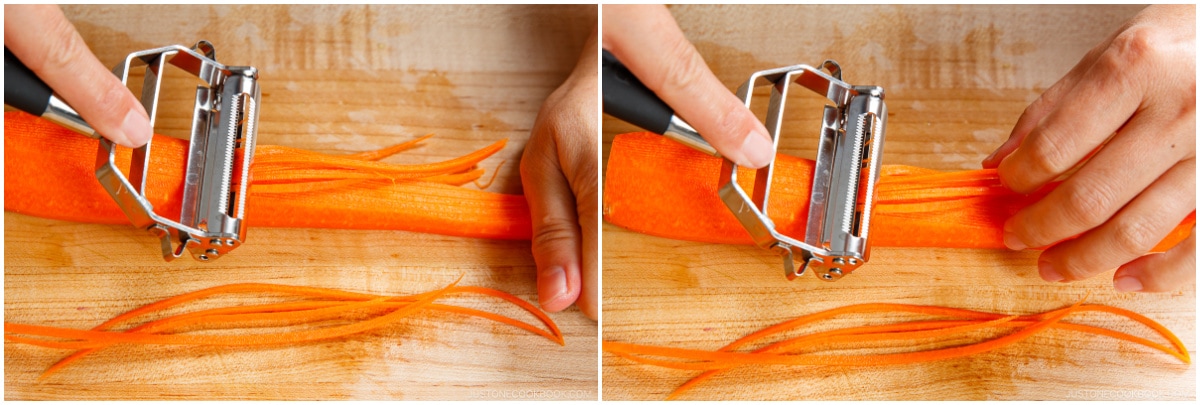
- Peel 1 carrot into very thin strips with a julienne peeler. If you have a regular vegetable peeler, peel thinly, then cut the sheets into long, thin julienned strips.
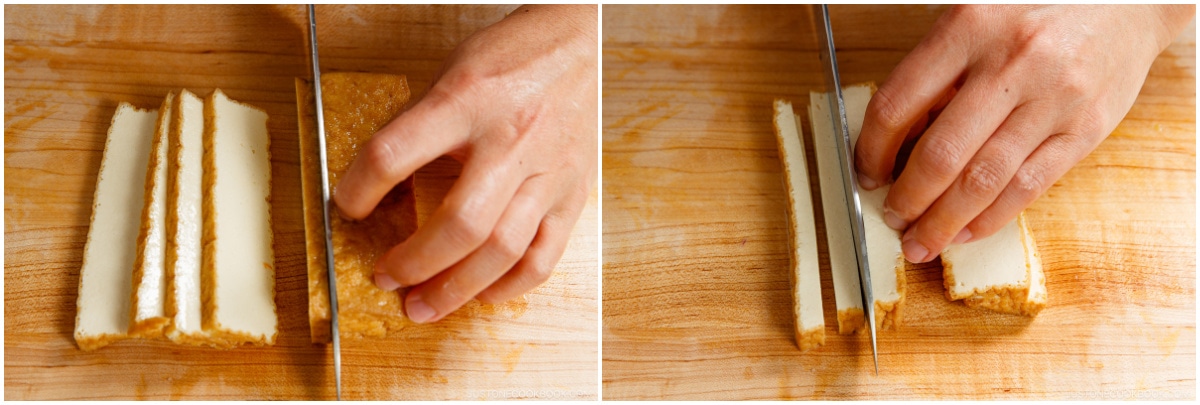
- Cut 1 deep-fried firm tofu cutlet (atsuage) into long slabs. Then, cut the slabs into long sticks.
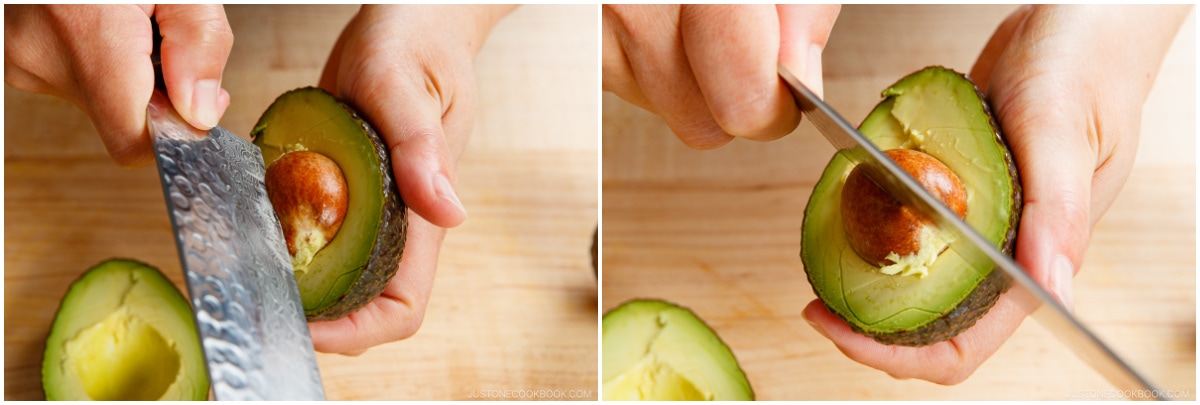
- Right before you're ready to roll, cut 2 avocados in half lengthwise around the pit. Twist the two halves to separate. The safest way to remove the pit is to slice it again into quarters around the pit, then twist the avocado off the seed. If you are experienced with removing avocado pits, follow my advanced method below.
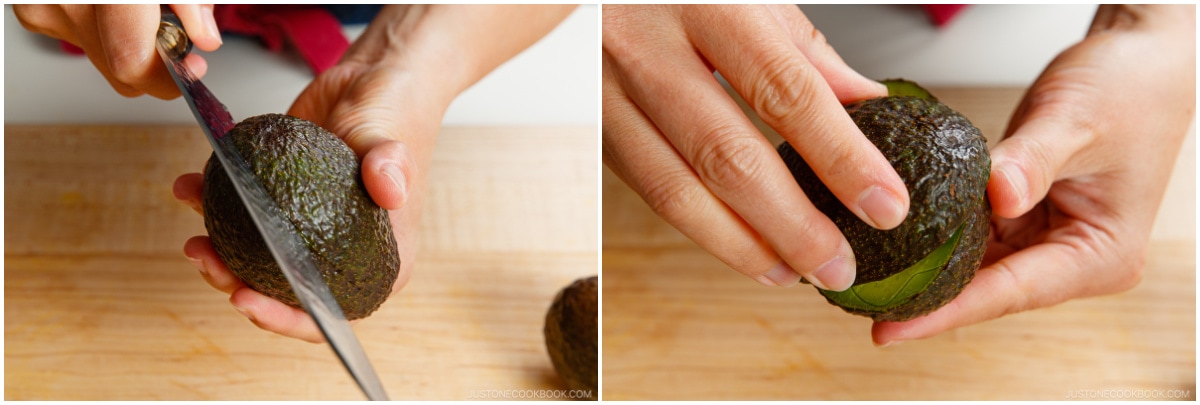
- Be very careful not to cut your hand with this method. Hold the avocado half with the pit firmly in your palm, preferably with a folded kitchen towel. Next, carefully and very gently tap the heel of your knife into the pit with just enough pressure to embed the blade. Twist the avocado and knife with pit in counter directions, and the pit should come out smoothly.
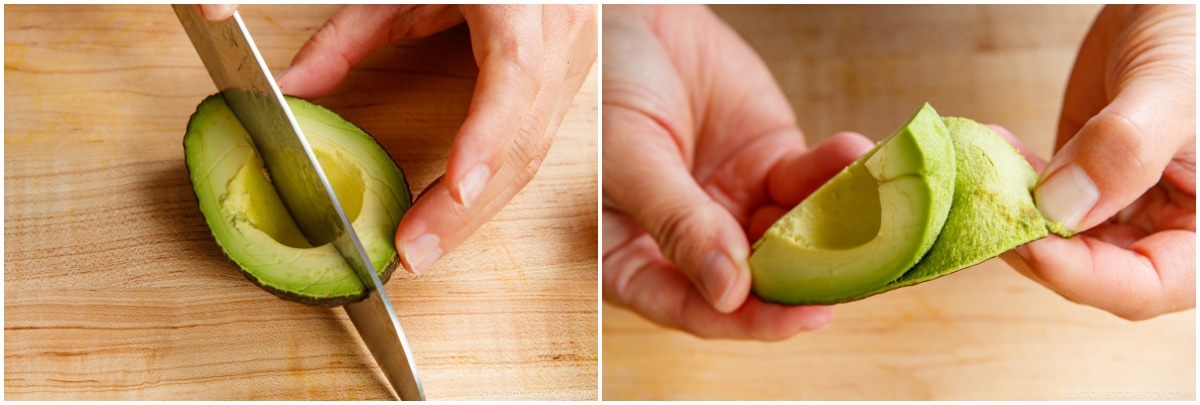
- Cut the avocado into quarters and remove the skin.
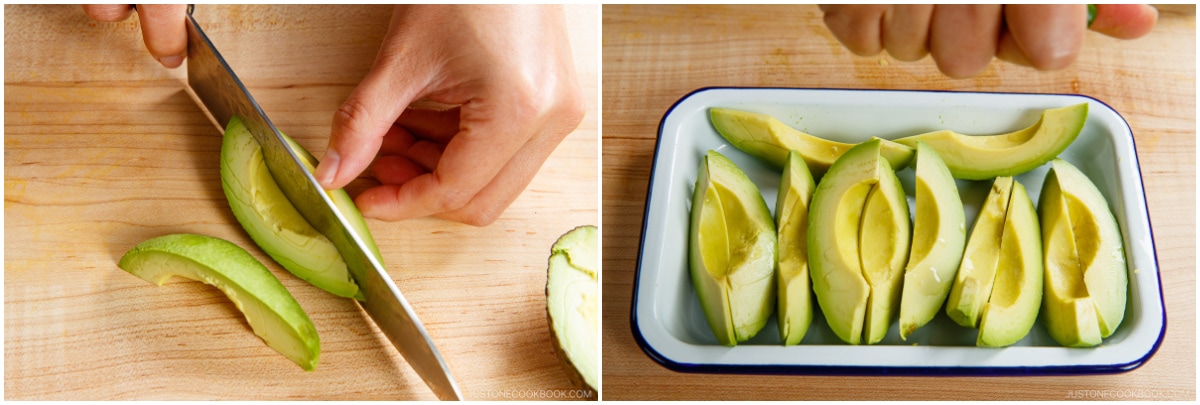
- Cut the quarters in half again lengthwise so you have eighths. With the leftover lime, sprinkle a splash lime juice over the cut avocado to keep their color from changing.
To Roll
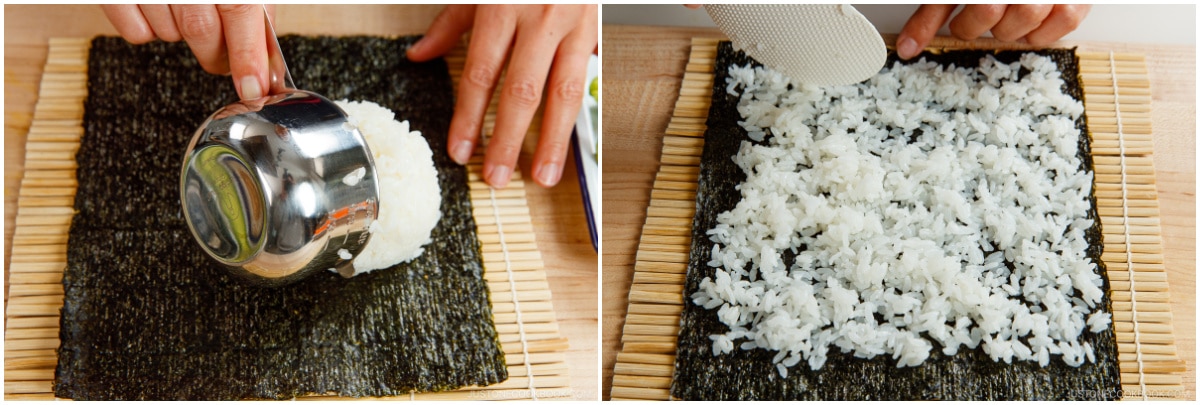
- Place a bamboo sushi mat on a flat surface. Lay one sheet of nori on top, shiny side down, with the long edge running vertically. Add 1 cup (150 g) of sushi rice and gently spread it into an even layer using a rice paddle or your fingers. Leave a ½-inch (1.5 cm) strip of nori uncovered along the top edge to seal the roll. If using your fingers, lightly wet them with water to prevent sticking.Nami's Tip: Leave the top edge of the nori uncovered so the rice doesn’t squeeze out when you seal the roll. Spreading it in an even layer also helps the sushi roll look neat and well balanced.
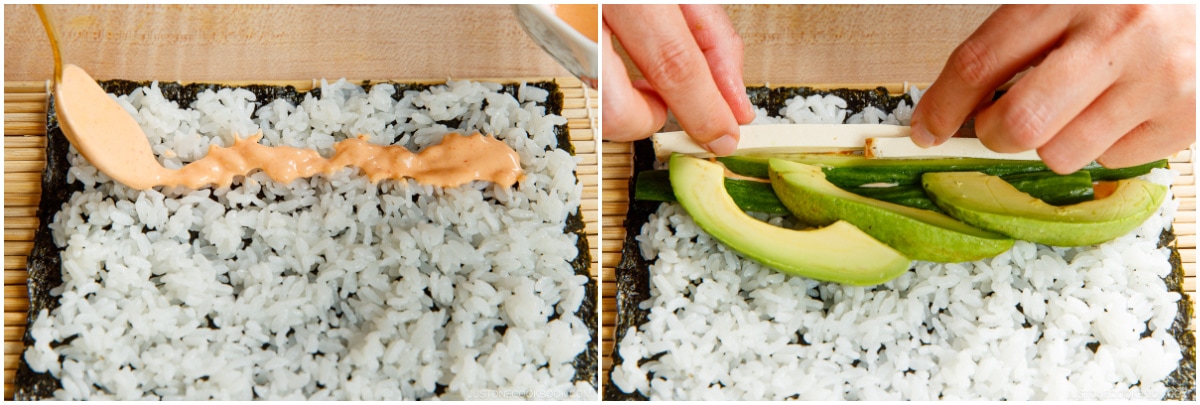
- Add the fillings. Spread a thin line of spicy mayo across the nori, about 1½ inches from the bottom edge. Top with 2–3 cucumber strips, 3 avocado slices, and 2–3 tofu sticks, spreading them evenly across the width.Nami's Tip: Place the fillings about one-third up from the bottom edge. This makes the roll easier to lift and keeps loose ingredients from slipping out.
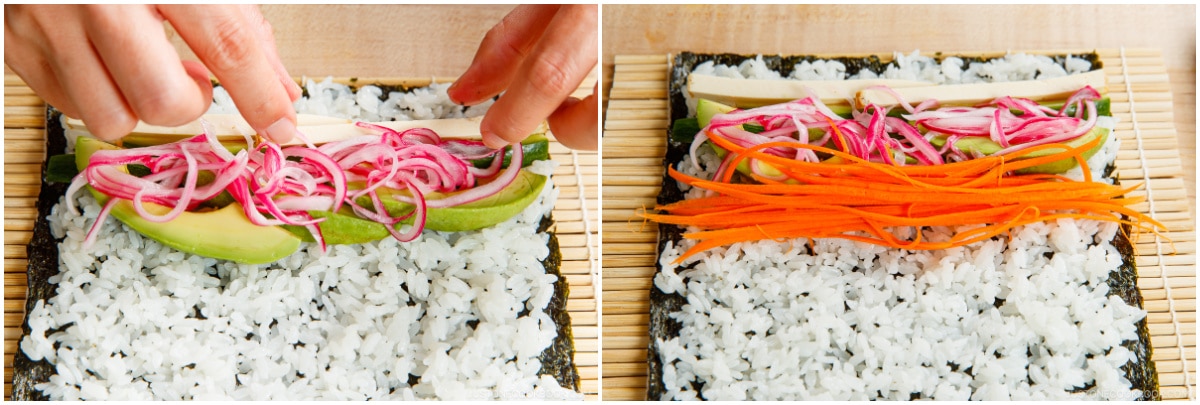
- Put some pickled red onion on the avocado (the vinegar will help prevent discoloration). Place several carrot strips evenly next to the avocado. Nami's Tip: Do not overfill, or your roll may fall apart. These ingredients are just an examples; you can replace a filling with a different kind, or you can skip it all together for a thinner role.
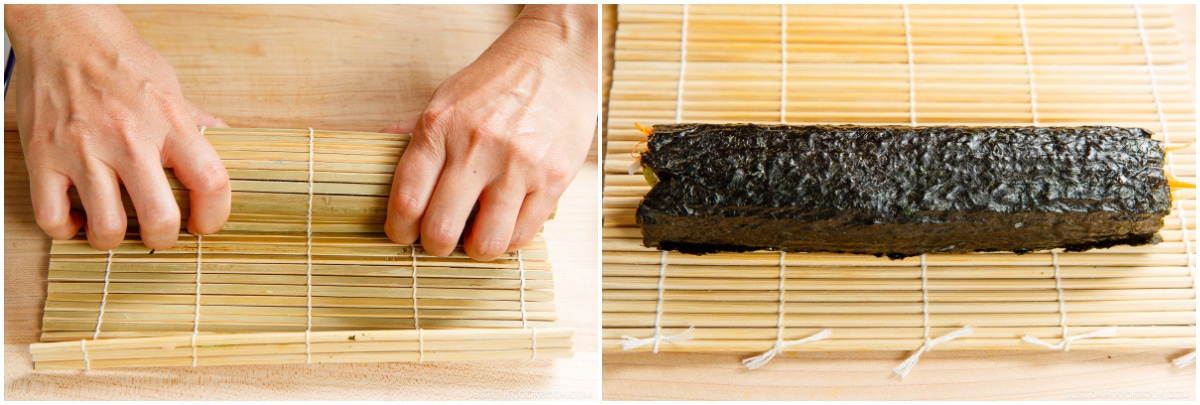
- Now, roll your sushi. Lift the bottom edge of the mat with your thumbs and forefingers. Hold down the fillings with your other fingers. Roll the nori sheet over the fillings tightly and firmly until the bottom edge meets the rice on the other side (left image).
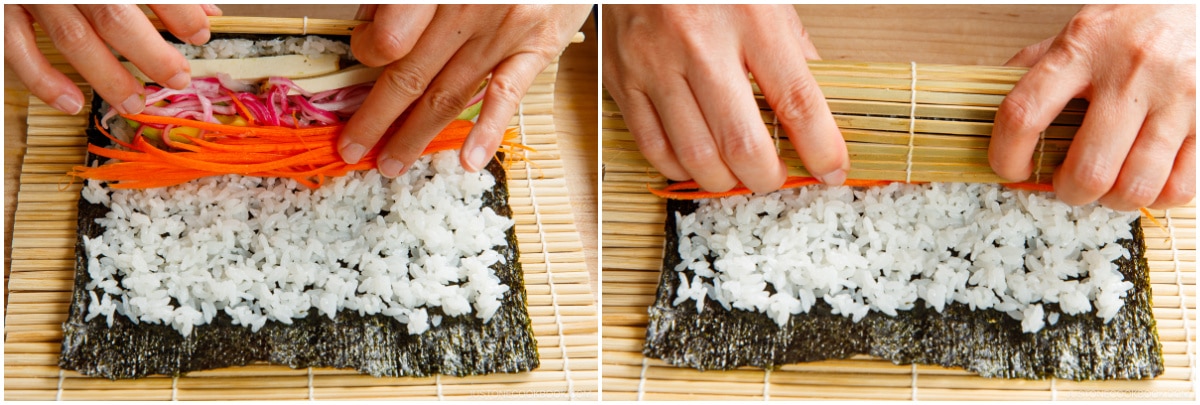
- Firmly hold the rolled portion in place with one hand. Pick up the top edge of the mat with your other hand and pull the two sides against each other to tighten the roll. Release the top edge and finish rolling.
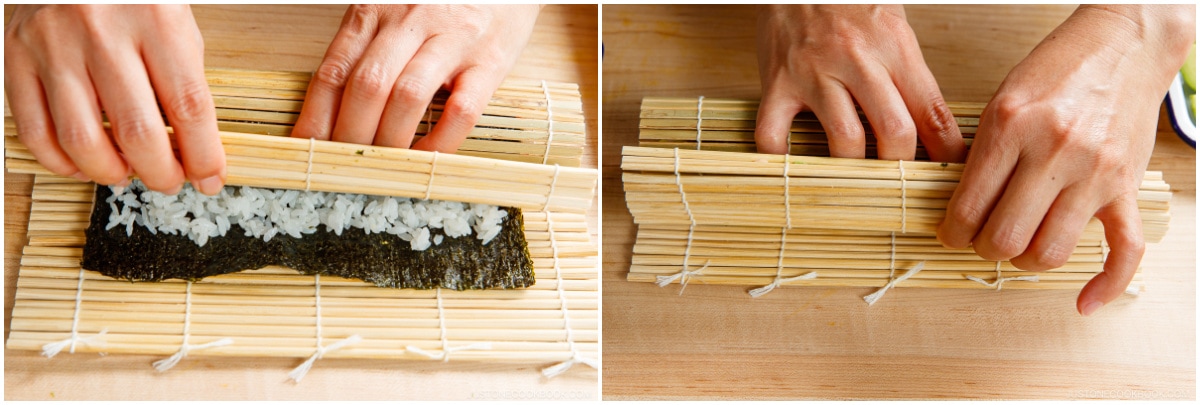
- Place the bamboo mat over the rolled sushi and firmly squeeze to set its shape. Cover the finished roll with plastic wrap so it doesn‘t dry out while you make the other rolls. Keep them in a cool place under plastic wrap (NOT in the refrigerator) until ready to serve.
To Serve
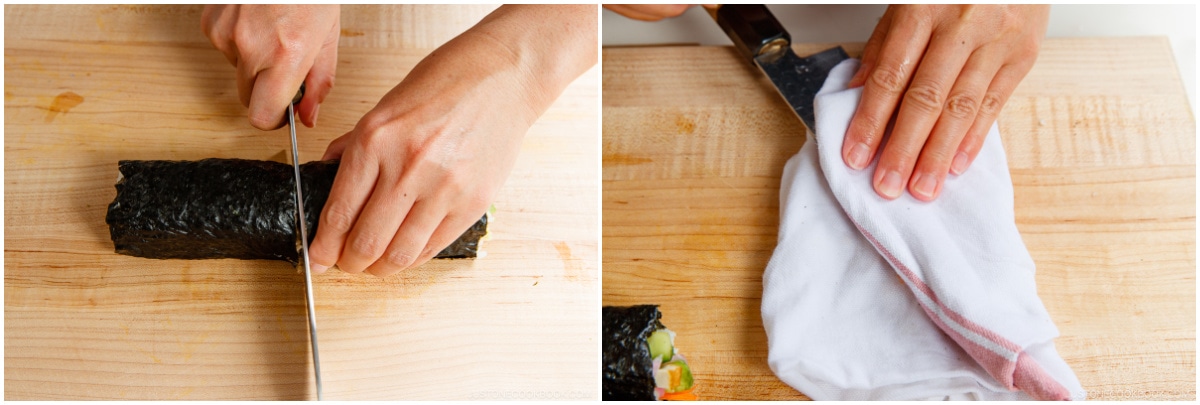
- Using a very sharp knife, cut the sushi roll in half crosswise. For clean cuts, wipe the knife with a damp kitchen cloth after every slice or every other slice.
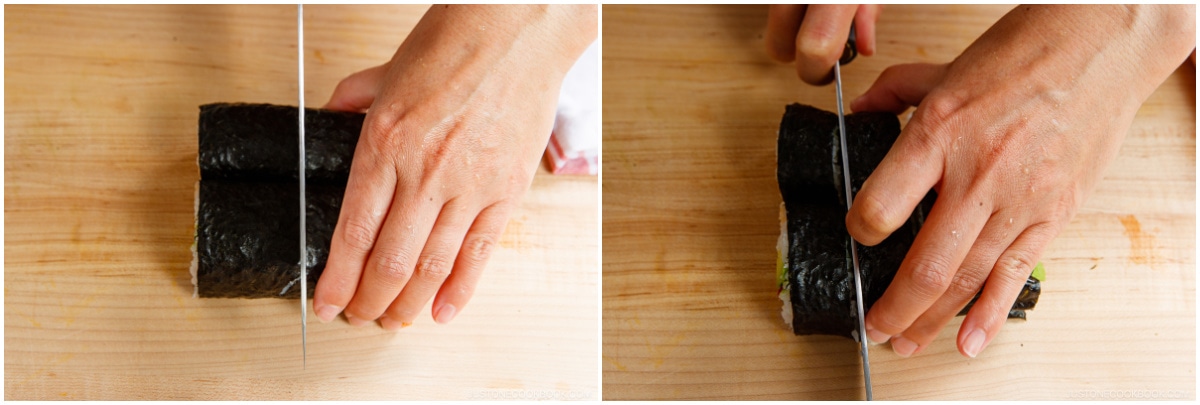
- Next, cut each half roll in half again. Cut the quarters in half once more so you have 8 pieces from one roll.
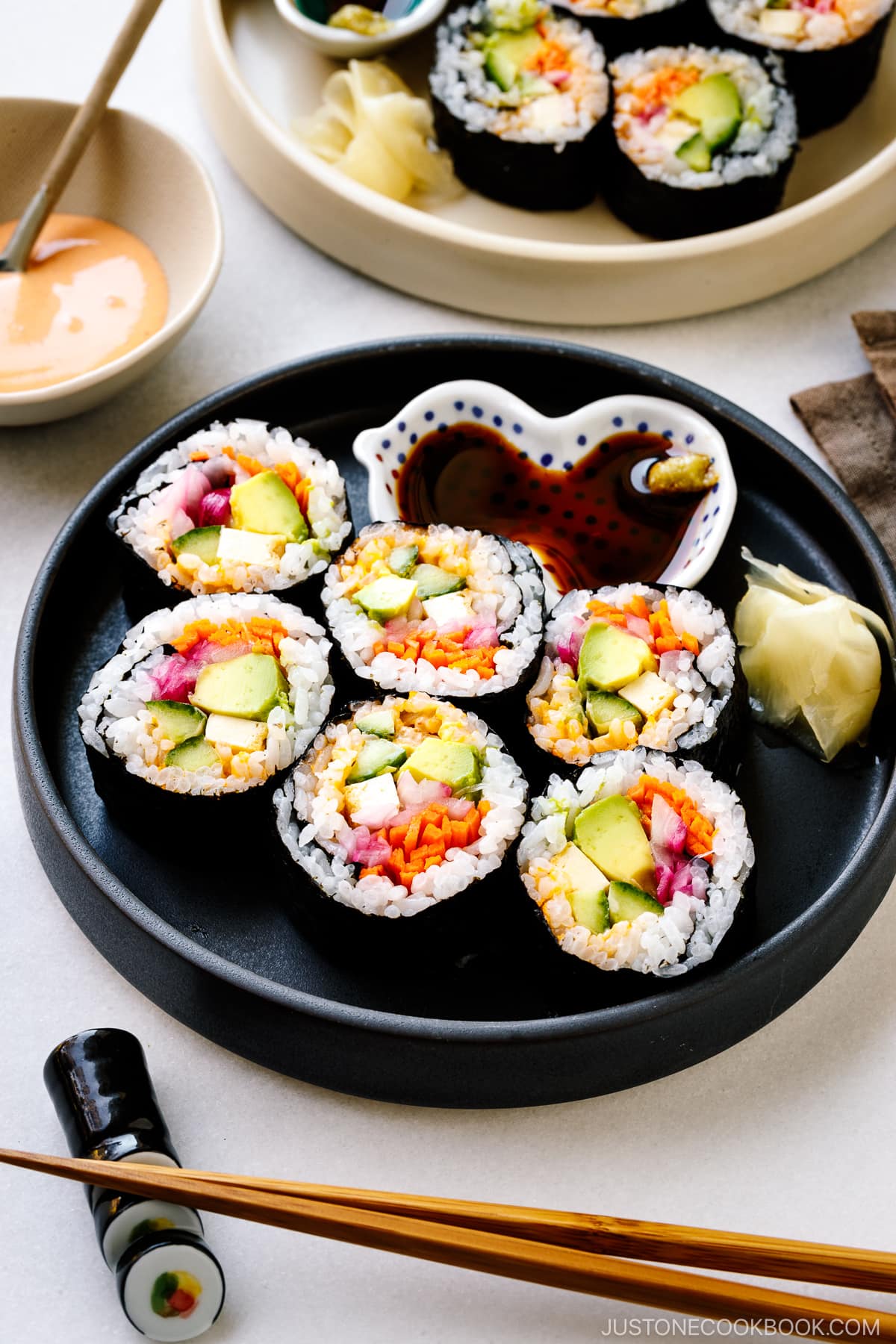
- Arrange your Vegetarian Sushi Rolls on a plate and serve with soy sauce, wasabi, and pickled ginger on the side.
To Store
- Keep leftover sushi rolls in a cool place for up to 8 hours. Sushi is best eaten on the same day it's made. If you need to refrigerate them overnight, cover them with a thick kitchen towel, so the rice will stay cool but not become cold.Store leftover sushi rice in an airtight container and in the freezer for up to a month. To use, defrost it overnight in the fridge, and then microwave to room temperature (not hot). Rice gets hard and dry when stored in the refrigerator, so I don't recommend it, but you could cover the container with a thick kitchen towel so the rice will stay cool but not become cold.
Nutrition
Did you make this recipe?
Tag @justonecookbook on Instagram so we can see your delicious creation!
Editor’s Note: This post was originally published on May 29, 2023. It was republished with more information on July 14, 2024.