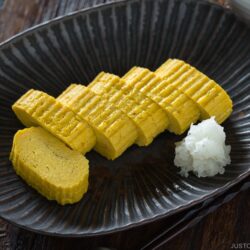
Tamagoyaki (Japanese Rolled Omelette) — Dashimaki Tamago
Tamagoyaki is a lightly sweet, savory Japanese rolled omelette with soft, custardy layers and deep umami flavor from dashi stock. It takes a little practice, but once you get the technique down, it comes together in just 10 minutes. Serve it warm with rice and miso soup, or pack it into a bento box for lunch.
Ingredients
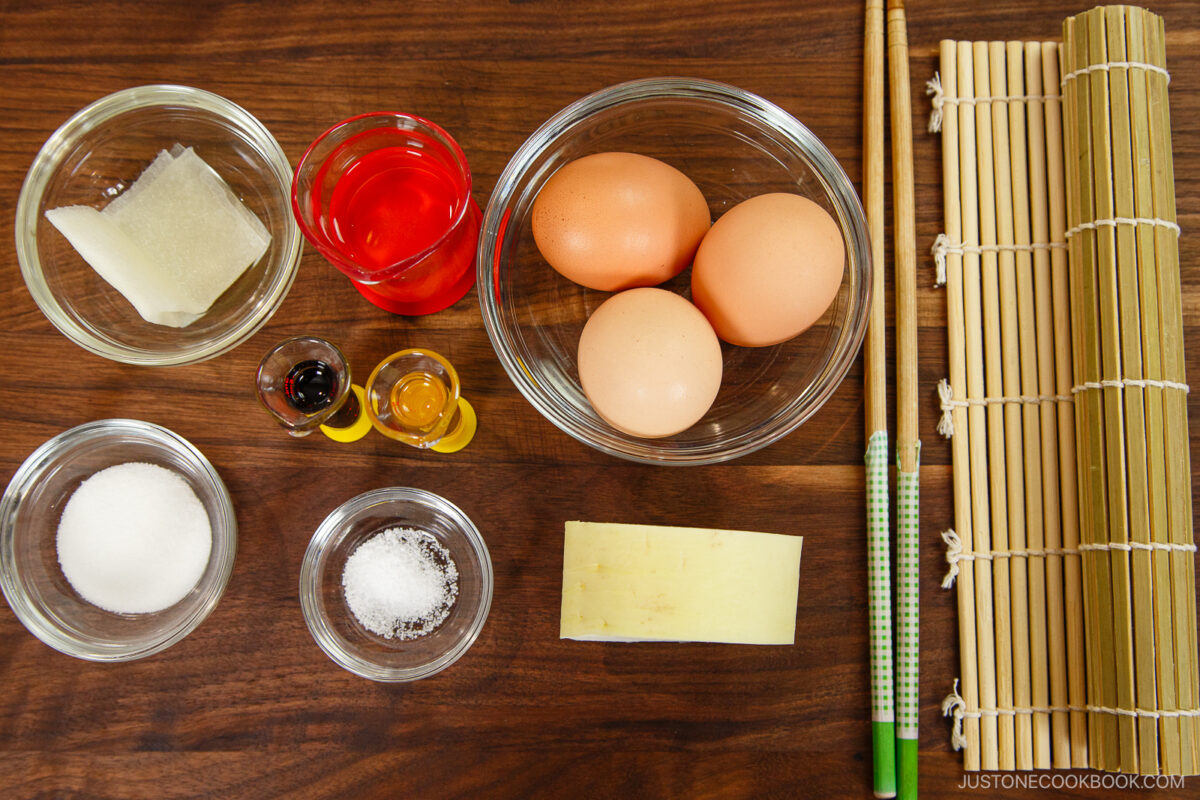
- 3 large eggs (50 g w/o shell)
- 3 Tbsp dashi (Japanese soup stock) (use standard Awase Dashi or Vegan Dashi; or make quick dashi with water and a dashi packet or dashi powder)
- 2 tsp sugar
- 1 tsp soy sauce (use GF soy sauce for gluten-free)
- 1 tsp mirin
- 2 pinches Diamond Crystal kosher salt
- 2 Tbsp neutral oil (for cooking)
Instructions
Before You Start
- Tamagoyaki with dashi is the most challenging to roll as the egg mixture is watery. If you're a beginner, practice first with my 3-Ingredient Simple Tamagoyaki recipe.Gather all the ingredients.
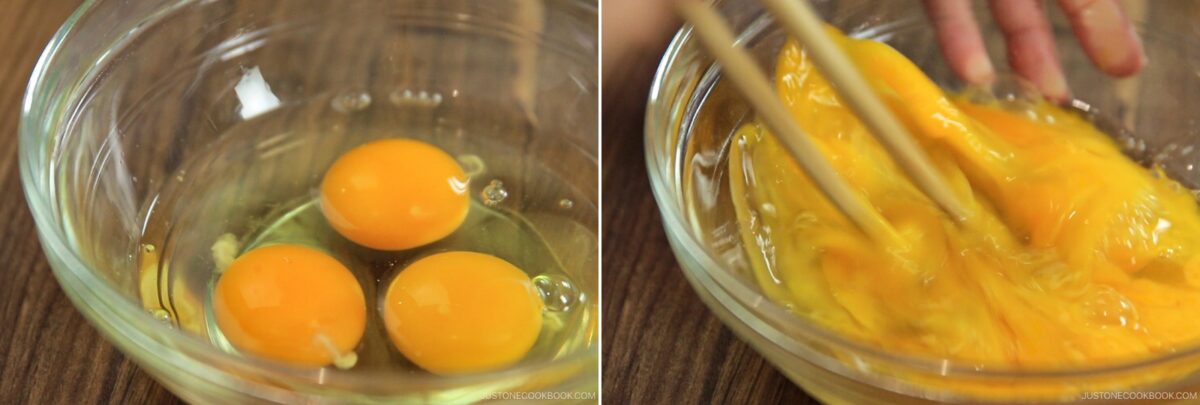
- Crack 3 large eggs (50 g w/o shell) into a bowl. Whisk by "cutting" through the eggs with chopsticks in a zig-zag motion, taking care not to overmix.
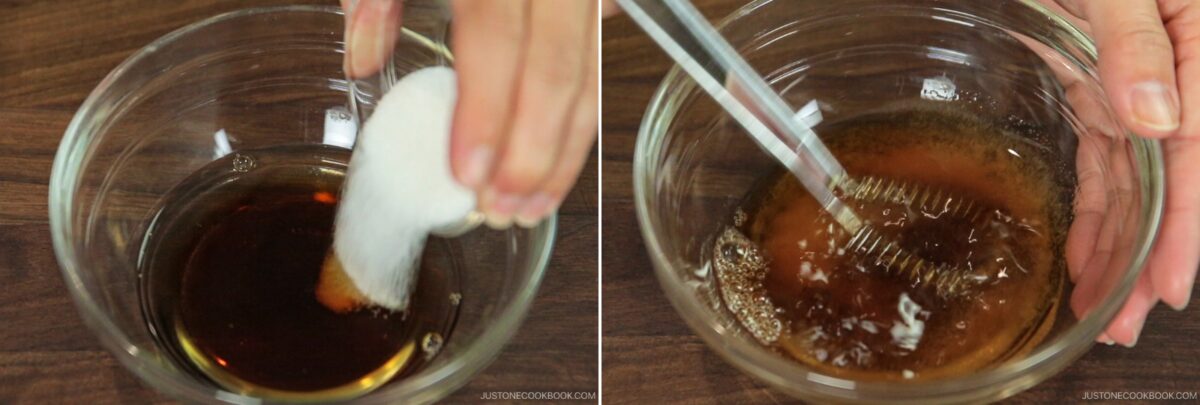
- Combine the seasonings in another bowl: 3 Tbsp dashi (Japanese soup stock), 2 tsp sugar, 1 tsp soy sauce, 1 tsp mirin, and 2 pinches Diamond Crystal kosher salt. Mix well.
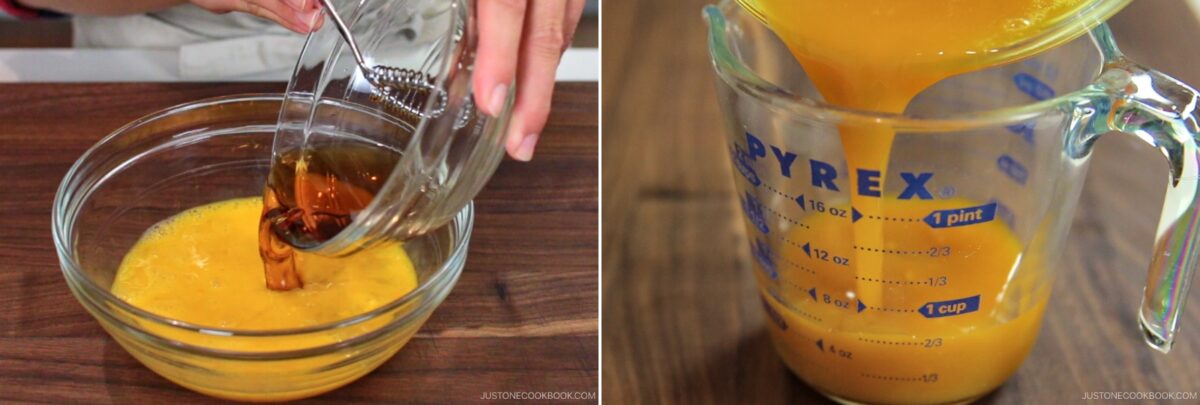
- Add the seasonings to the eggs and whisk to combine. Don't overmix. Transfer the mixture to a measuring cup with a spout.
To Cook
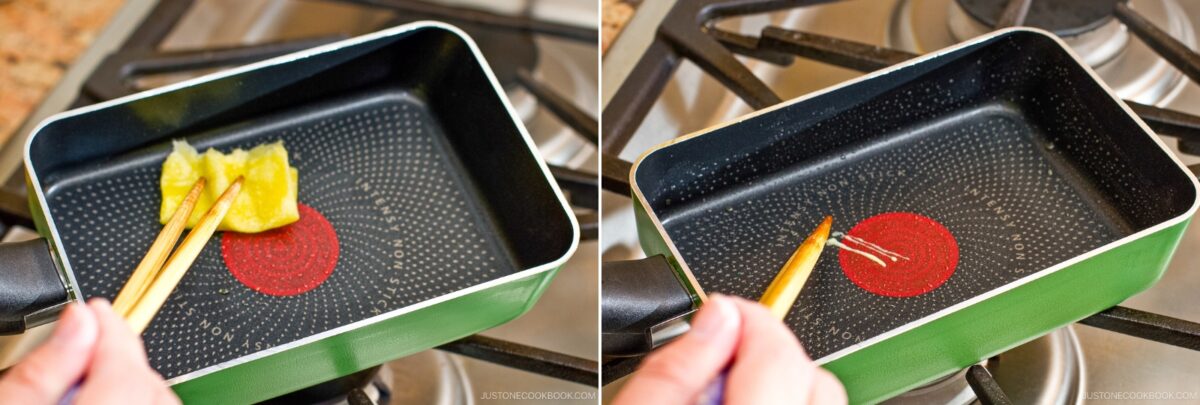
- Heat the pan over medium heat. Dip a folded paper towel in 2 Tbsp neutral oil and apply a thin layer to the pan. Add a drop of egg mixture — if it sizzles, the pan is ready.
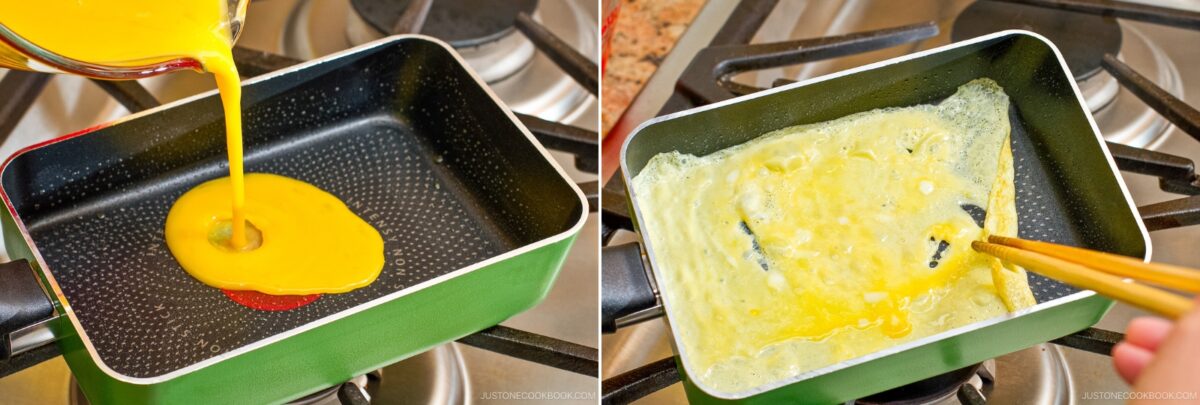
- Pour a thin layer of egg into the pan and quickly tilt it so the mixture coats the entire cooking surface. Poke any air bubbles with cooking chopsticks.
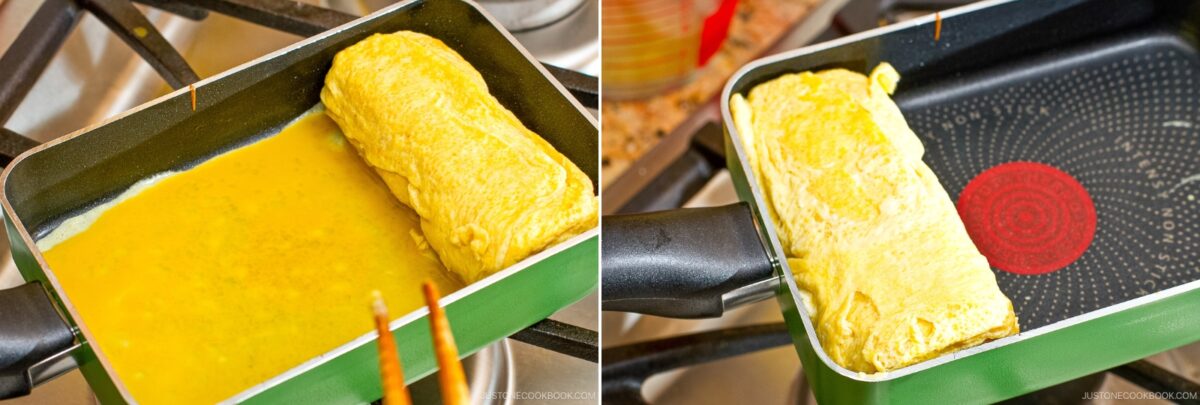
- When the bottom is set but the top is still runny, roll the egg into a log shape using chopsticks or a spatula, starting from the far side of the pan toward the handle. Move the rolled omelette to the far side. Apply more oil to the pan with a paper towel, even under the omelette.Nami's Tip: Don't worry about rolling perfectly at this stage, since the inner layers will be hidden inside.
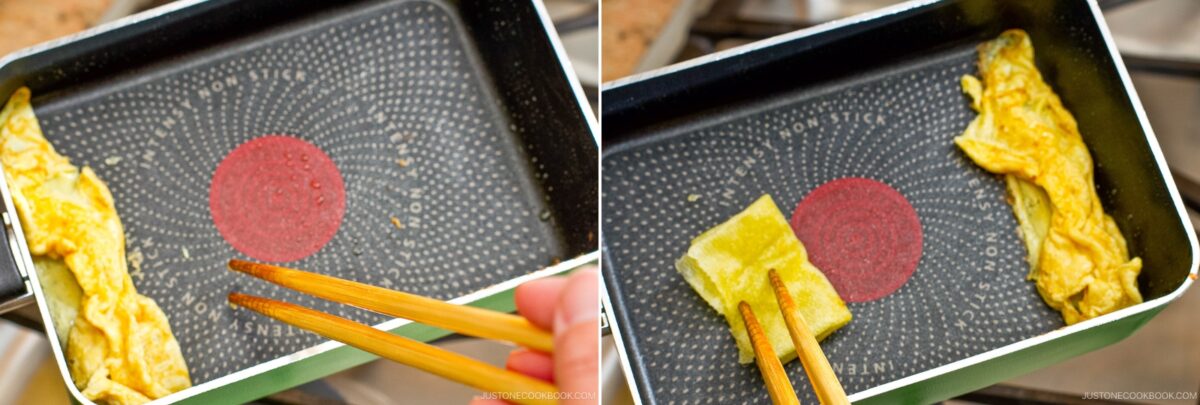
- Pour the second thin layer of egg, just enough to cover the bottom of the pan. Lift the rolled omelette and tilt the pan to spread the egg mixture underneath. When the new layer of egg has set and is still soft on top, roll it as before from the far side toward the handle.Nami's Tip: Control the cooking temperature by lifting the frying pan rather than adjusting the stove heat. If the heat is too weak, the egg will stick to the frying pan, so be careful.
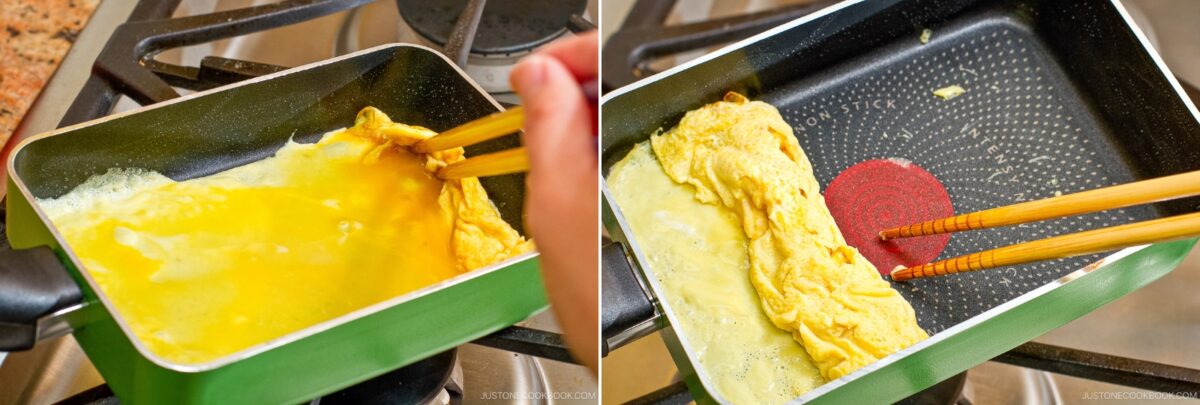
- Move the rolled omelette to the far side. Reapply oil on the pan and under the omelette. Pour the next thin layer of egg and tilt to coat the entire surface—including under the omelette.
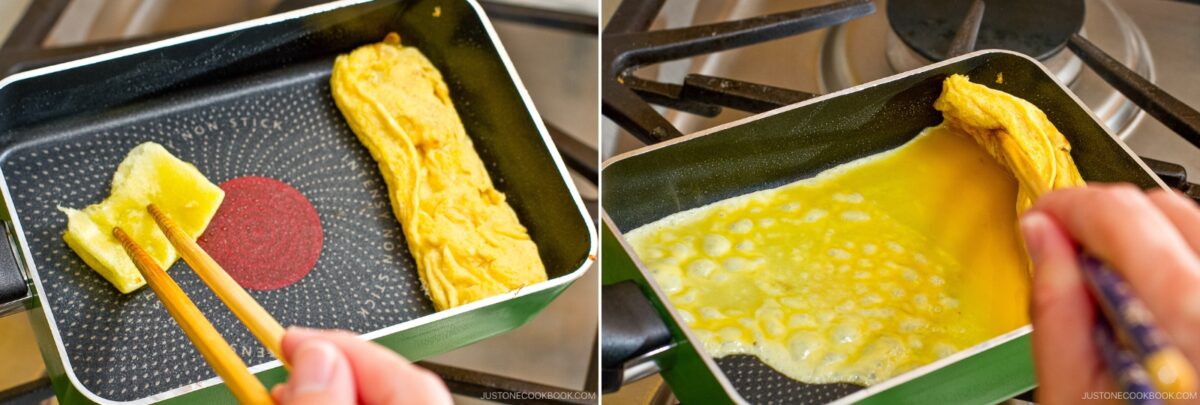
- Roll again when the bottom is set and the top is still soft.
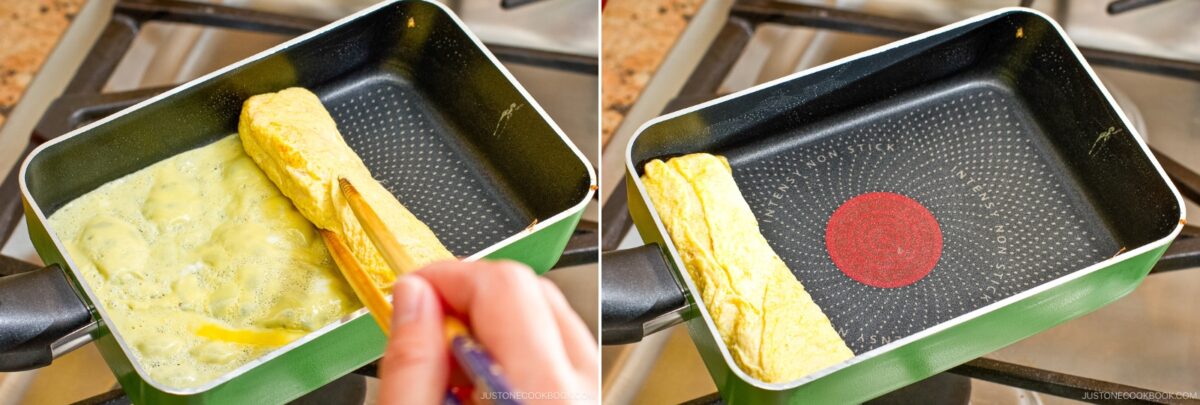
- Repeat until all the egg mixture is used.
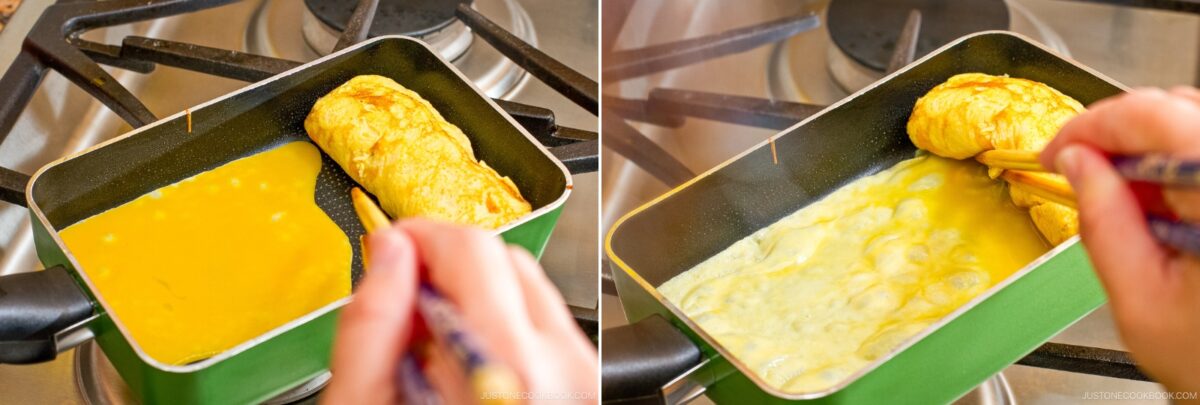
- On the final round, brown the omelette lightly on each side, if desired.
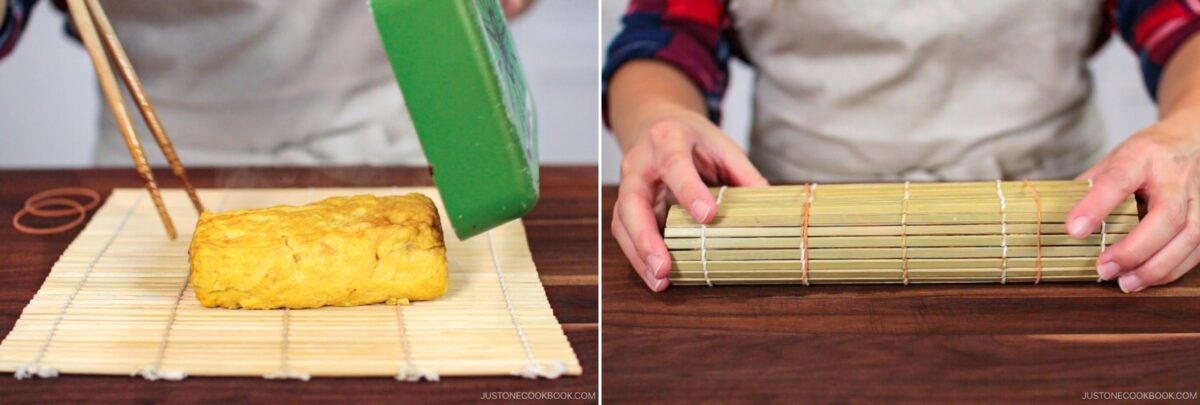
- Remove the omelette from the pan. While still hot, place it on a bamboo sushi mat and roll tightly to set the shape. Let stand for 5 minutes.Nami's Tip: Rolling in the bamboo mat is optional but recommended for a neat log shape.
To Serve
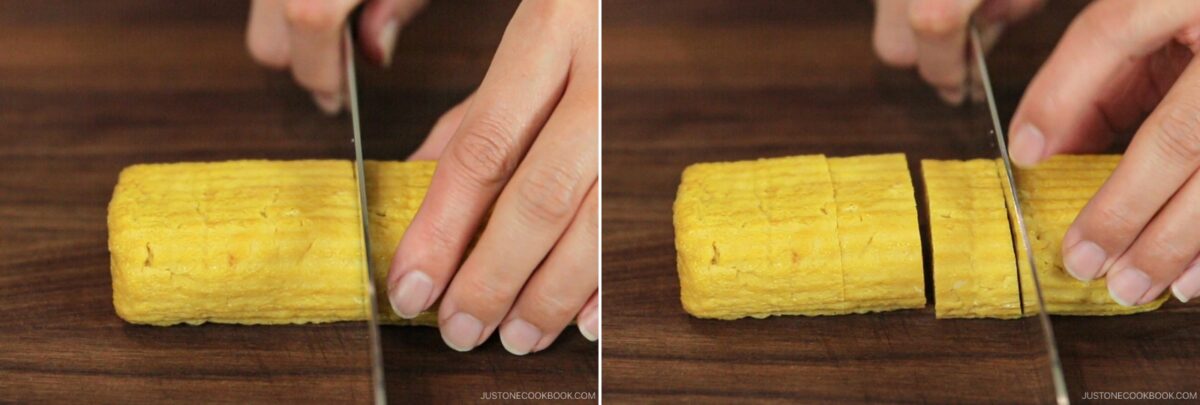
- Slice the omelette crosswise into ½-inch (1-cm) pieces. Optionally, serve with a mound of grated daikon and a splash of soy sauce on the side.Nami's Tip: Gently squeeze out any excess water from grated daikon.
To Store
- Cool and transfer to an airtight container. Refrigerate for up to 1–2 days or freeze for up to 2 weeks. Thaw overnight in the refrigerator, or reheat directly from frozen in the microwave.
To Cook in a Round Frying Pan
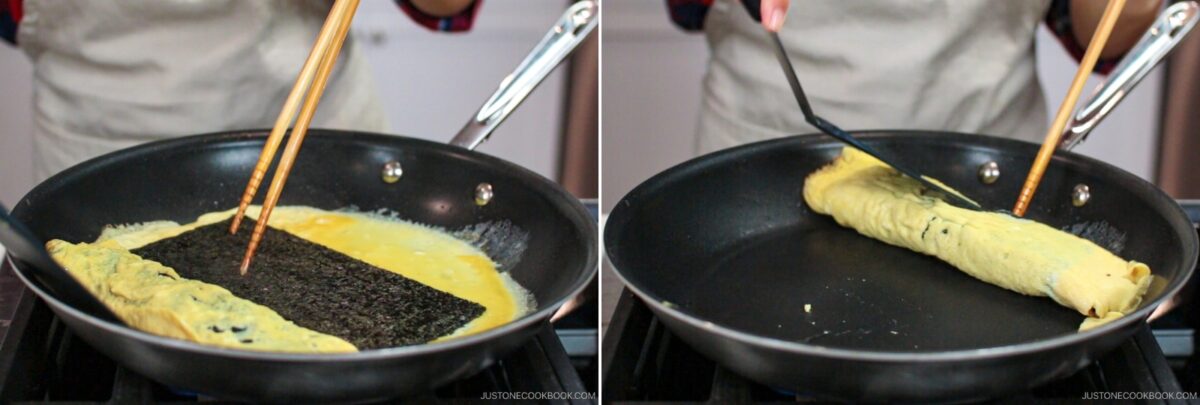
- If you don't have a rectangular tamagoyaki pan, a round frying pan works too. As you roll, tuck in both rounded edges of the egg layer before each roll to keep the shape straight—or trim the edges with a knife once finished. The roll will be shorter, but just as delicious.

- If you'd like to add a filling such as a nori sheet, place it on top of the egg layer when the bottom is set and the top is still slightly runny, then roll as usual.
Notes
Variations and Customizations
- Plain and simple. Skip the dashi for a firmer, easier omelette. Try my 3-Ingredient Simple Tamagoyaki.
- Sweeter style. Add more sugar to make atsuyaki tamago—a thicker, sweeter version. See my Japanese Sweet Rolled Omelet recipe.
- Add nori. Tuck sheets of nori seaweed between layers before rolling for extra flavor. I show this in method 2 in the recipe card below.
- Make it restaurant style. Add more dashi than I do to make oven-baked castella tamago. It's similar to my Datemaki recipe.
Nutrition
Calories: 199kcal, Carbohydrates: 7g, Protein: 10g, Fat: 14g, Saturated Fat: 8g, Trans Fat: 1g, Cholesterol: 279mg, Sodium: 347mg, Potassium: 207mg, Fiber: 1g, Sugar: 6g, Vitamin A: 503IU, Vitamin C: 10mg, Calcium: 55mg, Iron: 2mg
