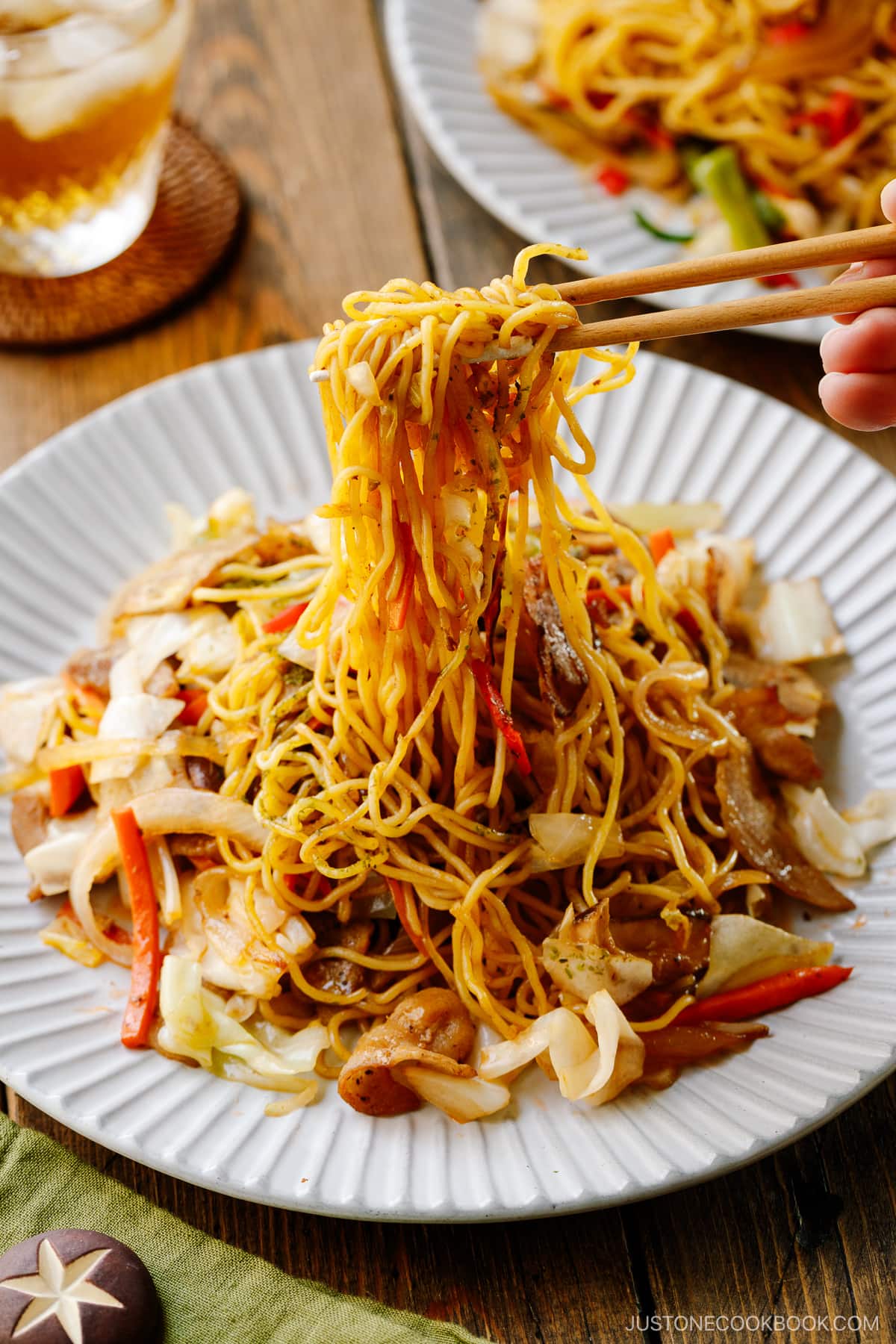
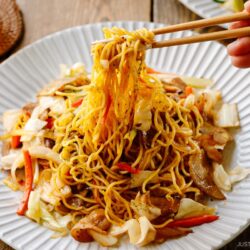
Growing up in Japan, yakisoba (Japanese stir-fried noodles) was a staple of our weekend lunches. My mom and I would prepare the ingredients, and everyone gathered around the electric griddle and cooked the noodles together. There were so many memories surrounding the dish that I always associate yakisoba with weekend lunches.
You can easily make yakisoba at home, customizing it with ingredients like chicken, shrimp, calamari, to make it your style. Or try it with mushrooms or tofu for a simple vegetarian version!
What is Yakisoba?
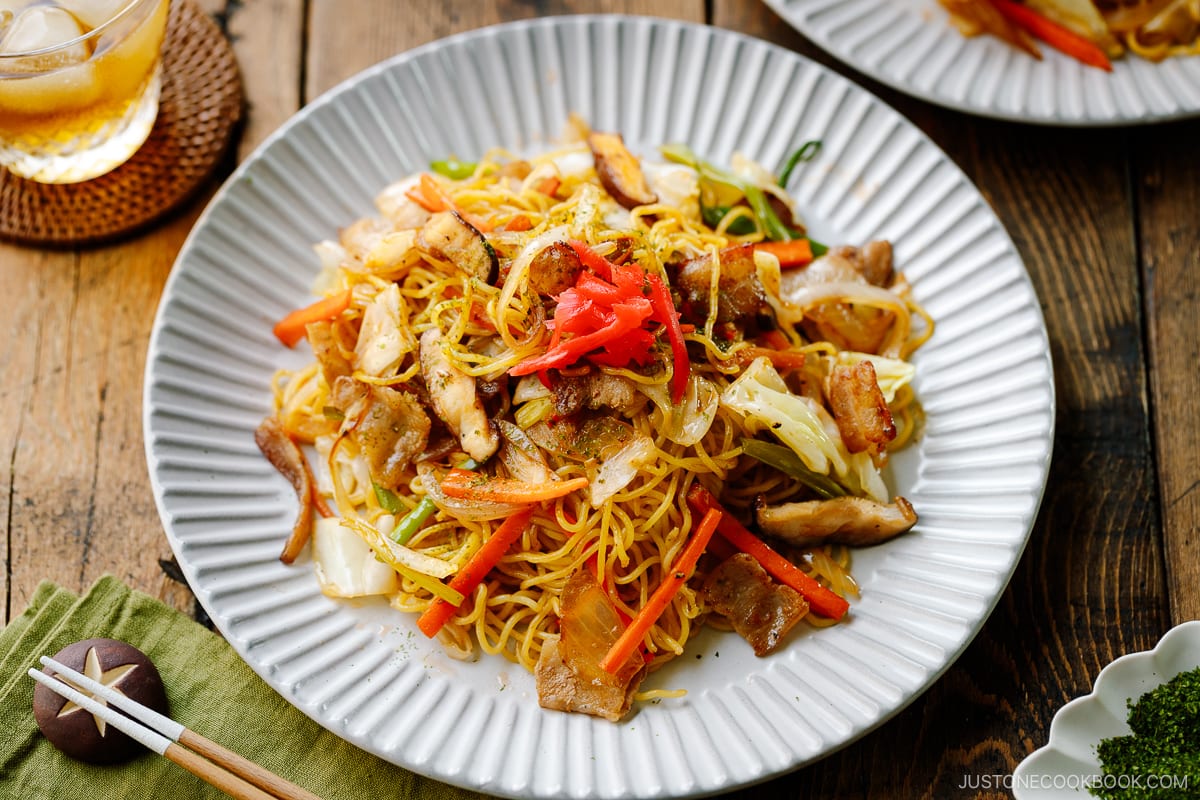
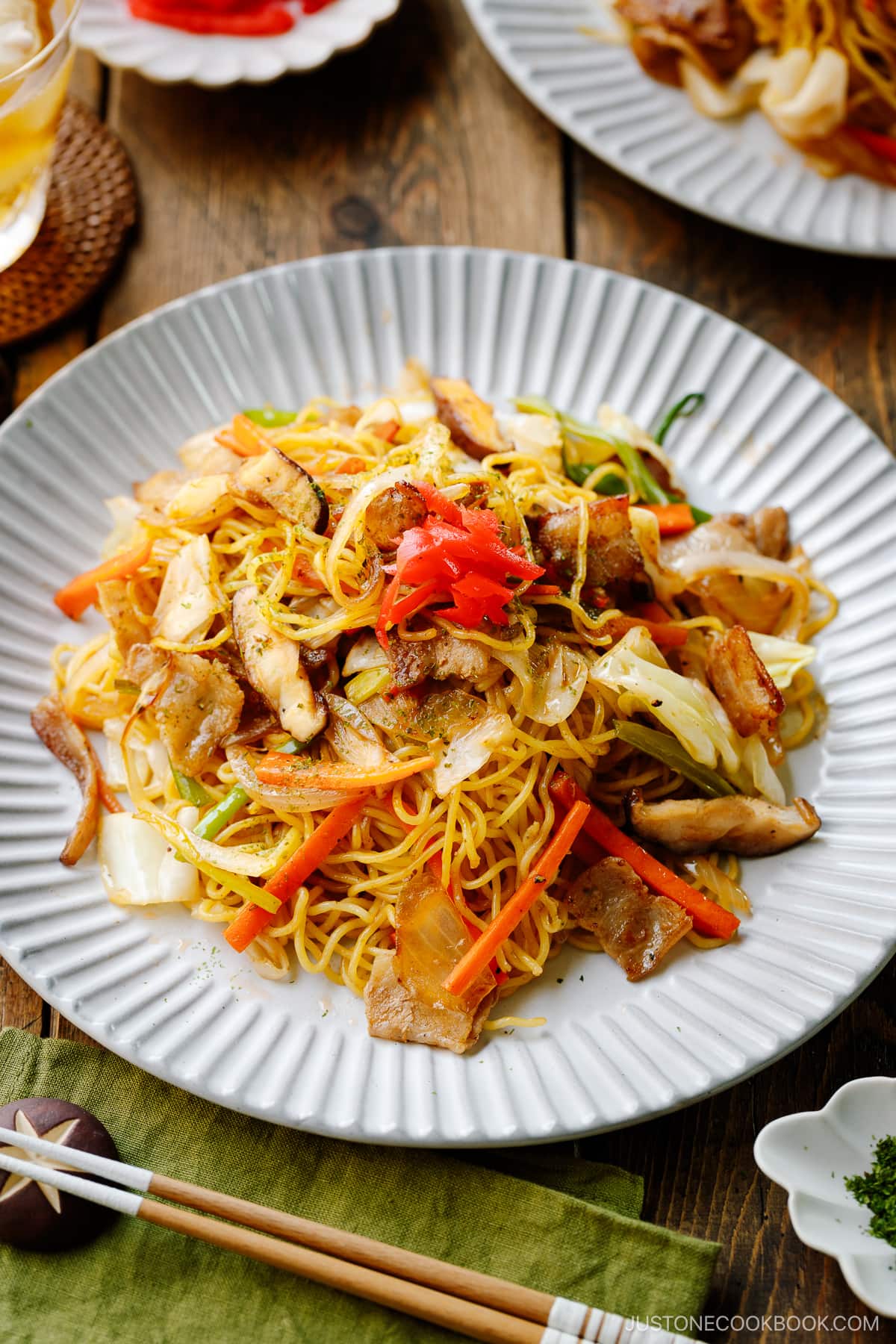
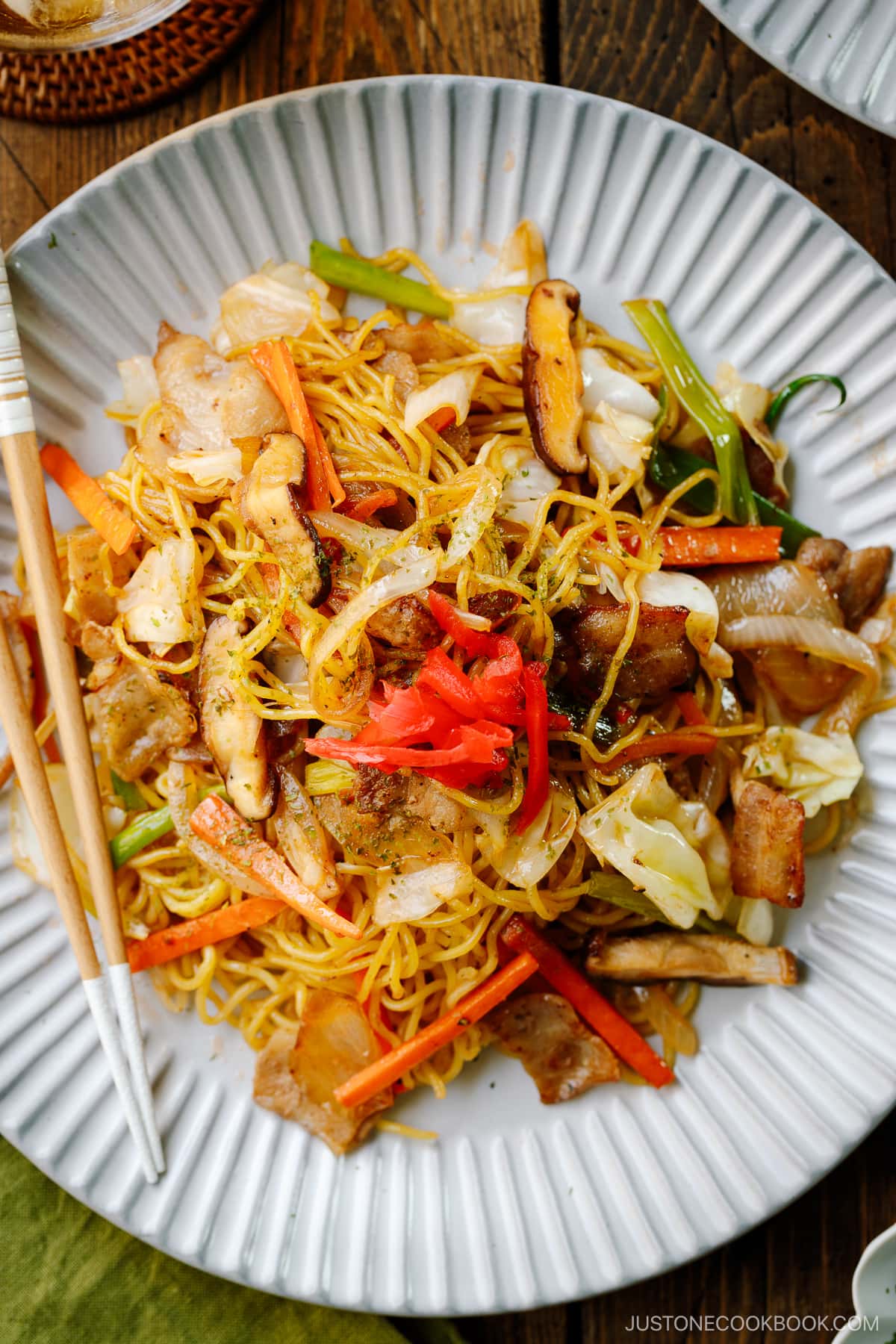
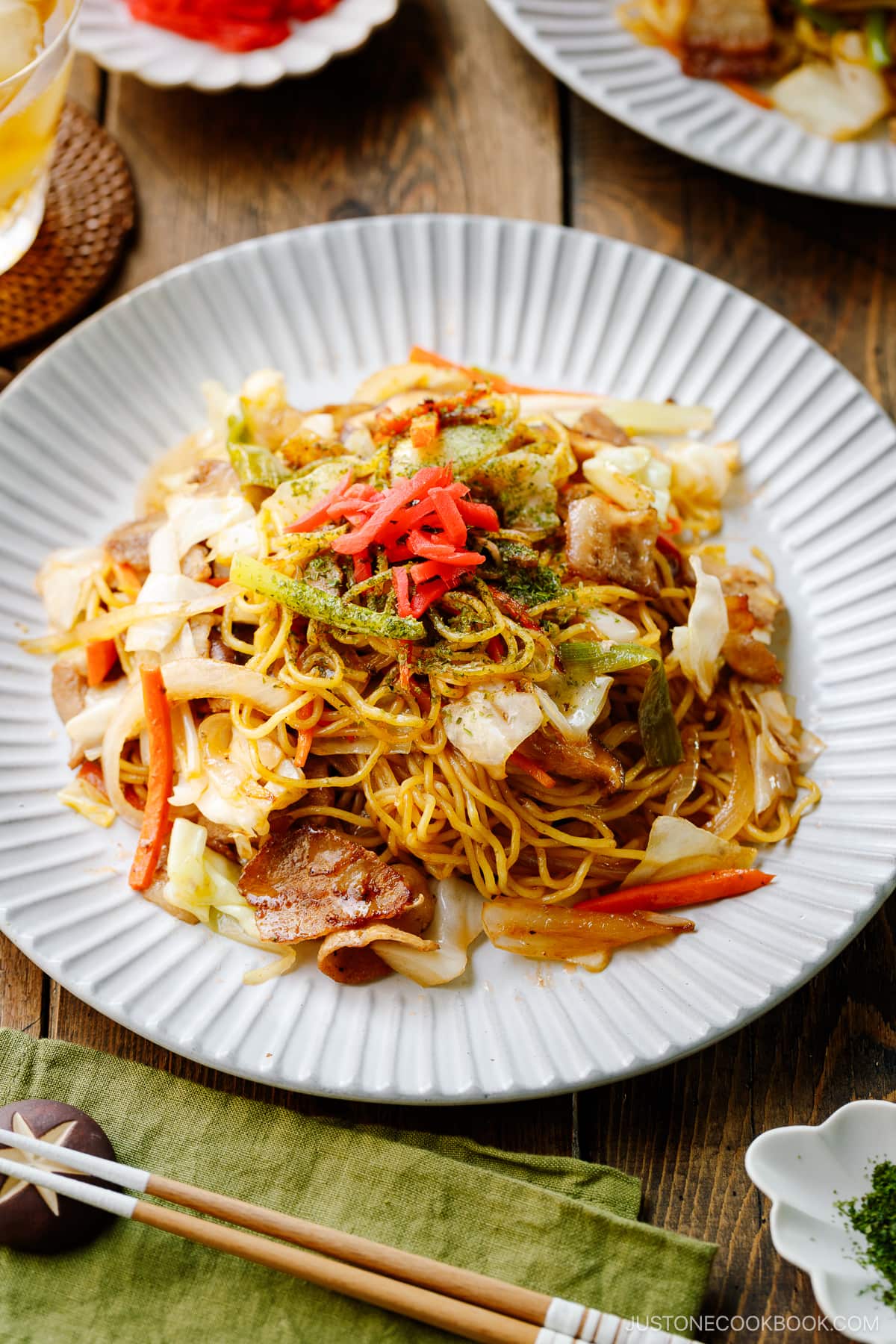
Yakisoba (焼きそば) is a stir-fried noodle dish that typically includes meat or seafood, as well as vegetables such as cabbage, carrots, onions, and bean sprouts. These ingredients are all cooked together in a thick, sweet-savory sauce, and the final dish is usually topped with aonori (dried green seaweed) and red pickled ginger for added flavor.
A Brief History
According to food history researcher Shogo Shiozaki, this popular street food originated in Asakusa during the Taisho era, where Chinese noodle factories were first established.
Interestingly, yakisoba was actually created as a clever variation of okonomiyaki, a Japanese savory pancake. If you examine both dishes closely, you’ll notice similarities in the ingredients used, including meat/seafood, vegetables, and a British-style sauce! The key distinction is that yakisoba replaces the flour batter used in okonomiyaki with Chinese noodles. In fact, if you visit long-standing okonomiyaki restaurants in Tokyo, you’ll often find yakisoba offered as part of their menu.
Yakisoba quickly gained popularity, especially among young children who loved its delicious fried noodles. Originally a staple of food stalls, it eventually became a common item at Teishoku-ya (Japanese diners) and even at candy stores known as dagashi-ya (駄菓子屋). Due to the ease of setting up an iron plate teppan (鉄板), yakisoba food stalls became popular at school events, festivals, fairs, and more. Today, yakisoba is considered an iconic Japanese street food.
In the US, you can commonly find yakisoba on the menus of Japanese grill teppanyaki restaurants or sold by street vendors at Japanese Obon festivals or cherry blossom festivals.
Is Yakisoba Made with Buckwheat Noodles?
As “soba” is a type of Japanese buckwheat noodles, a lot of people have asked me if yakisoba uses the same noodle.
To clarify, the word “soba” in Japanese is an umbrella term to describe noodles of any type, such as chuka soba for ramen and yakisoba in this instance.
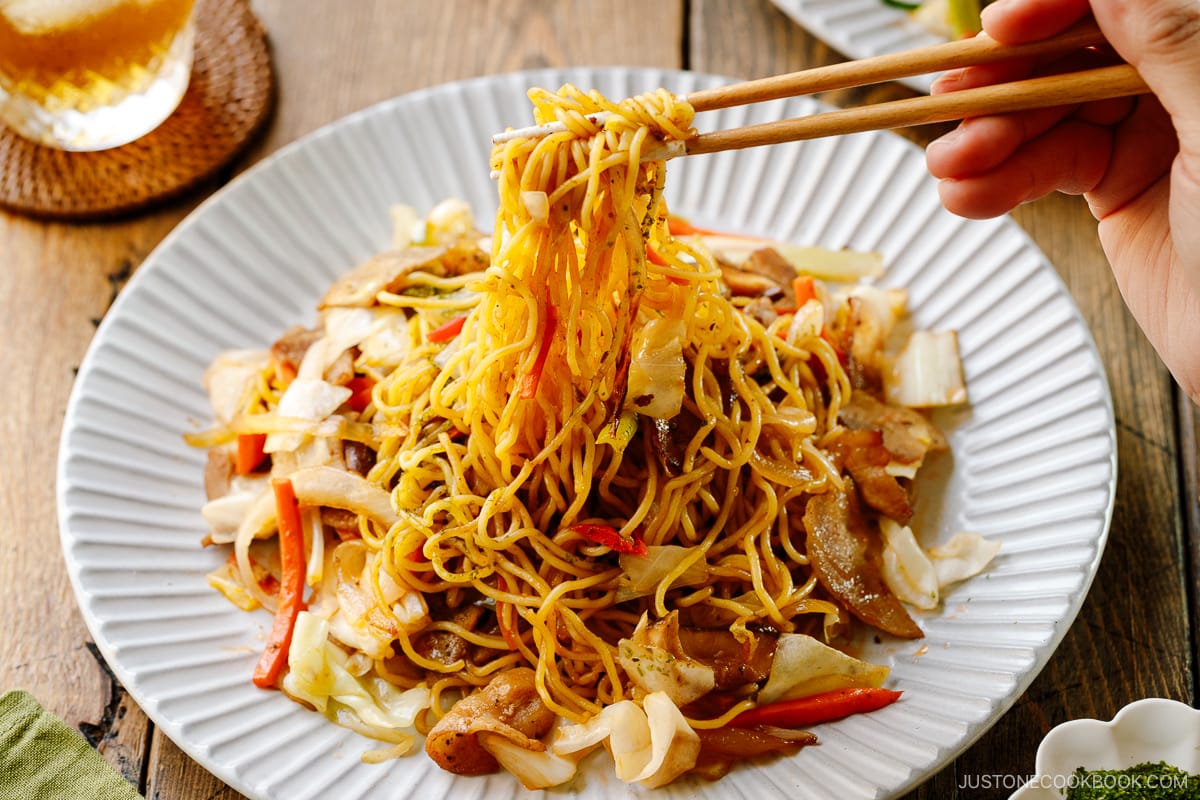
Yakisoba does not use buckwheat soba noodles. Instead, it uses mushi chukamen (蒸し中華麺), which are steamed Chinese-style noodles made from wheat flour, kansui, and water. These noodles have a yellowish color due to the kansui but are not egg noodles. They share a texture similar to ramen noodles and are pre-steamed for quick reheating.
How to Make Yakisoba
The Ingredients You’ll Need
- Yakisoba noodles: These are Chinese-style noodles made with wheat flour (more information below).
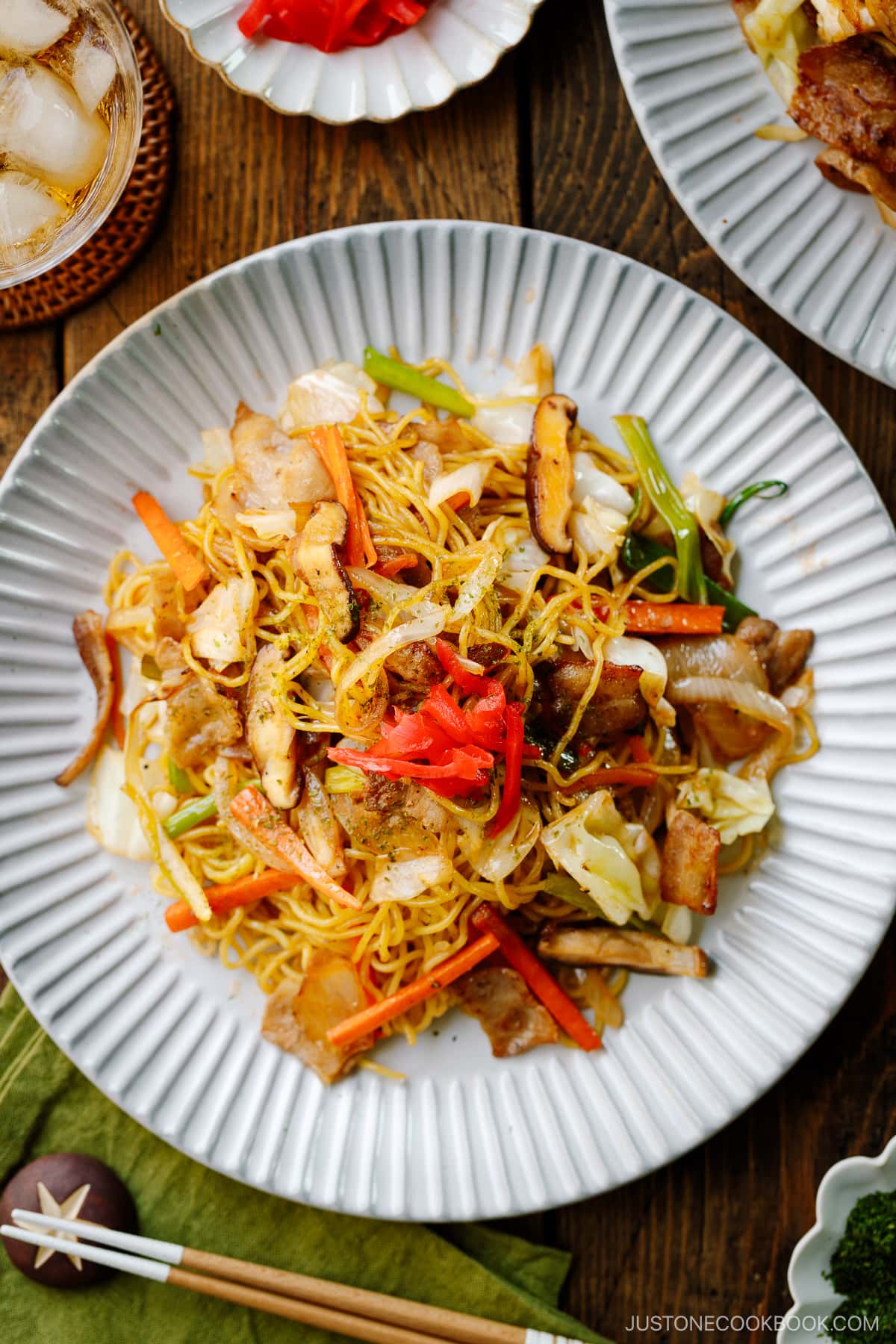
- Vegetables: I use thinly sliced yellow onion, green onion, julienned carrot, some sliced shiitake mushrooms, and chopped cabbage. These veggies work great for a stir-fry. You can also use bok choy or thin strips of bell pepper.
- Protein(s): I use sliced pork belly in this recipe as it is the most common choice of meat to make yakisoba in Japan. However, you can switch it up with any protein like shrimp, calamari, chicken, and firm tofu.
- Oil: Any neutral-tasting oil will work.
- Yakisoba Sauce: Worcestershire sauce, oyster sauce (or vegetarian stir fry sauce), ketchup, soy sauce, and sugar. Adjust the amount to suit your taste.
- Optional toppings: aonori (powdered green seaweed) and beni shoga (red pickled ginger). Some people also like to top the noodles with katsuobushi (shaved bonito flakes).
The Cooking Steps
- Cut the ingredients into bite-size pieces.
- Warm up the noodles and transfer them to a dish.
- Cook the protein, followed by the tough vegetables, and then the soft vegetables.
- Put back the noodles and season them with Yakisoba Sauce.
- Toss them all together and serve.
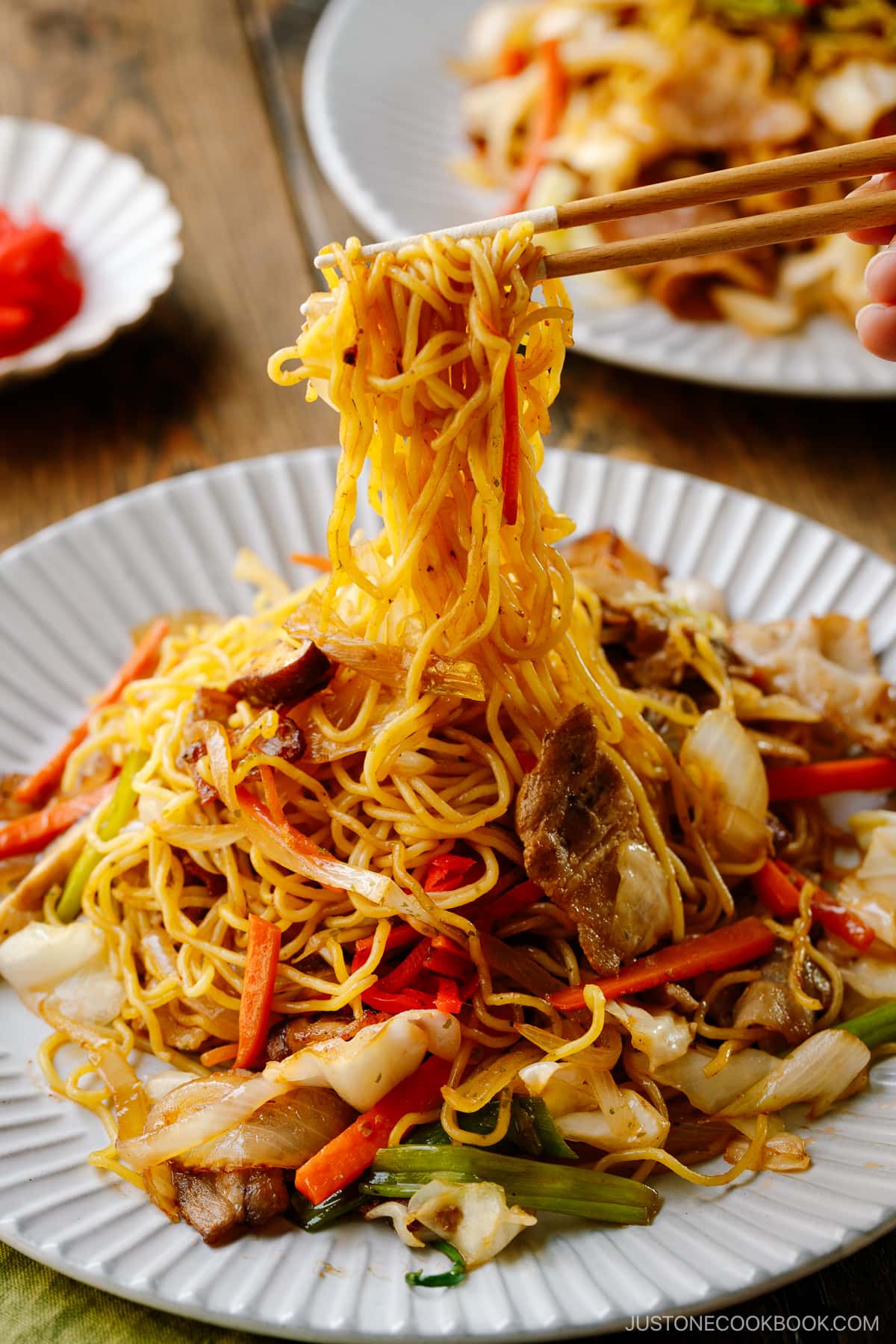
Ingredient Variations
My mom often changes up the ingredients when she makes yakisoba. In addition to pork belly slices, she sometimes uses Japanese sausages and ground pork, and my favorite is the combination of ground pork and squid/calamari. For extra crunch and fiber, she also throws in Chinese chives (nira in Japanese) and bean sprouts.
Where to Buy Yakisoba Noodles
The two popular yakisoba noodle brands are Myojo (明星) and Maruchan (マルちゃん), and each package comes with three packs of yakisoba noodles. The noodles are already steamed, coated with oil, and packed tightly in the packets.
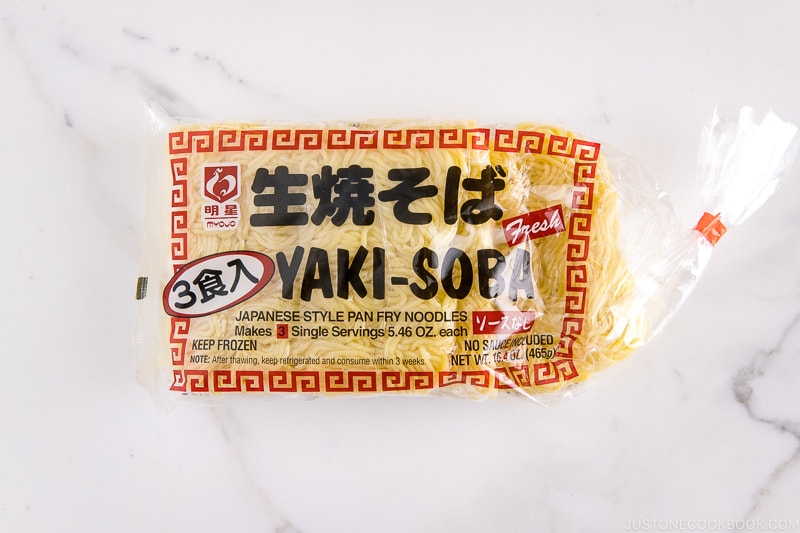
I recommend using the Myojo brand (see the picture above). Maruchan, if frozen, tends to break into pieces when defrosted. In Japan, yakisoba noodles are never sold frozen. However, these noodles don’t last too long and they are often sold frozen outside of the US.
You can purchase them in Japanese, Korean, and Chinese grocery stores, and they are either in the refrigerated or freezer section.
How to Make Yakisoba Sauce
The popular Otafuku brand offers Yakisoba sauce (see below), but my family actually likes making yakisoba sauce from scratch.
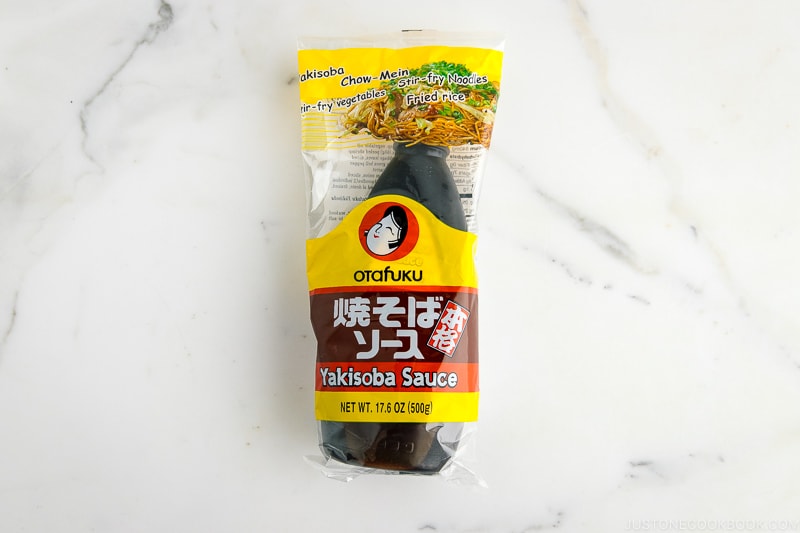
Homemade yakisoba sauce is made with common condiments from American grocery stores, such as Worcestershire sauce, ketchup, oyster sauce, and soy sauce. You can adjust the sauce as you like, so your yakisoba tastes slightly different each time.
My homemade recipe below is the exact amount needed for the ingredients below. I recommend doubling the sauce in case you end up adding more ingredients. You don’t want the noodles to be bland.
Cooking Tips
1. Use a large cookware.
It’s important to use a griddle, wok, or frying pan with a large cooking space so that your ingredients have direct contact with the hot surface. The nice char will add fantastic flavors and give the noodles a “street food” character.
My griddle is from Thermador and I can’t find the exact model. You can use a similar griddle like this or this when making yakisoba at home. It is also fantastic for Okonomiyaki and all sorts of pancakes!
2. Cook vegetables in stages.
When it comes to any stir-fried dishes, we want to retain the fresh texture and crunch of the vegetables. So it is important to stir-fry the hard vegetables first before adding other softer ingredients. Each vegetable has a different cooking time, so cook quickly and in succession. Do not throw everything at once. Also, do not overcook as wilted veggies are a no-no for stir-fries.
3. Don’t add too many ingredients.
This is after all a noodle dish. It’s tempting to toss in lots of veggies or extra meat. Adding too many ingredients will end up steaming the noodles. You need to let the steam escape, so the noodles are not wet, and preferably make it as dry and crispy as possible. If you prefer drier-style noodles (I prefer mine to have some moisture), fry the noodles first, then transfer them out before cooking the vegetables and meat/ tofu. That way, you don’t have to cook the noodles later on, and the noodles will still stay crispy.
4. Loosen up the noodles first.
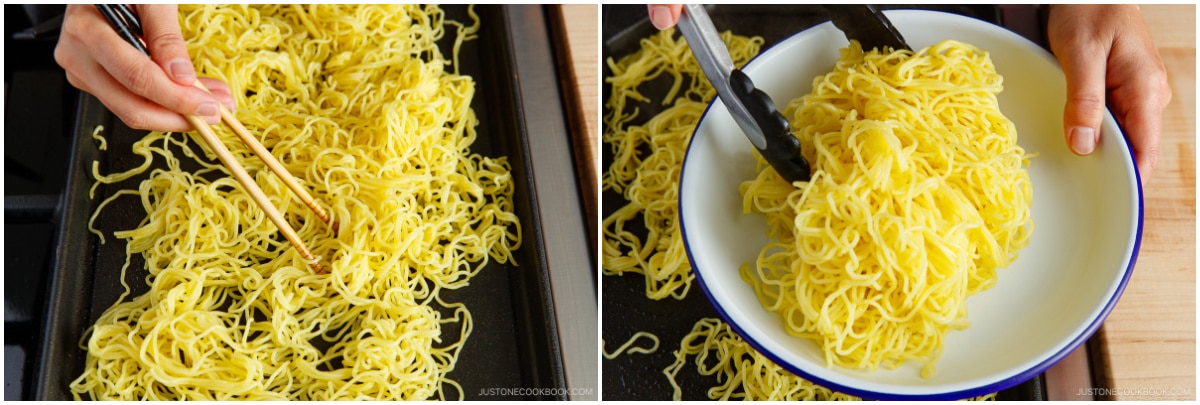
I recommend loosening the noodles quickly before mixing with the stir-fried ingredients. This way, you can mix with the other ingredients easily. If you don’t, you will most likely break up the noodles into small pieces on the griddle or wok.
FAQs
What is yakisoba made of?
Yakisoba is made with wheat-based noodles, sliced meat or seafood, vegetables like cabbage and carrots, and a sweet-savory yakisoba sauce. It’s stir-fried over high heat and often topped with aonori and red pickled ginger.
Is yakisoba made with soba noodles?
No. Yakisoba does not use buckwheat soba noodles. It uses wheat-based Chinese-style noodles called mushi chukamen. In Japanese, “soba” is also an umbrella term for noodles of any type.
What sauce is used for yakisoba?
Yakisoba sauce is a mix of Worcestershire sauce, oyster sauce, ketchup, soy sauce, and sugar. The flavor is sweet, savory, and slightly tangy. Many cooks make it from pantry condiments.
Can I use ramen noodles for yakisoba?
Fresh ramen or Chinese-style noodles can work in a pinch, but dried ramen noodles are not ideal. Yakisoba noodles are pre-steamed, which gives them the right chewy texture when stir-fried.
Varieties of Yakisoba
There are also a few different ways of serving stir-fried noodles:
- Modern-Yaki – When the yakisoba noodles are used as a base layer ingredient for okonomiyaki, we call this savory Japanese pancake Modern-Yaki.
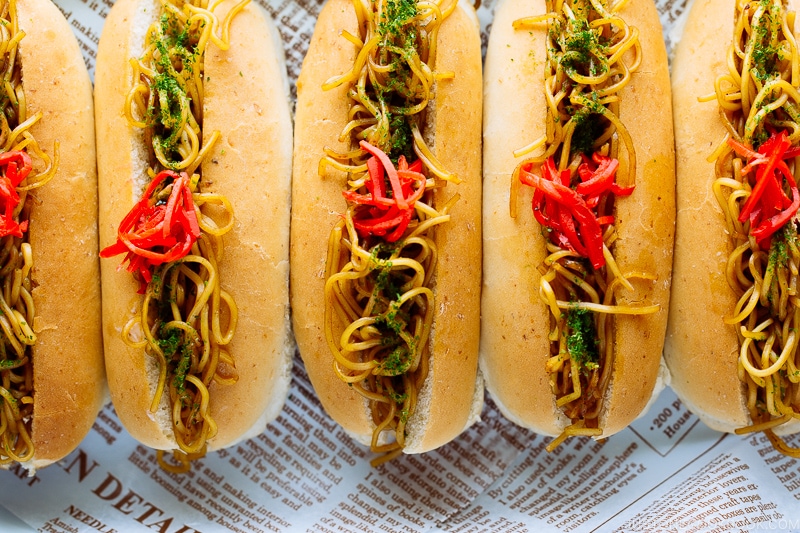
- Yakisoba Pan or Yakisoba Dog – It’s basically a hot dog bun stuffed with yakisoba!
- Omusoba – Omelette stuffed with yakisoba.
- Yaki Udon – Originated in the Fukuoka Prefecture, yaki udon uses thick chewy udon noodles instead of Chinese-style wheat noodles.
- Okinawan-style yakisoba – Sometimes features ingredients such as Spam, chopped hot dogs, and sliced hams.
- Shrimp Yakisoba – Loaded with juicy shrimp, tasty calamari, and crisp vegetables.
- Gluten-free Yakisoba – Use glass noodles instead of wheat noodles.
More Delicious Japanese Noodle Recipes:
Wish to learn more about Japanese cooking? Sign up for our free newsletter to receive cooking tips & recipe updates! And stay in touch with me on Facebook, Pinterest, YouTube, and Instagram.
Yakisoba (Japanese Stir-Fried Noodles)
Ingredients
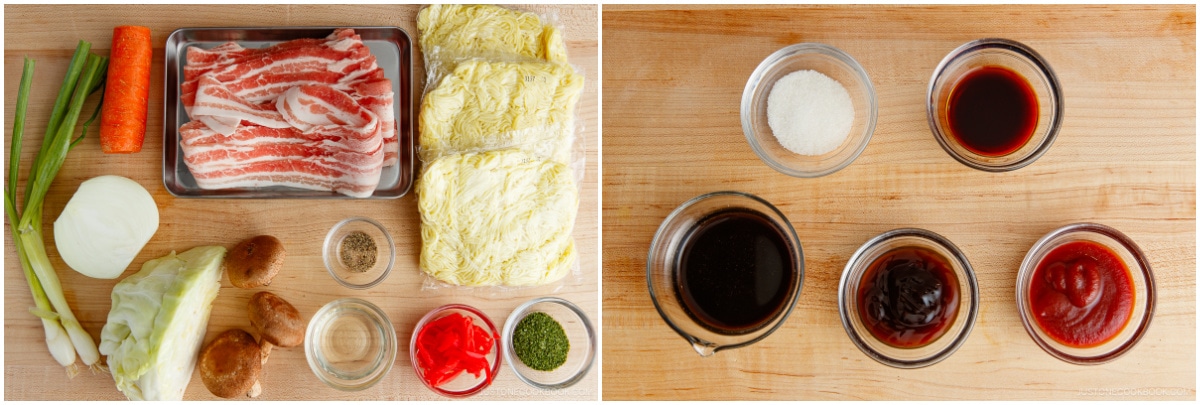
- 3 servings yakisoba noodles (pre-steamed; one package contains 3 servings, 16–17 oz, 454–480 g)
- ¾ lb sliced pork belly (or your choice of meat/seafood/mushrooms/veggies)
- ¼ head green cabbage (small; ½ lb, 227 g)
- 3 shiitake mushrooms (1.4 oz, 40 g)
- 4 inches carrot (3.5 oz, 100 g)
- ½ onion (5 oz, 142 g)
- 2 green onions/scallions
- 2 Tbsp neutral oil (for frying; plus more, if needed)
- freshly ground black pepper
- ⅓ cup yakisoba sauce (plus more, to taste; see recipe below)
For the Yakisoba Sauce
- ¼ cup Worcestershire sauce (use vegan Worcestershire sauce for vegan)
- 4 tsp oyster sauce (use Lee Kum Kee Vegetarian Stir-Fry Sauce for shellfish allergies or vegetarian)
- 4 tsp ketchup
- 2 tsp soy sauce
- 2 tsp sugar (plus more, to taste)
For the Toppings (optional)
Instructions
- Gather all the ingredients. Freeze the pork belly slices for 10 minutes so it‘s easier to cut. Nami's Tip: I recommend making double the sauce recipe. It‘s hard to measure the ingredients precisely, and if you add more vegetables and meat, you‘ll need to add more sauce to the noodles.
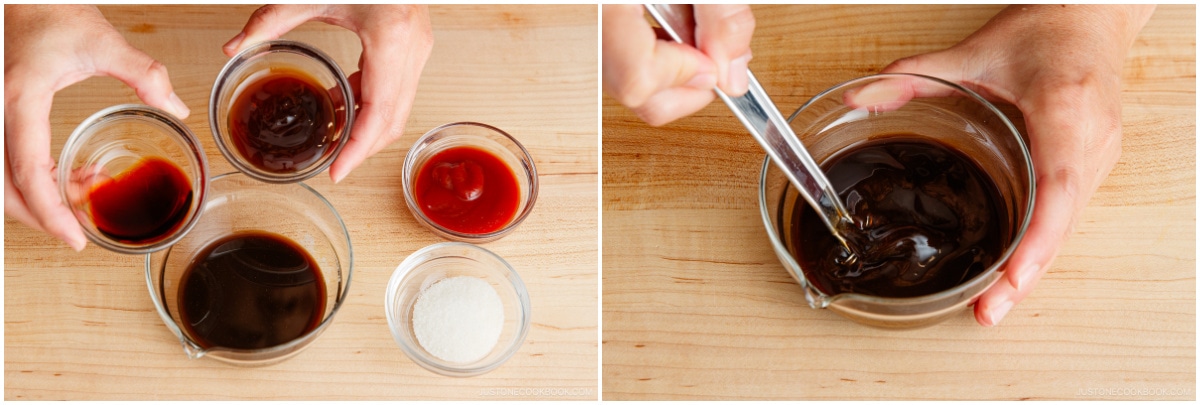
To Make the Yakisoba Sauce (⅓ cup, 80 ml)
- Whisk together ¼ cup Worcestershire sauce, 4 tsp oyster sauce, 4 tsp ketchup, 2 tsp soy sauce, and 2 tsp sugar in a bowl until the sugar dissolves. Taste the sauce and add more sugar, if needed. Nami's Tip: Adjust the sauce flavor since some ketchup is sweeter than others while some Worcestershire sauce is less sour than others.
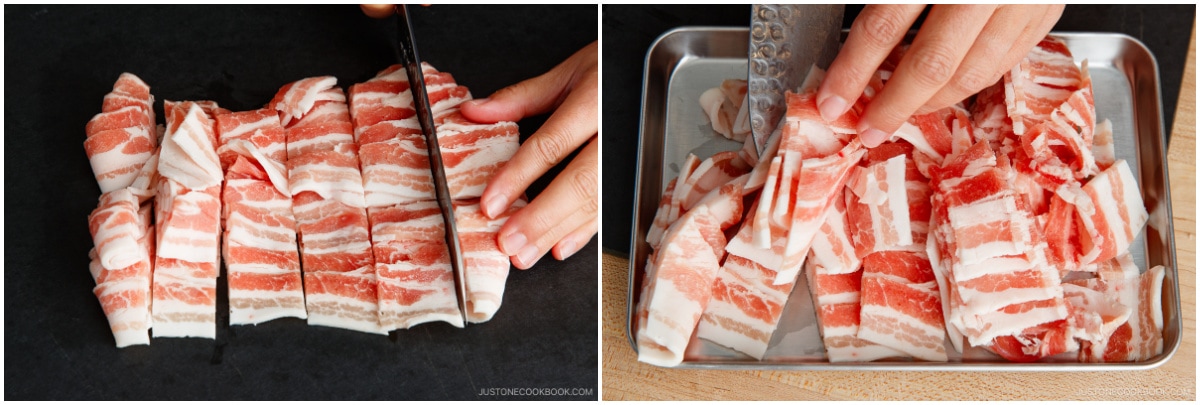
To Prepare the Ingredients
- Cut the partially frozen ¾ lb sliced pork belly crosswise into 1-inch (2.5-cm) pieces.
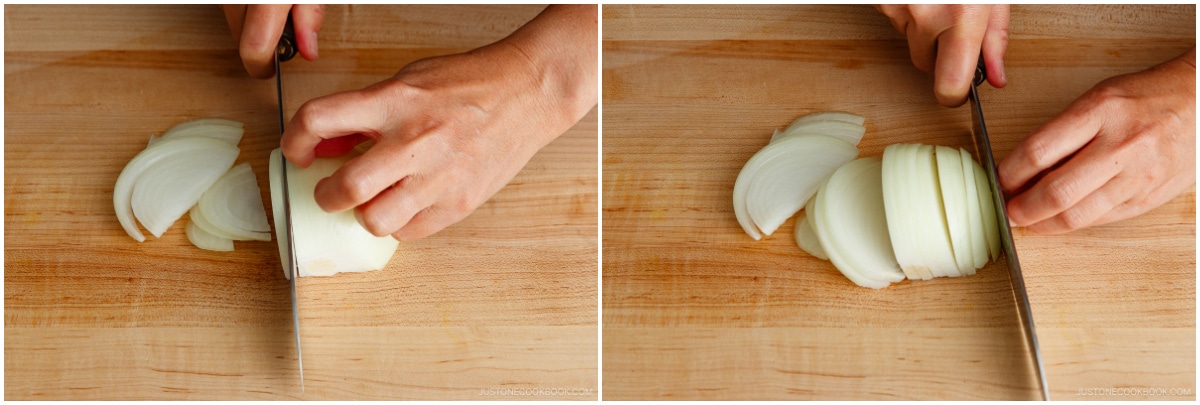
- Cut ½ onion into ¼-inch (6-mm) slices.
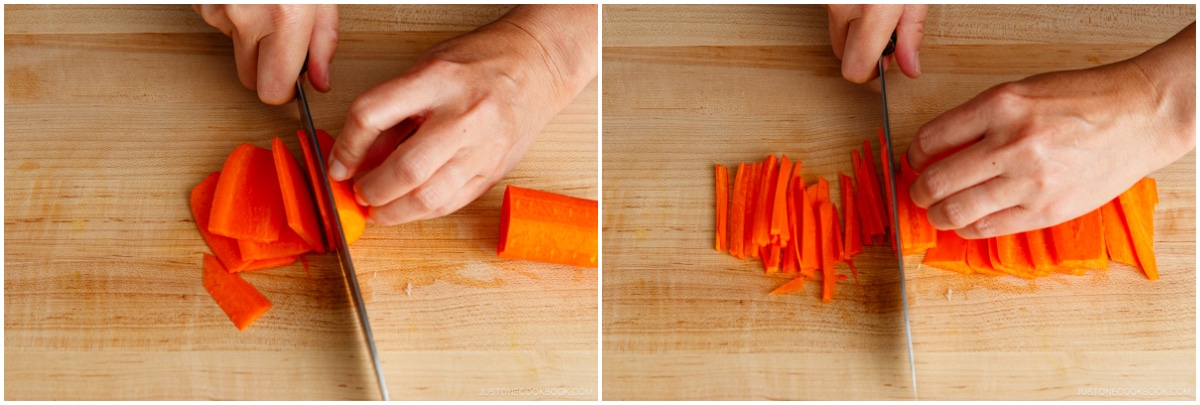
- Cut 4 inches carrot into 2-inch slabs and thinly slice into julienne strips.
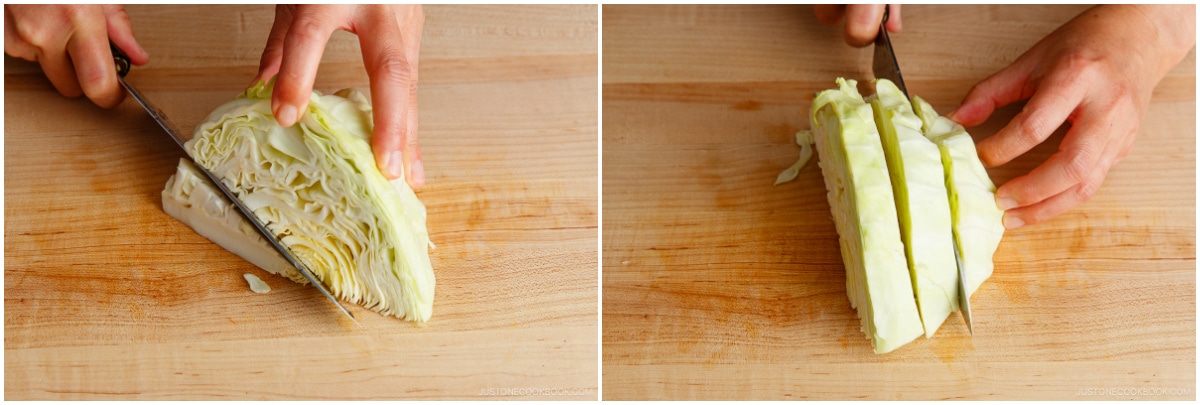
- Remove the core from ¼ head green cabbage. Cut the cabbage wedge into 1-inch (2.5-cm) slices.
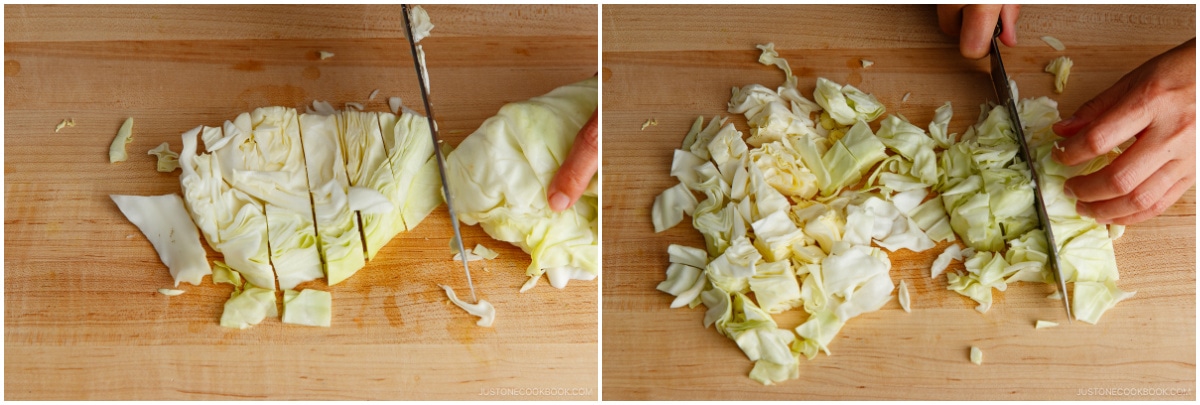
- Cut the cabbage slices into bite-sized pieces.
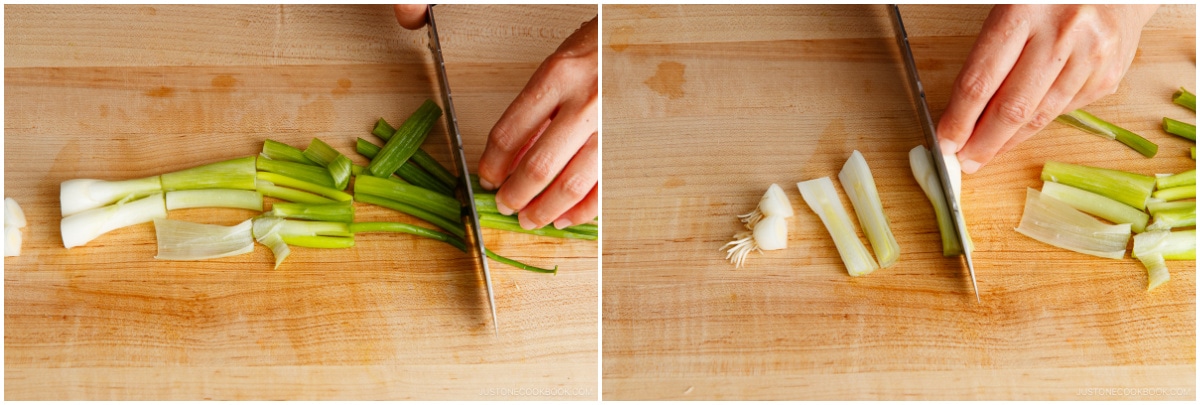
- Chop 2 green onions/scallions into 2-inch (5-cm) pieces. Cut any thick, white parts of the green onions in half lengthwise.
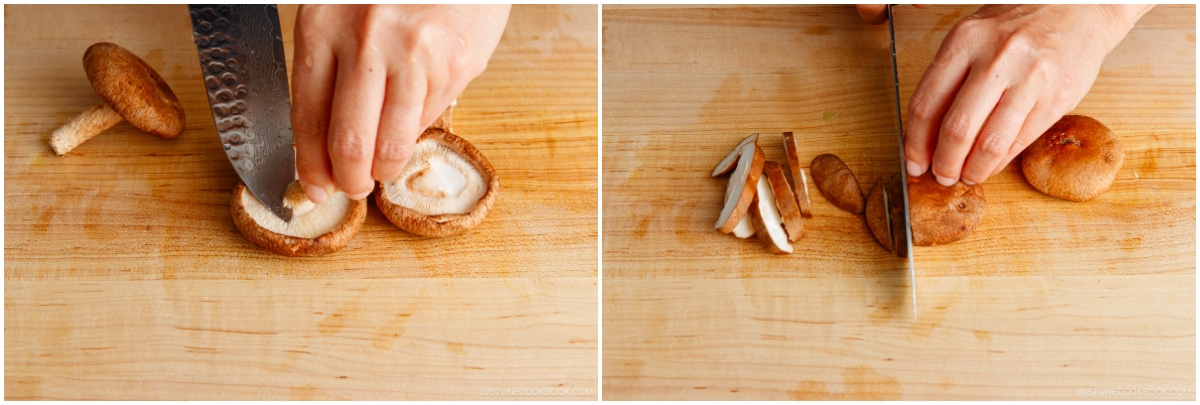
- Remove the stems from 3 shiitake mushrooms and cut the caps into ¼-inch (6-mm) slices.
To Loosen the Noodles
- Heat a griddle, large frying pan, or wok on medium heat. Add 2 Tbsp neutral oil. Unwrap 3 servings yakisoba noodles (they'll be pressed into squares) and add as is to the griddle.Nami's Tip: Use cookware with a large surface area so your ingredients directly contact the hot surface and develop a flavorful char for a "street food" character.
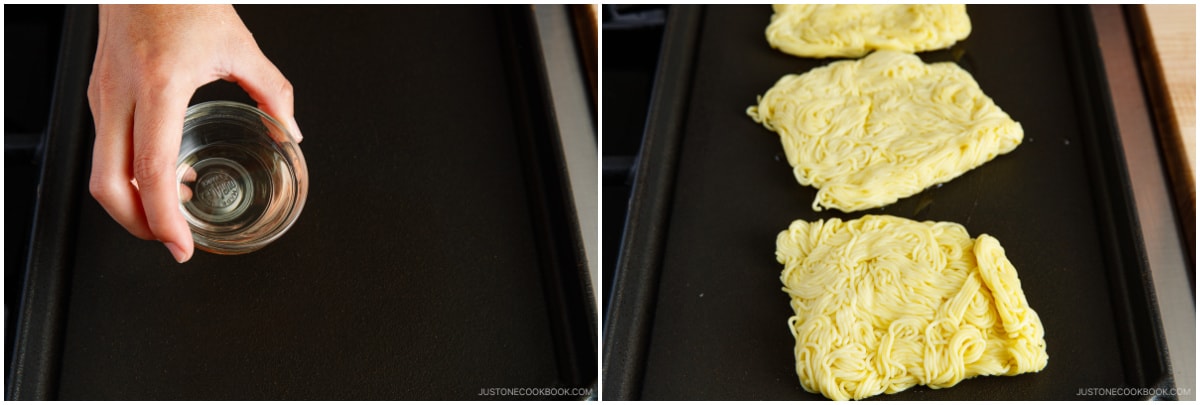
- When heated on the bottom, flip over the noodle squares and heat the other side.Nami's Tip: Heating the noodles will loosen them without breaking. Cold noodles will break if you force them to separate, so be patient.
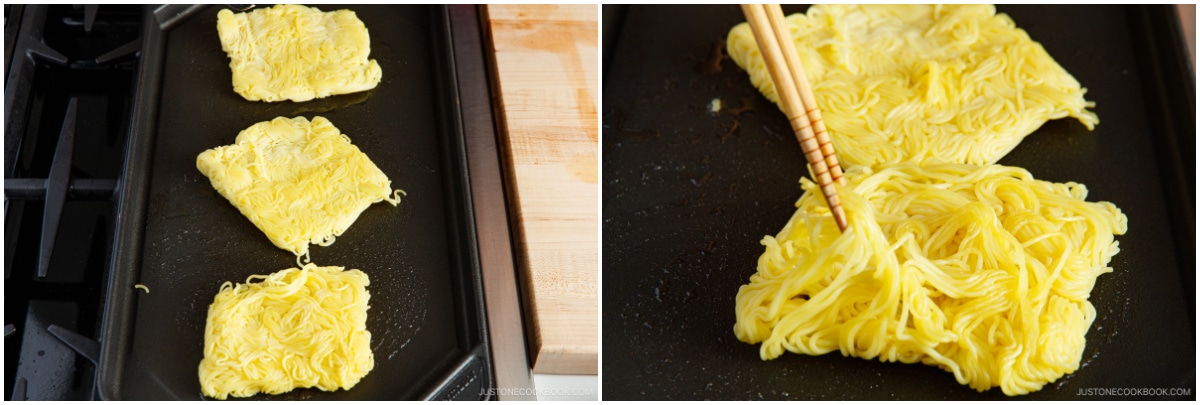
- Gradually shake the noodles with chopsticks to separate them. Once loosened completely, transfer them to a plate.
To Cook the Yakisoba
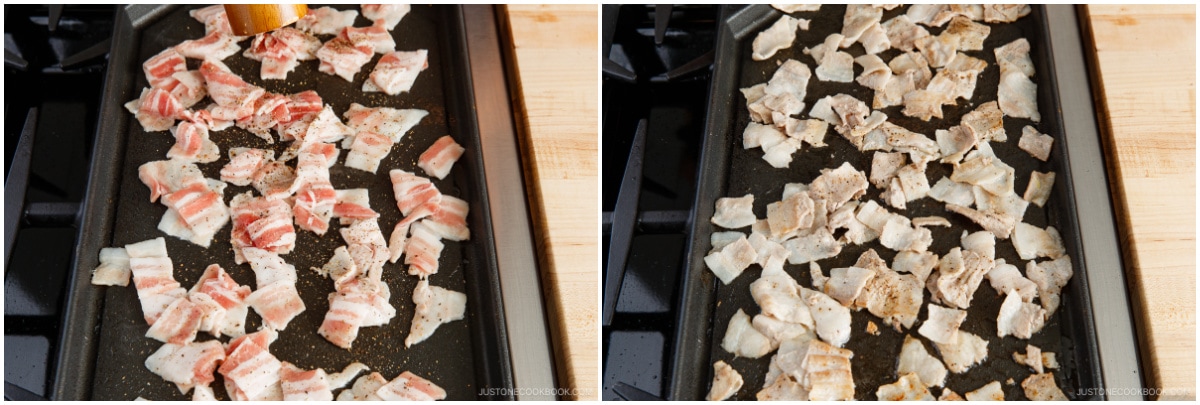
- Add the pork belly to the hot griddle, separating the clumps so the slices are in a single layer. Season with freshly ground black pepper. Nami's Tip: If using a different protein, drizzle an additional 1 Tbsp oil onto the griddle.
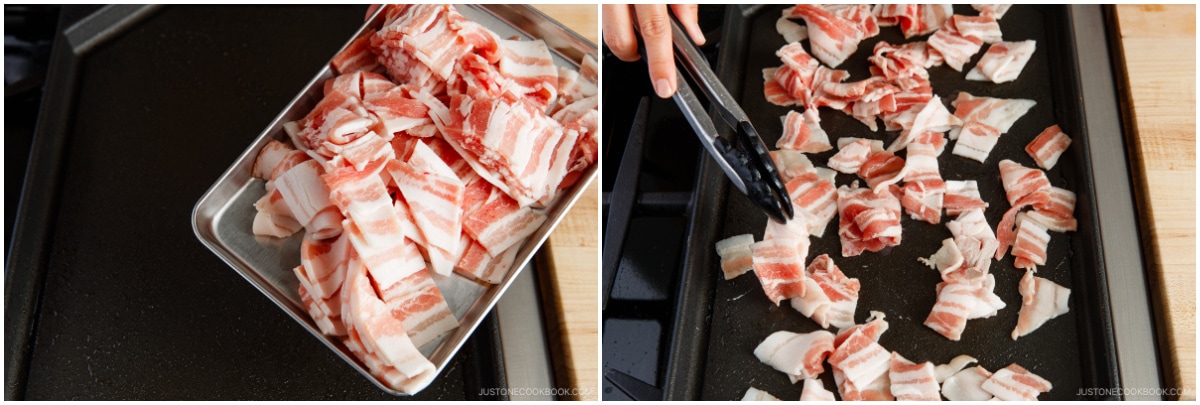
- Stir-fry until the meat is no longer pink.
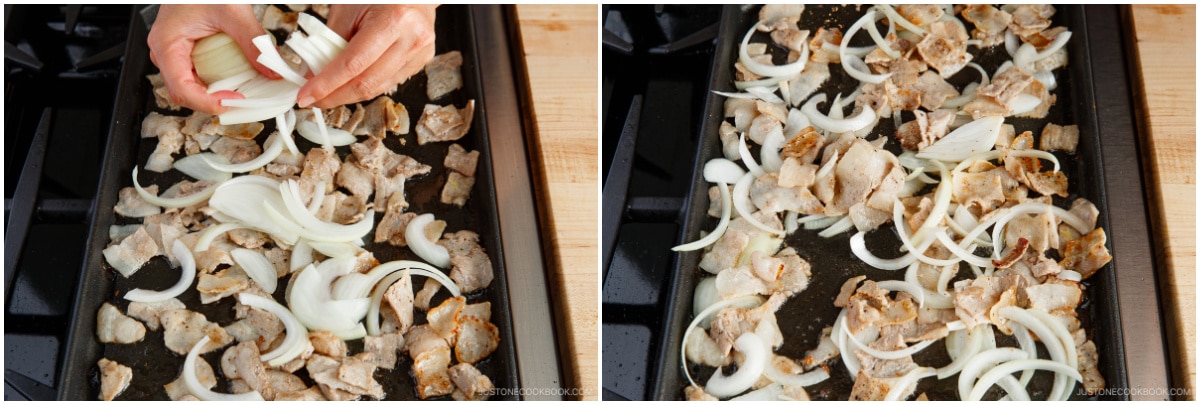
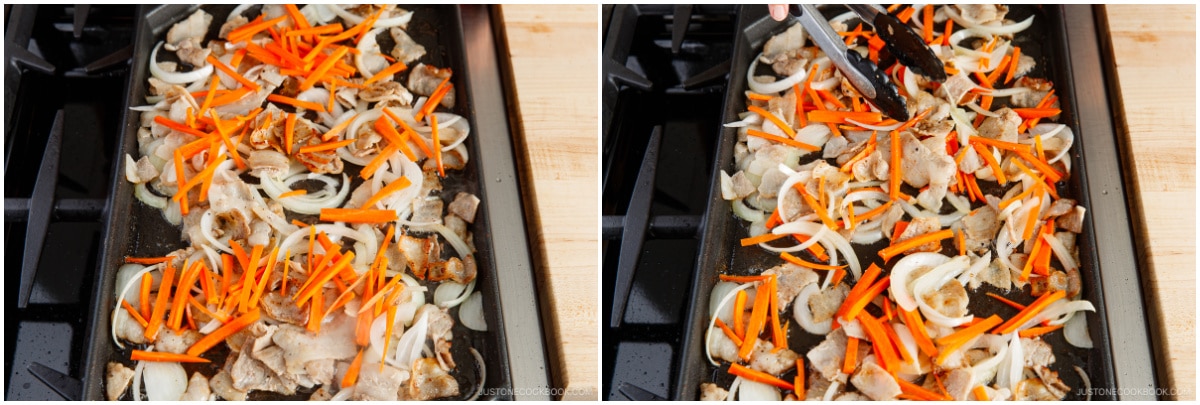
- Add the onion to the griddle and stir, separating the layers. Cook for 1–2 minutes, until tender and slightly charred.Nami's Tip: Cook the hard vegetables first, then the soft ones. Cooking the veggies in succession retains their fresh texture and crunch and avoids overcooking. Don't add too many ingredients, which will end up steaming the noodles.
- Add the carrots, stir, and cook for 1–2 minutes, until they are coated with oil and start to soften.
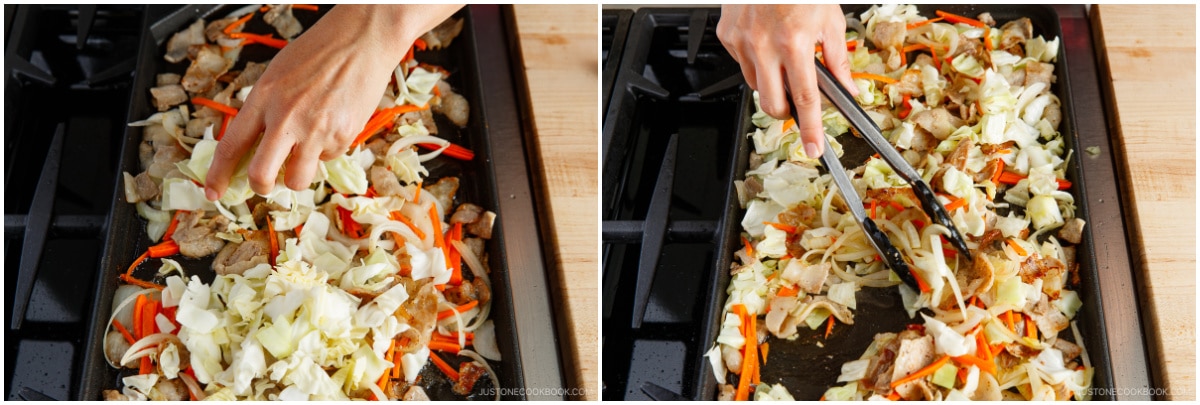
- Add the cabbage and shiitake mushrooms and cook until they are coated with oil and begin to soften.
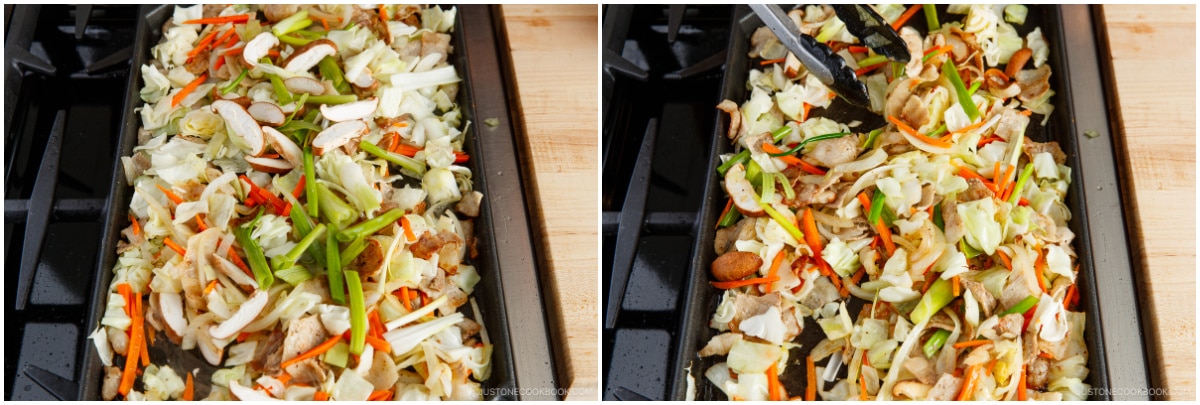
- Add the green onions and cook for 1 minute until they start to wilt.
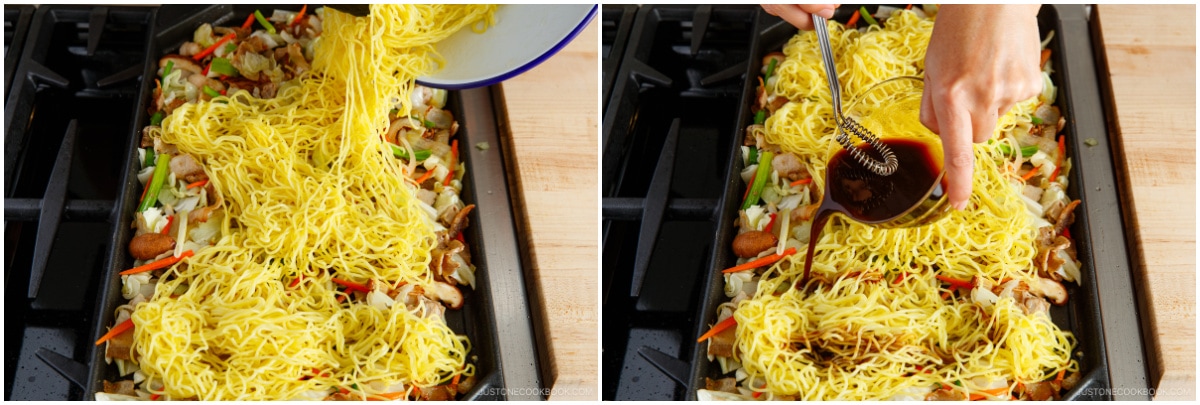
- Spread out the protein and vegetables, then place the yakisoba noodles on top. Drizzle with ⅓ cup yakisoba sauce and toss with tongs to distribute. Taste the noodles and add more sauce, if desired.
- Toss the noodles frequently as they may stick to the cooking surface. When the noodles are coated in sauce and warmed through, serve the yakisoba onto individual plates.
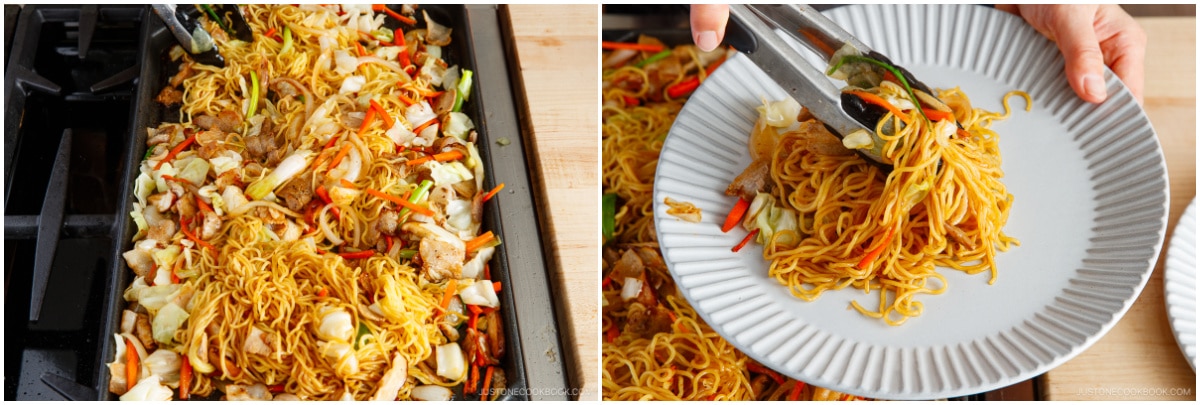
To Serve
- Garnish with aonori seaweed and pickled red ginger, if desired, and serve immediately.
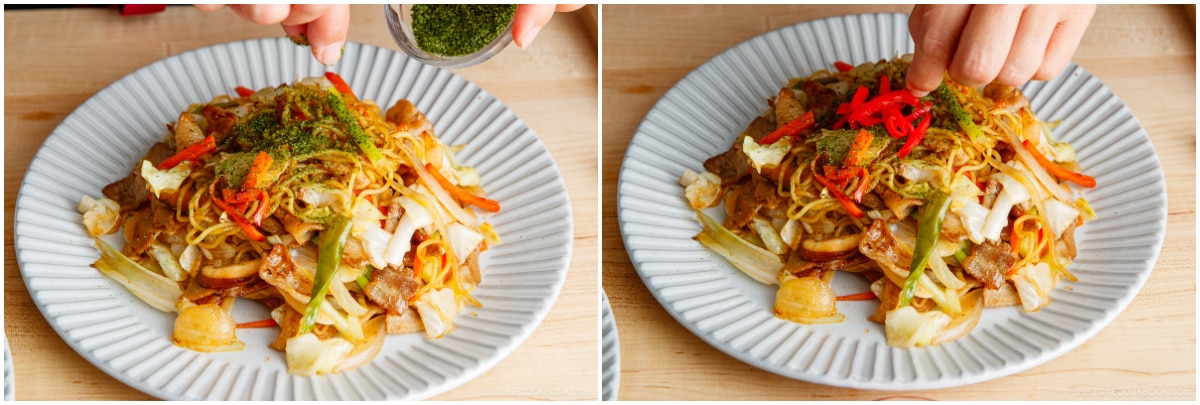
To Store
- Transfer any leftovers to an airtight container and store in the refrigerator for up to 3 days or in the freezer for up to a month. Thaw overnight in the fridge and reheat in the microwave until warm.
Notes
- Swap the protein. Chicken thighs, shrimp, squid/calamari, sausage, ground pork, tofu, or mushrooms work well. Beef is not a typical choice in Japan, but you can try it!
- Use more vegetables. Bean sprouts or nira (Chinese chives) add crunch and fiber.
- Make it vegetarian. Skip meat and use tofu with vegetarian oyster sauce.
- Try different styles. Use this recipe as a filling for Yakisoba Pan and omusoba (yakisoba-stuffed omelette), or as a base for Hiroshima-style Okonomiyaki.
Nutrition
Did you make this recipe?
Tag @justonecookbook on Instagram so we can see your delicious creation!
Update: The post was originally published on April 6, 2011. It’s been republished with a new video, new images, and updated content on October 27, 2023.